

What if your next commercial move cost your business more in lost productivity than the actual lease itself? It’s a valid concern for Australian business owners who know that even a few hours of downtime can result in significant revenue loss. You likely feel the weight of managing sensitive IT hardware and the anxiety of potential budget blowouts. We’ve developed this comprehensive office relocation checklist to help you master your 2026 move with a strategic timeline that eliminates these risks and protects your bottom line.
We understand that your priority is a seamless transition where your team stays productive and your assets remain secure. This guide will walk you through everything from the latest ASIC reporting requirements, such as the 28-day window for address changes, to meeting the new enforceable WHS standards for psychosocial hazards. You’ll learn how to organise specialised packing for fragile tech and secure your new premises without losing a single day of operation. By following this roadmap, you can ensure zero data loss and maintain clear communication with your clients throughout the entire journey.
Key Takeaways
- Audit your current lease and define clear business objectives early to ensure your new premises align with your long-term growth plans.
- Protect your digital assets by implementing a “first-in, last-out” IT strategy that prioritises server room setup and data security.
- Follow a structured 12-week office relocation checklist to manage essential tasks like booking removalists and notifying external stakeholders.
- Eliminate business downtime by scheduling the physical move during off-peak hours and maintaining client services through a skeleton staff model.
- Reduce the logistical burden on your employees by utilising professional packing services and secure storage for a more organised transition.
Establishing Your Strategic Office Relocation Framework
Successful moves begin months before the first box is taped. You must first define your core objectives. Are you following the “flight to quality” trend seen in major Australian hubs, or is this a strategic downsizing to a more efficient Canberra office? A comprehensive lease audit is your next step. Review your “make-good” obligations and notice periods carefully. Failing to lodge your new address with ASIC within 28 days can result in a $102 late fee, so add this to your administrative tasks immediately.
Calculating the true cost of relocation requires a granular approach. It goes beyond the removalist’s quote. You need to account for end-of-lease cleaning, transit insurance, and the potential cost of operational downtime. Many companies engage professional business relocation services to manage these moving parts, ensuring no detail is overlooked. This strategic framework acts as the foundation for your entire transition, turning a potentially chaotic event into a managed business evolution.
To better understand this concept, watch this helpful video:
Budgeting and Financial Planning for 2026
Your budget must be resilient. While basic transport is a fixed cost, you should allocate a 10% to 15% contingency fund for unforeseen logistical hurdles. Factor in specialised office packing services to protect high-value assets like servers and ergonomic workstations. If you’re moving across state lines, remember to account for utility disconnection and reconnection fees, as these vary significantly between providers. Don’t forget to include the cost of updating your marketing materials and signage to reflect your new location.
Forming Your Internal Relocation Committee
Don’t try to manage the entire shift alone. Appoint a dedicated Relocation Project Manager and form a committee with representatives from IT, HR, and Operations. This ensures every department’s functional needs are met without interrupting their daily workflows. Your office relocation checklist should include a clear communication plan to keep staff informed. Regular updates reduce moving-day anxiety and help maintain staff morale. On the day of the move, define specific roles so a committee member is present at both the old and new locations. This ensures a steady hand is always available to resolve issues as they arise.
Safeguarding IT Infrastructure and Business Assets
Your IT infrastructure is the lifeblood of your business. When working through your office relocation checklist, the server room must be your top priority. We recommend a “first in, last out” approach. This means your IT systems are the last things disconnected at the old site and the first things powered up at the new one. This strategy minimises downtime and ensures your team can get back to work immediately upon arrival.
Before a single cable is unplugged, implement a rigorous data backup protocol. Redundancy is key. Store one copy on-site and another in a secure cloud environment. Once data is safe, create a meticulous inventory. This documentation protects you against loss and simplifies insurance claims if an accident occurs during transit. Your hardware log should include:
- Serial numbers and asset tags
- Current physical condition reports
- Assigned user and department
- Warranty status and expiration dates
Effective cable management saves hours of frustration. Label every cord and port before disconnecting. Use a colour-coded system to match cables to their specific workstations. This small step ensures a rapid, error-free setup at your new premises. For businesses managing complex setups, relocating IT infrastructure requires a level of precision that goes beyond standard moving practices. Remember that IT relocation costs are highly variable, so getting specific quotes based on your workstation count is essential for your office relocation checklist.
Moving Sensitive Electronics and Servers
Sensitive hardware requires more than just standard bubble wrap. Use anti-static packing materials to prevent electrostatic discharge from damaging internal components. For critical servers, consider climate-controlled transport to avoid moisture or heat damage during long-haul shifts. Always consult with professional removalists who specialise in commercial tech logistics. They have the equipment and expertise to handle fragile electronics safely. Before you move, review your IT warranties. Some manufacturers require specific transport methods to keep your coverage valid.
Furniture Audits and Asset Disposal
A new office is a fresh start. Audit your existing furniture to decide what truly fits your new vision. Measure your new floor plan down to the millimetre. This ensures your current workstations fit the configuration without blocking exits or power points. If you have surplus items, organise for ethical disposal or donation. For items you want to keep but cannot fit immediately, look into secure storage solutions to keep your assets safe during the transition. If you need a hand with the heavy lifting, consider a professional office moving team to streamline the process.
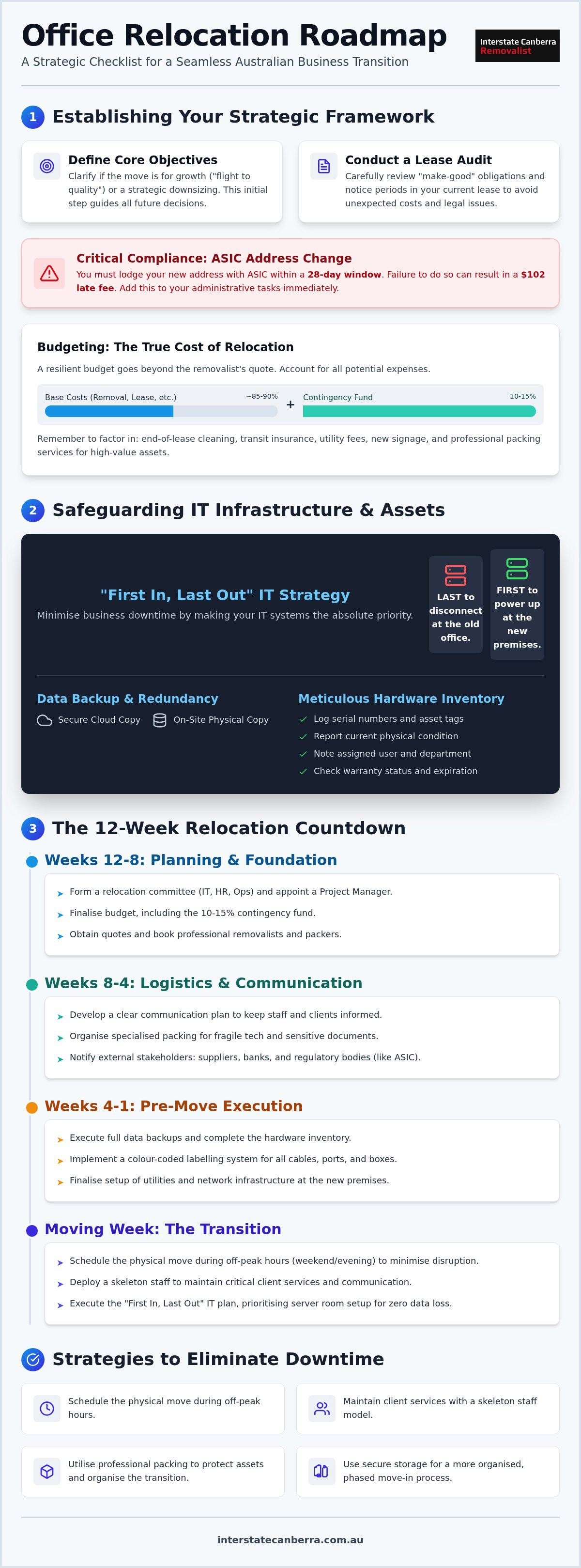
The 12-Week Office Relocation Master Checklist
A structured timeline is the only way to prevent a commercial move from spiralling into chaos. This 12-week office relocation checklist provides the steady hand you need to manage the transition while protecting your revenue. By breaking the process into manageable phases, you ensure that no administrative detail or physical asset is left behind.
- 8-12 Weeks: Finalise your moving date. Secure your commercial removalist team immediately. This is particularly vital for interstate relocations where logistics are more complex and high-quality providers book out months in advance.
- 6-8 Weeks: Notify external stakeholders. Reach out to clients, banks, and insurance providers. Review your current policies to ensure they cover the transition period and the physical transport of assets.
- 4 Weeks: Begin packing non-essential archives. This includes old records, surplus marketing materials, and storage items that aren’t used in your daily operations.
- 1 Week: Finalise the “Moving Day” run sheet. Distribute this document to all staff members. It should clearly outline arrival times, emergency contact numbers, and specific duties for the day.
Success depends on early action and professional support. If you’re planning a move between major cities, professional office removalists can help you lock in these dates and manage the heavy lifting while you focus on business continuity.
Compliance and Legal Notifications
Moving your business involves several statutory obligations that carry financial penalties if ignored. You must update your registered office address with ASIC within 28 days to avoid late fees, which can reach $428 if delayed by more than a month. Remember to notify the Australian Taxation Office and set up mail redirection with Australia Post. Update your Google Business Profiles and digital signatures to reflect the new location. Finally, ensure the new workspace meets all current WHS requirements. From December 2026, Australia transitions to stricter Workplace Exposure Limits (WELs) for airborne contaminants, so verify that your new ventilation and safety systems are fully compliant before staff arrive.
Packing Strategy for Business Continuity
Order is everything during a shift. Utilise a colour-coded labelling system where each colour corresponds to a specific zone in the new office. This allows movers to place boxes exactly where they belong, speeding up the unpacking process. Provide staff with “Personal Packs” for their immediate desk essentials, such as laptops, chargers, and notebooks. To keep packing efficient, define “essential assets” as any item required to maintain client service and revenue generation within the first 24 hours of operation. Everything else can be treated as secondary and unpacked once the core business functions are operational.
Minimising Downtime and Post-Move Optimisation
The physical move is only half the battle. To ensure your office relocation checklist delivers on its promise of zero downtime, you must manage the “go-live” phase with precision. Schedule the heavy lifting during low-impact hours, such as Friday evenings or after-hours. This prevents your staff from being caught in the middle of a logistical whirlwind while trying to answer client enquiries. It’s about maintaining a professional presence even while your desks are in transit.
Consider implementing a skeleton staff or hybrid work model during the transition days. While the removalists are active, your team can work remotely to maintain seamless service. On “Day One” in the new office, perform a comprehensive tech stress test. Don’t wait for staff to arrive to find out the internet is patchy or the phone lines are down. Test every port and connection before the first shift begins. Finally, conduct a post-move debrief. Check your inventory against the condition reports created earlier to identify any damaged assets or missing items immediately. This accountability ensures your insurance claims, if needed, are lodged without delay.
Settling into the New Workspace
Moving is a significant change for your employees. Help them settle in by providing a “Welcome Pack” that includes local area maps, nearby café recommendations, and updated security protocols. Ensure all signage, security passes, and kitchen facilities are fully functional from the moment they walk in. To secure your bond return and maintain a professional reputation, schedule a thorough professional clean of your previous premises. This is a critical final step in your office relocation checklist that prevents costly disputes with your former landlord.
The Long-Distance Advantage
Moving between major hubs like Canberra and Melbourne or Sydney adds another layer of complexity to your timeline. Leverage experienced interstate removalists who understand the logistics of long-haul commercial shifts. They can often offer “backloading” options for non-essential office furniture, which is a cost-effective way to transport items on returning trucks. For a truly professional finish, request a quote for comprehensive commercial relocation services. This ensures your high-value assets receive the specialised care they require, leaving you free to focus on growing your business in its new home.
Take Command of Your Commercial Move
A successful office move is defined by what doesn’t happen; there are no lost data packets, no broken hardware, and no unexpected budget blowouts. By implementing a rigorous office relocation checklist, you’ve established a strategic framework that prioritises your business assets and staff well-being. You’re now equipped to handle everything from ASIC address notifications to the “first-in, last-out” IT protocol that keeps your operations online. Whether you’re moving to a premium A-grade building in Melbourne or consolidating your footprint in Canberra, a methodical approach ensures your transition is a catalyst for growth rather than a logistical hurdle.
Expert assistance is the final piece of the puzzle. We are specialists in interstate commercial moves, offering the reliability and precision your business deserves. Our team provides secure storage for office assets and professional packing and unpacking to minimise downtime, allowing your staff to remain focused on their core roles. We take pride in being the steady hand that guides your business through every stage of the journey.
Ready to secure your move? Get an Instant Quote for Your Office Relocation and experience a seamless transition to your new premises. Your new office represents an exciting new chapter, and we’re ready to help you start it on the right foot.
Frequently Asked Questions
How far in advance should I start planning an office relocation?
You should begin your strategic planning at least three to six months before your current lease expires. While our office relocation checklist focuses on the final 12-week execution phase, the earlier months are vital for site selection, lease negotiations, and interior fit-out planning. Starting early ensures you can secure your preferred moving dates and avoid the premium costs associated with last-minute logistical arrangements.
How do I choose the right commercial removalist for an interstate move?
Prioritise providers who specialise in commercial logistics and offer comprehensive transit insurance for business assets. You need a team that understands the specific requirements of transporting fragile IT hardware and heavy office furniture across state lines. Verify their national coverage and ask for references from other businesses to ensure they have the “steady hand” required for complex, long-distance relocations.
What are the most common mistakes made during office relocations?
The most frequent errors include underestimating the complexity of IT migration and failing to conduct a thorough asset audit. Many businesses also overlook the “make-good” obligations in their old lease, which can lead to significant budget blowouts at the final hour. Using a detailed office relocation checklist helps you avoid these traps by ensuring every cable is labelled and every administrative deadline is met.
How can we move our office without stopping business operations?
Schedule your physical move during low-impact hours, such as Friday evenings, and utilise a hybrid work model during the transition. This allows your team to remain productive from home while the removalists handle the hardware and furniture. By the time your staff arrive at the new premises on Monday morning, the IT stress tests should be complete and the workstations fully operational.
What legal obligations do I have when changing my business address in Australia?
You must notify ASIC of your change of registered office address within 28 days to avoid statutory late fees. It’s also essential to update your details on the Australian Business Register and inform the Australian Taxation Office. Ensure you update your workers’ compensation insurance and any professional licences to reflect your new location and maintain full legal compliance.
Should we hire professional packers or let our employees pack their own desks?
Professional packers are the most efficient choice for protecting your business assets and reducing staff burden. While employees should manage their own personal items, professionals have the specialised materials and experience to pack fragile electronics and bulky files safely. This approach significantly reduces the risk of hardware damage and allows your team to focus on their core roles during the move.