
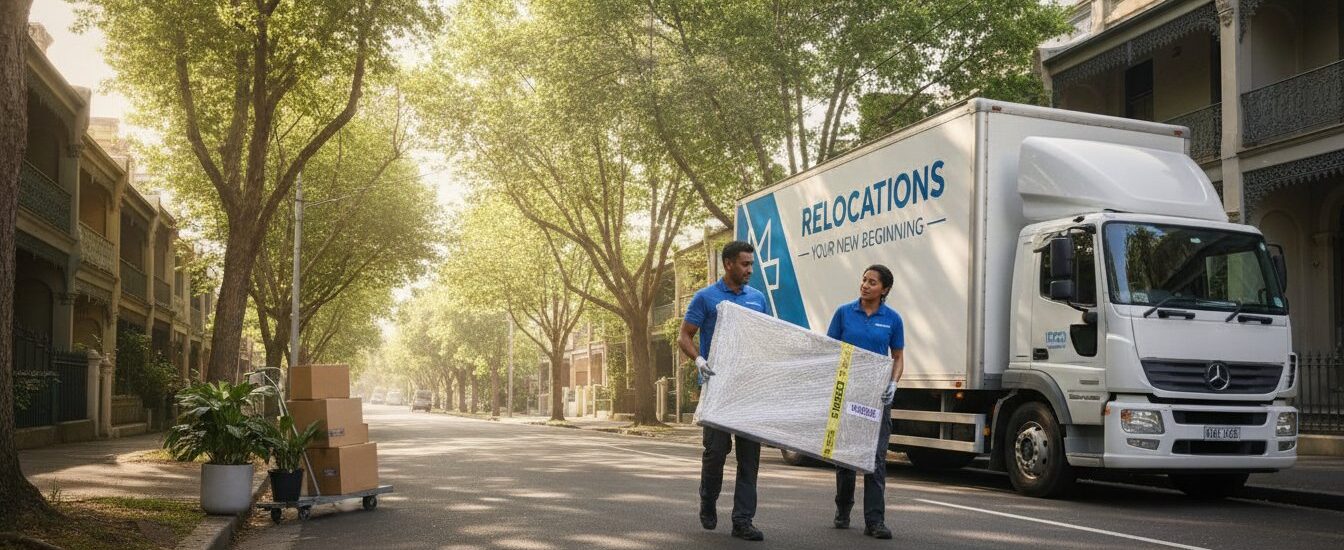
What if the seven-hour drive down the Hume Highway was actually the easiest part of your entire relocation? For many, the prospect of moving from canberra to melbourne feels like a gamble against hidden costs and the very real risk of furniture damage during transit. You likely worry about how a large truck will navigate narrow Richmond lanes or whether you have secured the right parking permits for a smooth arrival.
We understand that a successful interstate move requires more than just a vehicle; it requires a strategy that protects your belongings and your schedule. This guide ensures you master your relocation with expert advice on logistics and service comparisons for a seamless transition in 2026. We will show you how to achieve a damage-free move with transparent pricing and minimal disruption to your daily routine. From navigating Victorian vehicle registration to handling delicate items, you will find the practical steps needed for a professional, stress-free start in Melbourne.
Key Takeaways
- Prepare for an eight-hour transit along the Hume Highway and understand why this busy corridor requires precise timing for a smooth arrival.
- Compare service models to avoid hidden DIY costs and identify when a man and a van provides the most efficient balance for smaller loads.
- Protect your belongings against constant road vibrations with specific interstate packing techniques designed for long-haul travel.
- Simplify moving from canberra to melbourne by securing council parking permits early to navigate narrow inner-city streets and tram zones.
- Minimise disruption to your schedule by aligning your delivery window with Melbourne’s unique clearway and access restrictions.
Logistics of Moving from Canberra to Melbourne: What to Expect
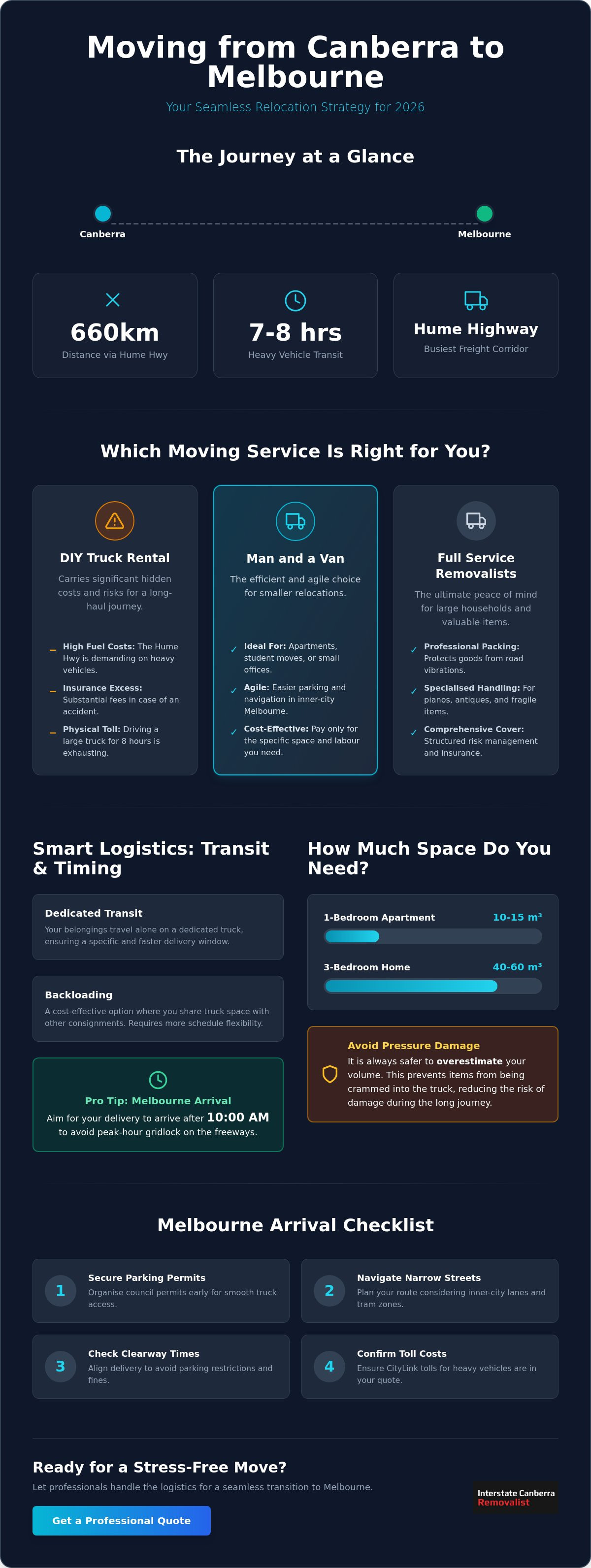
The journey from the capital to the coastal hub covers roughly 660km of varied terrain. Most heavy vehicles take seven to eight hours to complete this transit, primarily utilising the Hume Highway. As one of Australia’s busiest freight corridors, this route supports a constant flow of commercial traffic, making moving from canberra to melbourne a logistically demanding task that requires professional coordination.
You must decide between a dedicated transit or backloading. Dedicated transit means your goods are the priority, offering a specific delivery window and a truck reserved solely for your inventory. Backloading is often more cost-effective as you share truck space with other consignments, but it requires more flexibility with your schedule. Regardless of the method, aim to arrive in Melbourne after 10:00 AM. This avoids the gridlock of peak-hour commuters on the Monash or Eastern Freeways, ensuring the truck can actually access your new street.
To better understand the scale of an interstate relocation, watch this helpful video:
Key Route Considerations for 2026
Plan for varying conditions along the Hume. The Southern Highlands often experience thick morning fog, while the Goulburn Valley can face extreme heat during summer months. These factors impact driver fatigue and vehicle performance. Additionally, factor in CityLink toll costs. Most heavy removalist trucks incur higher toll rates than standard passenger cars, so ensure these are clarified in your service agreement to avoid surprise invoices at the end of the trip.
Inventory Assessment: How Much Space Do You Really Need?
Accurate volume assessment is vital when moving from canberra to melbourne to ensure the right vehicle is dispatched. A standard three-bedroom home typically requires 40 to 60 cubic metres of space, whereas a one-bedroom apartment might only need 10 to 15 cubic metres. It’s safer to overestimate your volume. Underestimating often leads to cramped loading, which increases the risk of pressure damage during the long drive. Identify non-standard items early. Antiques, large appliances, or heavy musical instruments require specialised packing and often dictate the type of ramp or lift needed for the truck.
Choosing Your Service: DIY Truck, Full Service, or Man and a Van?
Deciding on a service model is the most critical choice when moving from canberra to melbourne. While DIY truck rental often seems like the budget choice, it carries significant hidden costs. You’ll need to account for high fuel consumption on the Hume, substantial insurance excesses, and the sheer exhaustion of driving a heavy vehicle for eight hours. Professionals understand how to manage these variables without the physical toll on your family.
Before committing to any provider, it’s vital to Know Your Rights When Moving. This ensures you understand transit insurance and consumer protections under Australian law. Professional teams offer structured risk management that a self-drive rental simply can’t match. They provide the steady hand needed to protect your assets during the long haul across state lines.
The Man and a Van Advantage for Interstate Shifts
Many people overlook the middle ground between DIY and a massive semi-trailer. A professional man and a van service is often the perfect fit for studio apartments, office equipment, or student relocations. You benefit from the agility of a smaller vehicle, which is far easier to park in Melbourne’s inner-north than a large truck. You only pay for the specific space and labour you require. For those transporting just a few key pieces of furniture or boxes, exploring small removals options can reveal cost-effective solutions that match your inventory without subsidising a massive rig. It’s a highly efficient way to handle moving interstate without the overkill of a full-scale fleet. The same principle applies when moving from Canberra to Sydney, where a man and a van solution offers transparent pricing and meticulous care for a shorter but equally demanding interstate corridor.
Full Service Removalists: Peace of Mind for Large Homes
For larger households, a full-service approach is indispensable. This includes professional packing and unpacking services, which are designed to withstand the constant vibrations of a 660km journey. If you have non-standard items, like a family piano, a dedicated team ensures safe handling and specialised loading. This level of care allows you to focus on your family’s transition while experts manage the safety risks and fatigue associated with the Hume Highway transit.
Interstate Packing and Transit Strategy for 2026
Packing for a short trip across town differs significantly from preparing for the long haul. When moving from canberra to melbourne, your belongings must withstand the “vibration factor.” Over 600km of constant road movement on the Hume Highway can cause items to rub, shift, and vibrate in ways that local moves simply don’t trigger. This friction is the primary cause of scuffed furniture and hairline cracks in glassware. To mitigate this, every void inside your boxes must be filled with industrial-grade padding or crumpled paper to prevent internal movement.
Success relies on a robust labelling system. Don’t just write “Kitchen” on a box. Use a numbered system cross-referenced with a digital master list on your phone. This level of organisation is essential for multi-day relocations where you might need to locate a specific item before everything is unpacked. Always prepare a “First Night” box containing chargers, basic tools, toiletries, and bed linens. Keep this box in your personal vehicle so you aren’t hunting for essentials the moment you arrive at your new Melbourne residence.
Securing Fragile and Heavy Items
Electronics and delicate kitchenware require double-boxing. Place the item in a padded box, then place that box inside a larger one with at least 5cm of cushioning on all sides. For high-value, sensitive equipment, professional piano movers are a necessity rather than a luxury. These specialists use industrial-grade strapping and custom padding to ensure heavy, complex instruments survive the rigours of interstate transit without losing their tune or sustaining structural damage. If you’re still in the planning phase, research Choosing a removalist to understand how different providers handle high-risk inventory.
Managing Your Transit Timeline
Coordinating your ACT departure with your Victorian arrival is a fine art. Most relocations involve a two-day window: loading on day one and delivery on day two. Maintain constant communication with your removalist team to track progress along the route. Have a contingency plan for extreme weather or road delays. If you want to ensure your strategy is airtight, book your interstate move with a team that prioritises transparent scheduling and real-time updates.
Arriving in Melbourne: Navigating Your New Neighbourhood
Arriving in Melbourne presents a sharp contrast to the wide, planned avenues of the ACT. When moving from canberra to melbourne, you must navigate the “Access Challenge.” This involves managing narrow inner-city laneways, active tram lines, and strict clearway zones that often lead to immediate towing. Professional drivers understand these hazards, but you must play your part by researching the specific restrictions of your new street before the truck arrives.
Safety is the priority during unloading. High-traffic urban environments require a clear perimeter to prevent accidents with pedestrians and cyclists. Ensure you have a designated spot for the truck that doesn’t block tram tracks or emergency access. Once the heavy lifting is done, focus on post-move logistics. This includes the responsible disposal of packing materials and ensuring your Victorian utility connections are active. Melbourne’s weather is famously unpredictable, so getting your heating or cooling sorted on day one is essential.
Parking and Access Permits
Don’t assume the truck can simply pull up out the front. Most Melbourne councils require applications for temporary parking bay closures or “Work Zone” permits at least five to ten business days in advance. If you’re moving into a high-rise development in Southbank or the CBD, coordinate with the building manager. You will likely need to book a dedicated service lift and check for height restrictions in basement car parks. Many apartment basements have clearances as low as 2.1 metres, which means the removalist will need to unload from the street or a loading bay.
Settling In and Storage Solutions
Sometimes the timing doesn’t align perfectly. If your new home isn’t ready or you’re downsizing into a smaller Victorian terrace, consider short-term storage solutions. This keeps your belongings secure while you finalise your living arrangements. When you begin unpacking, prioritise the bedrooms and the kitchen to establish a sense of normalcy quickly. Interstate Canberra Removalist ensures a stress-free final handover by placing every box in its designated room, allowing you to settle into your new Melbourne lifestyle without the clutter. Our team takes pride in a methodical approach that respects your time and your property.
Start Your Melbourne Chapter with Confidence
Successful relocation relies on matching your inventory to the right service model and preparing for the specific access challenges of Victorian streets. By prioritising professional packing and securing your council permits early, you eliminate the common stresses of long-haul transit. Moving from canberra to melbourne is a significant milestone that deserves a methodical, expert approach to ensure your belongings arrive in pristine condition.
Our team provides the steady hand you need for a seamless transition. We offer specialist piano and heavy item handling, secure storage solutions, and professional packing and unpacking services tailored to the Hume Highway corridor. We take accountability for every stage of the process, allowing you to focus on settling into your new home without the logistical burden. Get an instant quote for your Canberra to Melbourne move and secure your 2026 relocation date today. Your new life in Melbourne is just a well-planned journey away.
Frequently Asked Questions
How much does it cost to move from Canberra to Melbourne in 2026?
Total costs depend on your inventory volume, chosen service level, and the time of year. While industry data for 2026 suggests a standard three-bedroom home relocation often ranges between $3,000 and $4,500, your final investment is dictated by specific requirements like packing services or heavy item handling. Requesting a detailed inventory assessment is the only way to secure a transparent, fixed-price quote that avoids hidden interstate fees.
How long does the actual transit take for an interstate removalist?
The road journey itself takes approximately seven to eight hours to cover the 660km via the Hume Highway. However, most professional interstate moves are structured over two days to ensure safety and efficiency. This schedule typically involves loading your belongings on day one and performing the delivery in Melbourne on day two, which allows the driver to manage fatigue and navigate Melbourne’s peak-hour traffic effectively.
Do I need to be present for both the loading and unloading of the truck?
You or a trusted representative must be on-site at both the Canberra and Melbourne addresses. Your presence is required to verify the inventory list, sign off on the condition of items, and provide specific directions for furniture placement. If you cannot be there personally, ensure your nominee understands the access requirements for narrow Melbourne streets and has the authority to manage parking logistics on your behalf.
Can I move my piano interstate with a standard removalist service?
Standard moving services often lack the specialised equipment and training required for high-value, sensitive instruments. It’s essential to use dedicated piano movers who employ industrial-grade padding and heavy-duty strapping to combat the constant vibrations of long-haul travel. This specialised care protects the internal mechanisms and external finish of your piano during the moving from canberra to melbourne process.
What is the cheapest day of the week to move interstate?
Mid-week days, specifically Tuesday and Wednesday, are typically the most cost-effective times to book your relocation. Demand for interstate services peaks on Fridays and weekends, which often results in higher rates and limited availability. Scheduling your move for the middle of the week or the middle of the month can help you avoid these peak-period surcharges while ensuring a more relaxed transit timeline.
How do I organise a parking permit for a removalist truck in Melbourne?
Apply for a temporary parking permit or “Work Zone” closure through the local council website for your new Melbourne suburb. Most inner-city councils require at least five to ten business days to process these applications. Securing this permit is a vital step when moving from canberra to melbourne, as it guarantees a safe unloading space and prevents the truck from blocking active tram lines or clearway zones.