
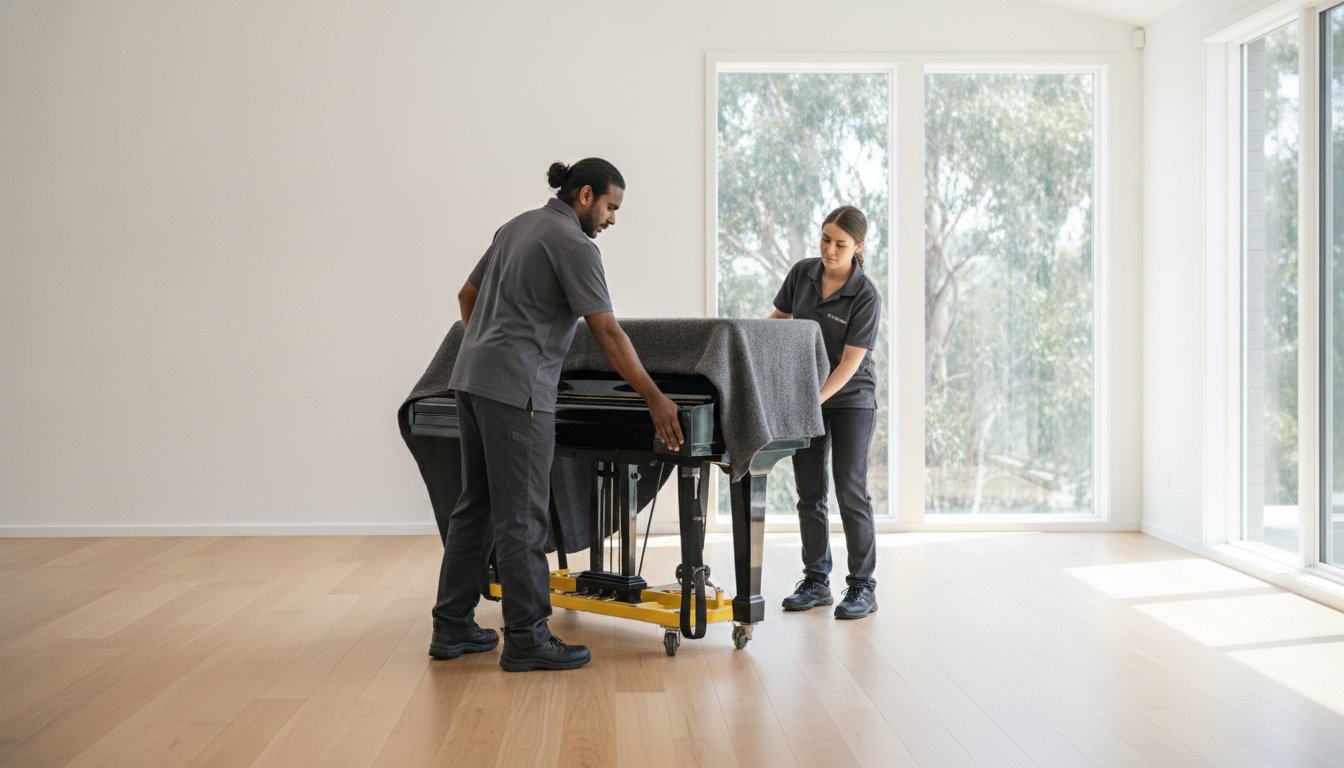
An upright piano can weigh up to 350kg and exerts several tonnes of internal tension, making it a structural masterpiece rather than just a heavy piece of furniture. Treating your instrument like a standard sideboard during a move isn’t just risky; it is a recipe for permanent acoustic damage and costly repairs. You need specialist piano movers who understand that relocation requires precise engineering rather than just raw muscle.
It is completely normal to feel anxious about scratched floorboards, dented walls, or the complex mechanics of your piano’s frame. You want a relocation that is entirely damage-free and handled by experts who respect the instrument’s value. This guide explores why professional handling is essential for protecting your piano’s integrity and how to navigate transit insurance without confusion. You will discover how to secure transparent pricing and ensure your piano arrives at its new home ready to play.
Key Takeaways
- Understand why the extreme internal tension of your instrument requires engineering expertise rather than just raw lifting power.
- Learn about the specialised tools professional piano movers use to navigate tight spaces without risking structural or aesthetic damage.
- Discover how investing in specialist services prevents five-figure repair bills and helps you secure an accurate, transparent quote.
- Get practical advice on preparing your piano and your home to ensure a seamless, damage-free relocation process.
- Identify the critical factors that influence transport costs, including piano type and property access requirements.
Why Professional Piano Movers are Essential for Your Instrument
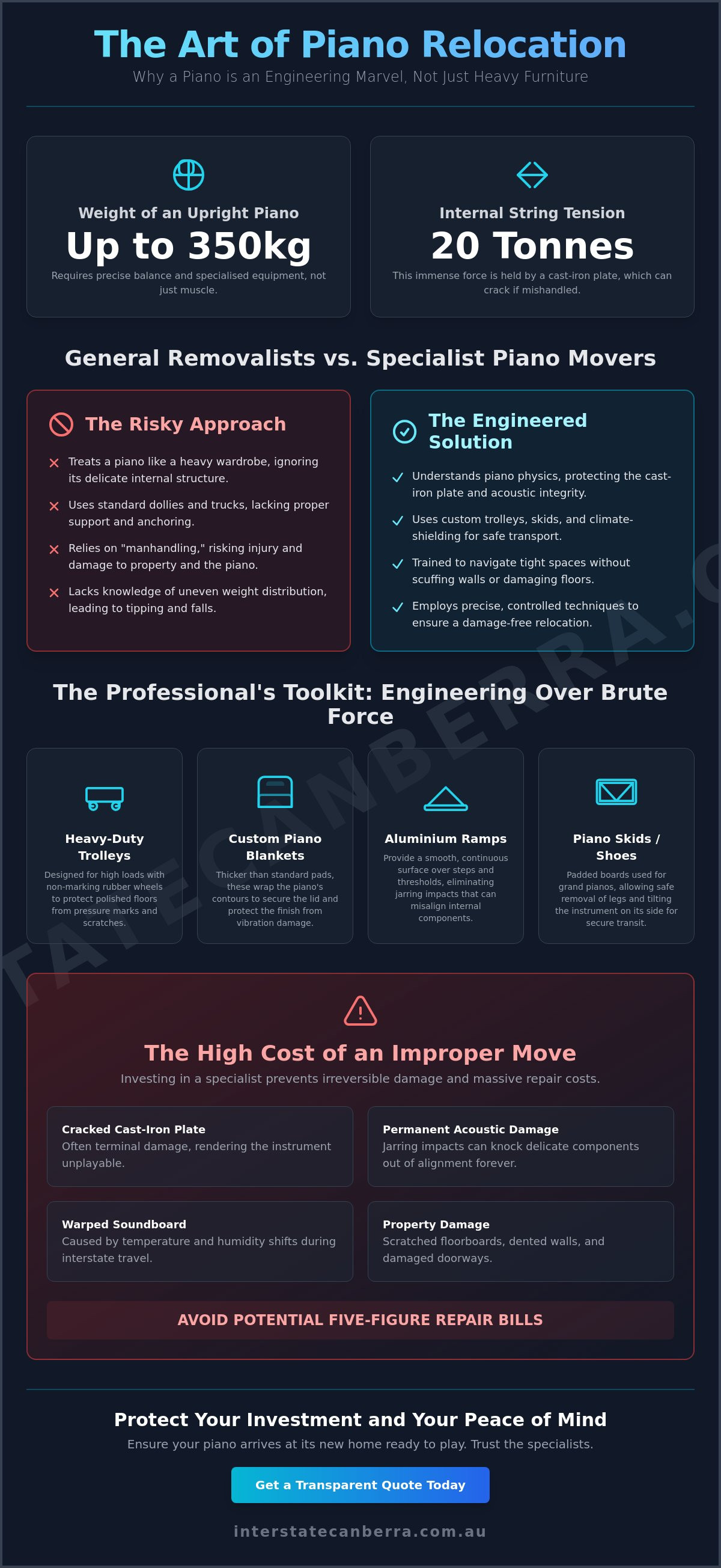
Moving a piano is a feat of engineering, not just a task of heavy lifting. It is a highly specialised branch of the removalist industry because a piano is a high-tension instrument. A standard upright or grand piano holds up to 20 tonnes of internal tension across its strings. This massive force is held in check by a cast-iron plate. If the instrument is tilted, dropped, or jarred incorrectly, you risk “plate cracking.” When the cast-iron frame snaps, the damage is usually terminal and the instrument becomes unplayable. Using dedicated piano movers ensures this structural integrity remains intact throughout the transition.
General removalists often treat a piano like a heavy wardrobe, but the physics involved are entirely different. A piano requires a methodical approach that respects its delicate internal mechanics and its immense weight. Professional specialists don’t rely on raw strength; they use physics and custom equipment to manage the load safely. This protects the instrument’s acoustic integrity and its financial value, preventing the need for five-figure repair bills after a botched move.
The Anatomy of a Piano Move
Weight distribution in a piano is notoriously uneven. The heavy cast-iron plate and soundboard are located at the back, making the instrument significantly back-heavy. Amateurs often underestimate this imbalance, which leads to the piano tipping during transit. On grand pianos, the “lyre” (the pedal assembly) and the legs are particularly vulnerable. These components are not designed to bear lateral pressure. They can easily snap if the piano is pushed rather than properly lifted and placed on a piano board.
Interstate travel introduces further risks through external temperature shifts. Rapid fluctuations in humidity and heat cause the wooden soundboard to expand or contract. This can lead to warping or cracks in the wood. You can find more technical details in Wikipedia’s guide to piano moving regarding how these components react to physical and environmental stress. Specialists use climate-shielding techniques to mitigate these risks during long-haul transport.
General Removalists vs. Specialist Piano Movers
Standard moving trucks are built for boxes and square-edged furniture. They often lack the specialised strapping points required to secure a 350kg instrument vertically. If a piano isn’t anchored correctly, it can shift during transit, causing catastrophic damage to the frame. General removalists might resort to “manhandling” the unit, which increases the risk of back injuries for the crew and structural damage to your home.
Professional piano movers undergo specific training to navigate tight corners and narrow hallways without scuffing your walls or damaging expensive floorboards. They use a combination of:
- Custom-fitted piano slippers and covers to prevent surface scratches.
- Heavy-duty trolleys with non-marking rubber wheels.
- Specific anchoring systems designed for high-weight, low-centre-of-gravity loads.
This expertise ensures the move is a controlled, silent, and efficient process that prioritises the safety of your home and your instrument.
Specialised Equipment Used by Expert Piano Removalists
Professional transport relies on a single philosophy: engineering always beats brute force. Standard furniture dollies, while useful for sideboards or desks, are dangerous when applied to instruments. They often feature plastic wheels or light frames that cannot withstand the concentrated weight of a 350kg upright. Specialist piano movers utilise heavy-duty trolleys designed specifically for high-load capacities. These tools ensure the instrument remains stable and the weight is distributed evenly across the frame.
Protection goes beyond just preventing scratches. Custom-fit piano blankets are significantly thicker than standard moving pads. They are designed to wrap around the specific contours of the casing, securing the lid and keyboard against vibration. When navigating small elevation changes, like porch steps or door thresholds, experts use heavy-duty aluminium ramps. These provide a continuous, smooth surface that eliminates the jarring impact of a “drop” which can knock the internal components out of alignment. As noted in a recent Forbes review of piano movers, the presence of this specialised gear is the primary indicator of a qualified service provider.
Piano Trolleys and Skids
The wheels on a specialist piano trolley are made from high-tensile, non-marking rubber. This material is firm enough to support the weight but soft enough to protect polished Australian hardwood floors from pressure marks. For grand pianos, the process requires a “piano skid” or “shoe.” This is a padded timber board that allows the movers to remove the legs and lyre, tilting the piano onto its long side. This configuration is the only safe way to move a grand through standard doorways and into a truck. If you are planning a relocation, choosing professional piano movers ensures your home’s aesthetic and your instrument’s structure remain pristine.
Hydraulic Tailgates and Purpose-Built Trucks
Lifting a piano manually into the back of a truck is a recipe for disaster. Even a team of four can struggle with the awkward weight distribution. Professional trucks feature hydraulic tailgates that act as a level, vibration-free lift. This platform moves the instrument from the ground to the cargo hold without any tilting or manual hoisting. Once inside, the instrument is secured using internal track-and-tie systems. These industrial-grade straps anchor the piano to the truck’s structural ribs, ensuring it remains completely immobile even during long interstate hauls across varied road conditions.
Assessing the Risks and Costs of Moving a Piano
Choosing professional piano movers is a strategic decision to protect a significant financial and emotional asset. While specialist services require a higher initial investment than a standard furniture move, they prevent five-figure repair bills. A single slip during a DIY attempt can result in a cracked soundboard or a bent frame, often costing more to fix than the instrument is worth. You aren’t just paying for transport; you are paying for the engineering expertise required to keep a high-tension instrument stable.
Several variables influence a professional quote. The type of piano is the primary factor, as a grand piano requires more personnel and specialised skids than a standard upright. Distance also plays a role, particularly for extensive interstate journeys. Finally, access at both ends is critical. The Australian removalist industry typically uses a “stair-step” fee structure. This accounts for the increased risk and physical labour required to navigate each flight of stairs or tight landing. The challenges of moving a piano often involve navigating vertical space and architectural constraints that standard movers simply aren’t equipped for. If you want to understand exactly what influences the cost to move a piano interstate and how to select a genuine specialist, our dedicated selection guide covers every factor in detail.
The Hidden Dangers of DIY Piano Moving
Attempting to move a 300kg instrument without the right training often leads to serious physical injuries. Back strain, crushed fingers, and foot injuries are common among amateurs who underestimate the shifting centre of gravity. Beyond physical harm, the internal “action”, the complex system of hammers and levers, is incredibly fragile. Jarring the instrument can break these parts, leading to expensive mechanical failures. Most importantly, many instrument warranties and insurance policies are voided if the piano isn’t handled by professional piano movers. Before assuming a budget option will suffice, it is worth reading about the common myths surrounding piano removal companies and why cutting corners on specialist expertise can cost far more than you save.
Understanding Piano Transit Insurance
Don’t assume that a removalist being “fully insured” covers your specific instrument. Public liability insurance only protects the property and people if an accident occurs. You need to verify that your removalist holds specific goods-in-transit insurance. This covers the instrument itself while it is being loaded, transported, and unloaded. It’s also wise to check your home contents policy. Some Australian insurers include “away from home” clauses that may offer supplementary protection, but these often have strict limits on high-value musical instruments. Always ask for a summary of the cover before the truck arrives to ensure your peace of mind.
Preparing Your Instrument for a Seamless Relocation
Preparation is the foundation of a successful move. Before the team arrives, you must establish a clear line of communication regarding the instrument’s current state. Note any existing scratches, sticky keys, or pedal issues. Taking timestamped photos from multiple angles is a vital step for your insurance records. This ensures that in the unlikely event of a claim, you have undeniable proof of the piano’s pre-move condition. It also helps the crew understand specific areas that might require extra padding or reinforced wrapping.
Clearing a physical path is equally important. Remove loose rugs, wall decorations, and small furniture items from the hallway. A clear exit route allows piano movers to maintain a steady, uninterrupted flow, which is safer for both the crew and the instrument. If you are ready to start your relocation, you can book professional piano movers to handle the technical heavy lifting with ease.
Measuring Access and Clearance
Precision measurements prevent on-day delays. You should measure the narrowest point of every doorway and the height of every stairwell landing. Pianos cannot be tilted indefinitely to clear low ceilings or tight corners without risking damage to the internal action. If your property has a steep incline or a gravel driveway, inform your removalist early. These surfaces often require additional plywood sheeting to create a smooth rolling surface for the trolley. In some Australian homes, particularly multi-storey apartments, an “over-the-balcony” lift using a crane may be the only viable option. Identifying this early ensures the right equipment is on-site from the start.
Post-Move Care and Retuning
One of the most common mistakes owners make is booking a tuner for the day after the move. You must wait at least 2-4 weeks before tuning your instrument. During this period, the piano undergoes an “acclimatisation” phase. Australian wood reacts to the new environment’s humidity and temperature levels, causing it to expand or contract. Tuning too early is a waste of money as the strings will shift again as the wood settles into its new position.
Placement in your new home is critical for long-term health. Avoid placing the piano:
- Directly under or opposite an air conditioning vent.
- Next to a heater or fireplace.
- In a spot that receives direct afternoon sunlight through a window.
Consistent temperature is the key to maintaining acoustic integrity. Aim for an internal wall away from draughts to keep your piano in peak playing condition for years to come.
Secure Your Piano with Interstate Canberra Removalist
Interstate Canberra Removalist acts as the steady hand for national piano transport. We understand that moving a high-value instrument across state lines requires more than just a truck; it requires a coordinated logistical plan. Our team maintains a professional and efficiency-driven communication style. We provide quick answers and clear solutions without the fluff. Whether you need piano movers for a standalone delivery or as part of a full home relocation, we manage the process with meticulous care.
Punctuality is a core value of our service. We recognise that your time is valuable and that instrument transport often involves tight schedules with tuners or new property settlements. We treat every upright and grand piano as a structural masterpiece. Our experts handle the heavy lifting so you can focus on settling into your new space. We don’t just move furniture; we protect your musical legacy. Our team is trained to navigate the specific challenges of Australian architecture, ensuring your instrument remains pristine from start to finish.
Our National Interstate Network
We provide a significant logistical advantage by operating an Australia-wide network. While many providers are restricted to a single city, we specialise in long-distance hauls between major hubs. We regularly coordinate secure transport for routes from Canberra to Sydney, Melbourne, Brisbane, and the Gold Coast. For those moving from Canberra to Melbourne, our complete relocation guide covers every logistical detail you need for a seamless transition. This national reach ensures your piano stays within a single, accountable system. You won’t have to worry about your instrument being handed off between multiple sub-contractors.
Long-distance hauls require specific expertise in load stabilisation. We monitor road variables to ensure the instrument remains immobile throughout the journey. If your new home isn’t ready yet, we offer integrated storage solutions. Our facilities provide a secure environment where your piano can wait until your new space is prepared. This seamless transition between transport and storage reduces the risk of damage during multiple handovers. We manage the entire timeline to ensure your instrument arrives exactly when you need it.
Request Your Personalised Piano Moving Quote
Transparency is essential for building trust. We provide clear, upfront pricing that avoids the hidden “heavy lifting” fees often found in the industry. You deserve to know exactly what the relocation will cost before the truck arrives. Our online quote tool allows you to input your specific details, including piano type and access requirements, for an accurate estimate. This eliminates the anxiety of unexpected costs on moving day.
We take pride in our accountability and focus on your peace of mind. Every move is handled by seasoned specialists who value the integrity of your instrument. You can trust our team to navigate the complexities of interstate logistics while maintaining the highest standards of safety. Get your piano moving quote from Interstate Canberra Removalist today and ensure your instrument receives the specialist care it deserves.
Secure Your Instrument’s Future
Relocating a piano is a precise engineering task that requires far more than raw strength. You now understand why the extreme internal tension of your instrument demands specialist handling to prevent catastrophic plate cracking. By choosing professional piano movers who utilise specialised piano trolleys and hydraulic tailgates, you ensure your instrument remains stable and secure throughout the journey. Whether you are moving across the city or using our national interstate network for a long-distance relocation, expert care is the only way to protect your piano’s acoustic integrity.
We include comprehensive transit insurance to give you total peace of mind during every stage of the move. Our team focuses on transparent pricing and meticulous execution so you can settle into your new home without the stress of hidden fees or damaged property. Don’t risk a DIY approach that could lead to permanent damage or personal injury. Trust the experts to manage the logistics while you focus on the music. Get an instant quote for your piano move and let us handle the heavy lifting with the professionalism your instrument deserves.
Frequently Asked Questions
Can I move a piano myself with a few friends?
Moving a piano yourself is extremely risky and often leads to permanent structural damage or serious personal injury. You risk back strain, crushed fingers, and terminal damage to the instrument’s cast-iron plate if it is jarred incorrectly. Professional piano movers use specific engineering techniques to manage the immense weight and internal tension safely, protecting both the people and the property involved.
How much does it typically cost to move a piano interstate in Australia?
Interstate costs are determined by the specific type of piano, the total distance of the haul, and the complexity of access at both ends. Factors such as whether you are moving an upright or a grand piano will significantly influence the final quote. Because every long-distance relocation involves unique logistical challenges, you should request a personalised estimate to ensure there are no hidden “heavy lifting” surprises.
Will my piano go out of tune during the move?
Your piano will almost certainly require tuning after it has been relocated to a new environment. This change in pitch is rarely caused by the physical movement itself but is instead a reaction to different humidity and temperature levels. The wooden soundboard expands or contracts in the new climate, which alters the tension of the strings and affects the overall sound.
Do I need to hire a crane to move my piano?
Cranes are only required for “over-the-balcony” scenarios where the instrument cannot fit through standard doorways, tight hallways, or internal elevators. This is a common requirement for modern apartment living in Australian capital cities. We assess your property’s access points during the quoting process to determine if specialised lifting equipment is necessary for a safe exit or entry.
What is the difference between a piano skid and a normal trolley?
A piano skid is a specialised padded board used to move grand pianos on their side after the legs and lyre have been removed. A normal furniture trolley is not designed for this purpose and lacks the high-tensile frame required for such heavy loads. Specialist trolleys used by piano movers also feature non-marking rubber wheels to protect polished hardwood floors from pressure damage.
Is my piano covered by insurance during the relocation?
Coverage depends entirely on whether your chosen removalist holds specific goods-in-transit insurance. You should never assume that standard public liability covers the instrument itself while it is being handled or transported. Always ask for a written summary of the insurance cover to ensure your instrument is protected against accidental damage throughout the entire relocation process.
How long should I wait to tune my piano after it arrives at the new house?
You should wait a minimum of two to four weeks before booking a professional tuner for your instrument. This period allows the wood and internal felt components to acclimatise and settle into the new home’s atmospheric conditions. Tuning the piano too early is often ineffective as the wood will continue to shift as it adjusts to the local humidity levels.
Can you move a piano if there are stairs involved?
Stairs can be navigated safely by an experienced team using heavy-duty straps and specific lifting techniques. Most professional movers use a “stair-step” fee structure to account for the increased risk and the extra personnel required for vertical transport. It is essential to provide an accurate count of steps and landings when booking to ensure the crew arrives with the correct equipment.