

What if the “savings” you find with a budget mover actually cost you thousands in mechanical repairs? This is a common concern for Australian homeowners who view their piano as both a musical treasure and a significant financial investment. You likely feel a mix of anxiety over scratched cabinetry and the dread of your instrument losing its precise internal alignment. While it’s tempting to hire generalists, choosing a dedicated piano removal company ensures your instrument is treated as a delicate machine rather than just a bulky piece of furniture.
In this article, you’ll discover the truth about safe transport and why specialised expertise is the only way to truly protect your asset. We agree that peace of mind is non-negotiable during a high-stress move, especially when dealing with weights that can reach 500 kilograms. We will preview the essential equipment required for a professional relocation, debunk the myths surrounding “cheap” moving alternatives, and explain how to ensure your instrument stays in tune. By the end, you’ll have a clear roadmap for a damage-free move that keeps your piano’s integrity intact.
Key Takeaways
- Recognise that a piano is a complex machine with over 10,000 internal parts. This fragility requires a level of care that standard furniture movers cannot provide.
- Discover how a dedicated piano removal company uses specialised equipment to prevent common transit injuries and mechanical failures.
- Learn why general transit insurance often excludes internal damage. Specialist expertise is your best protection against hidden repair costs.
- Understand the importance of the acclimatisation period. You will learn why you must wait before tuning your instrument after it arrives at its new location.
Myth #1: A Piano is Just a Heavy Piece of Furniture
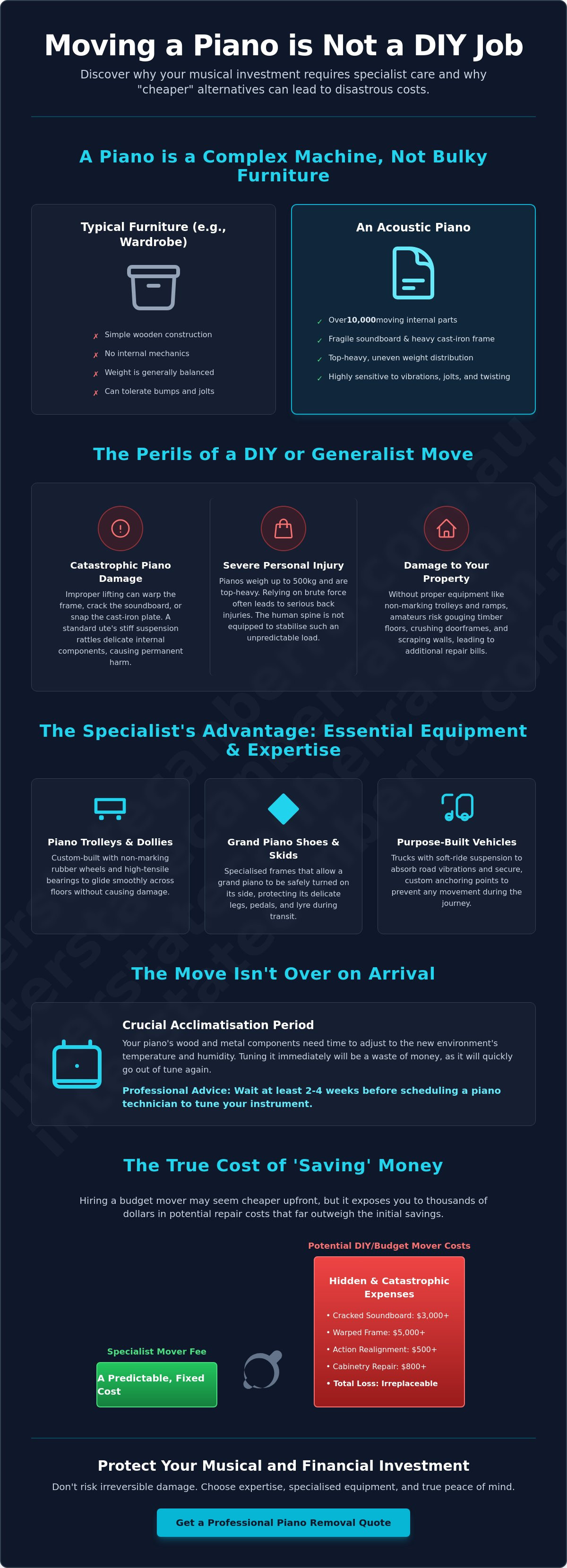
It is easy to look at a piano and see a sturdy, wooden cabinet. You might think it is just a heavier version of a sideboard or a wardrobe. This is a dangerous misconception. A piano is a complex piece of engineering containing over 10,000 moving parts. It holds thousands of kilograms of tension across its strings. While the exterior cabinet acts as armour, it hides a fragile internal soundboard and a heavy cast-iron frame. A piano is a high-precision instrument that reacts to even slight structural shifts. If you don’t use a specialist professional piano moving service, improper lifting can warp the frame. This damage often affects the instrument’s ability to hold a tune permanently.
When you hire a general mover, they often treat the instrument like any other bulky item. They might use standard straps or trolleys that aren’t designed for the specific dimensions of a piano. Choosing a dedicated piano removal company ensures that the internal mechanics are prioritised as much as the external finish. These specialists understand that even a minor jolt can lead to a costly repair bill from a technician later on.
The Anatomy of a Piano Under Stress
Rough handling puts immense pressure on the soundboard. This thin piece of timber is the soul of the instrument. It is highly susceptible to cracking if the piano is twisted or dropped during transit. Vibrations from a bumpy ride can also knock the action, which consists of the hammers and keys, out of alignment. Different piano types present unique challenges. An upright piano has a high centre of gravity, making it prone to tipping. A grand piano requires partial disassembly to protect its legs and internal lyre. A professional piano removal company understands these nuances. They ensure the instrument remains stable throughout the journey.
Why Weight is Only Half the Battle
Pianos are notoriously difficult to move because their weight is unevenly distributed. Most of the mass is concentrated in the cast-iron plate and the soundboard at the back or top. This makes them top-heavy and unpredictable. Relying on brute force from four strong mates is often more dangerous than using two experts with the right gear. Amateurs often struggle with the balance, leading to dropped instruments or severe back injuries. There is also the risk to your home. Without proper equipment like piano trolleys and ramps, you risk gouging timber floorboards or crushing doorframes. Specialist movers use specific techniques to distribute this weight safely, protecting both the piano and your property.
Myth #2: All You Need is a Few Strong Mates and a Ute
It is a common Saturday morning scene in Australian suburbs. A few mates arrive with a ute, ready to tackle a heavy lift for the price of a barbecue. While this works for a fridge or a washing machine, it is a recipe for disaster with a piano. The failure points of a DIY move are numerous and often irreversible. Back injuries are the most frequent outcome. The human spine is not designed to stabilise a shifting 400kg load on uneven ground. If the instrument slips, the result is catastrophic. Unlike a sofa, a dropped piano does not just get a scuff. The internal cast-iron frame can snap under its own weight, rendering the instrument a total loss instantly.
A standard ute or trailer is simply the wrong vehicle for this task. These vehicles have stiff suspension designed for heavy, static loads like timber or tiles. They do not absorb the micro-vibrations of the road that rattle a piano’s delicate action. Standard tie-down points are also poorly positioned for an instrument’s unique centre of gravity. If the piano is not secured at the correct height and tension, it will shift during transit. Hiring a professional piano removal company is the only way to ensure the vehicle has the correct suspension and anchoring systems for a high-value instrument. The “man and a van” approach might save money upfront, but it is only suitable for small digital keyboards, not a real acoustic piano.
Moving through narrow hallways or up stairs requires more than just muscle. It takes specialised training to understand pivot points and leverage. Without these skills, you risk impact damage where the instrument strikes a wall or railing, causing structural harm to both the piano and your home.
The Essential Toolkit of a Professional Piano Removalist
Experts do not rely on brute force. They use a piano trolley equipped with non-marking rubber wheels and high-tensile bearings. These allow for a smooth, silent glide across timber floors without leaving a trace. For grand pianos, we use specialised piano shoes or skids. These allow the instrument to be positioned on its side safely, protecting the delicate lyre and legs from taking any weight. The Piano Technicians Guild notes that internal mechanics are incredibly sensitive to jarring. Using a hydraulic tail-lift instead of a steep ramp prevents the sudden jolts that knock hammers out of alignment.
The Risk to Property and Person
The legal and medical risks of a DIY move are significant. If a friend is injured on your property, you could be liable for their medical costs and lost wages. Professional movers carry specific insurance that covers the instrument, the movers, and the premises. A dropped piano can easily crush a stair tread or punch a hole through a gyprock wall. The team at Interstate Canberra Removalist uses specific surface-protection techniques to ensure your home remains pristine. If you want to avoid a high-stress situation, booking a piano removalist is the smartest way to protect your property.
Myth #3: General Removalists are “Good Enough” for Pianos
Many Australians assume that any strong removalist with a large truck can handle a piano. While general removalists are excellent at “furniture moving,” they often lack the technical training required for “specialised instrument transport.” Moving a sideboard or a dining table involves managing bulk and protecting surfaces. Moving a piano involves protecting a delicate, high-tension machine. A generalist might get your piano from point A to point B without a scratch on the wood, but they may leave the internal mechanics in shambles. This leads to the most common hidden cost of using generalists: a repair bill that can easily exceed A$500 once a tuner discovers the frame has been stressed.
A dedicated piano removal company treats the instrument as a precision tool. They understand that the “insides” are what matter most. The Piano Technicians Guild on safe piano moving emphasizes that even small shocks can cause significant internal damage. If a mover doesn’t understand how to support the weight of the cast-iron plate, the instrument’s ability to hold a tune may be compromised forever. Relying on a specialist ensures that the structural integrity of your investment remains the top priority during every stage of the journey.
The Insurance Gap You Need to Know About
You must look closely at the Product Disclosure Statement (PDS) provided by a general mover. Most standard transit insurance policies cover “total loss” or visible external damage. However, they almost always exclude “mechanical derangement.” This term refers to internal damage that occurs without a clear external impact. If your piano arrives looking perfect but the keys are sticking or the soundboard has warped due to poor weight distribution, a general policy won’t pay out. A professional piano removal company carries item-specific insurance that acknowledges these mechanical risks, giving you genuine peace of mind.
The Difference in Packing Standards
Standard moving blankets provide very little protection for high-polish ebony or mahogany finishes. Professionals use heavy-duty, quilted piano covers designed specifically for the instrument’s unique shape. They also employ a “mummy wrap” technique using high-grade stretch film. This secures the lid, fallboard, and internal components to prevent any movement or vibration during transit. Unlike general movers who might use rough packing tape, specialists use materials that won’t leave a sticky residue or lift the delicate lacquer. This level of care ensures the instrument remains stable and silent throughout the drive, preventing the internal rattling that leads to mechanical failure. For a comprehensive overview of what professional piano transport involves from start to finish, including climate-controlled vehicle requirements and specialist equipment checklists, it is worth reviewing the full technical guidance available to Australian owners.
Myth #4: If It Arrives in One Piece, the Move was Successful
Many owners believe that if the cabinet is free of scratches, the move was a triumph. This is a narrow view of a piano’s health. A truly successful move is measured by the instrument’s ability to hold its pitch and maintain its mechanical response. A professional piano removal company understands that the internal environment is just as important as the external finish. If a mover handles the instrument roughly, the structural tension can shift. This might not be visible to the eye, but it will be obvious to the ear. Signs of a poor move often don’t appear until weeks later. You might notice sticking keys, buzzing strings, or a sudden inability to stay in tune. These issues suggest that the internal frame or soundboard was stressed during transit.
Temperature and humidity are the silent enemies of your instrument. Australian conditions are particularly harsh, with extreme heat that can dry out the glue and felt components. A specialised mover manages these factors by controlling airflow and ensuring stability within the truck. This level of care prevents the “jarring” that leads to long-term mechanical failure.
The Acclimatisation Period
One of the biggest mistakes you can make is booking a tuner for the day after your move. A piano needs at least 2 to 4 weeks to settle into its new environment. During this time, the timber soundboard and the 200+ strings expand or contract based on the new room’s humidity. Tuning too early is a waste of money because the instrument is still physically shifting. To help your piano settle, follow this placement checklist:
- Avoid placing the instrument against an external wall where temperatures fluctuate.
- Keep it away from direct sunlight and draughty windows.
- Ensure it is positioned far from heaters, fireplaces, or air conditioning vents.
- Maintain a consistent room temperature to protect the internal wood.
Climate Control and Long-Distance Logistics
Interstate moves present unique challenges due to the climate shifts between Australian regions. Moving a piano from the humid coast to a dry inland area can cause the wood to shrink rapidly. The team at Interstate Canberra Removalist manages these transitions by ensuring the instrument is properly insulated and secured against rapid temperature changes. They use specific loading patterns to maintain stability and airflow during long-haul trips. This attention to detail protects the delicate felt hammers and prevents the soundboard from cracking. If you are planning a long-distance relocation, you should book a professional piano mover who understands these environmental risks.
Myth #5: Specialist Piano Moving is Always Prohibitively Expensive
Many owners hesitate to hire a piano removal company because they fear the price tag. This is often a false economy. Professional removal is almost always cheaper than a major restoration or a full instrument replacement. If a generalist damages the internal soundboard or the cast-iron plate, repair costs can quickly escalate into thousands of dollars. Specialists typically offer “fixed price” quotes for the instrument. This prevents the “hourly rate” creep that is common in general moves when navigations become complex. You gain financial certainty and avoid the stress of a ticking clock while your instrument is being moved.
If you are already moving interstate, consolidating your piano transport with your full home relocation is highly cost-effective. It ensures a consistent standard of care across all your belongings. You should view your removalist as a protector of your asset’s resale value. A well-maintained piano with a documented history of professional transport retains its worth far better than one with a history of DIY moves and mechanical issues. Before committing to any provider, it pays to understand the cost to move a piano interstate and what separates genuine specialists from generalists who simply claim to handle instruments.
How to Get an Accurate Piano Moving Quote
To receive a precise estimate, you must provide specific details about your instrument. Clearly state whether you have an upright, a baby grand, or a full concert grand. Provide the brand name and the exact number of stairs at both the pickup and delivery locations. The distinction between “digital” and “acoustic” makes a massive difference in logistics and pricing. Acoustic pianos are significantly heavier and require more specialised equipment and manpower. Always check your contract for “heavy item” surcharges before signing to ensure the quote is truly all-inclusive.
The Peace of Mind Factor
There is a significant emotional benefit to knowing your sentimental heirloom is in expert hands. Pianos often carry decades of family history that cannot be replaced by an insurance payout. A specialised team provides a level of efficiency that generalists cannot match. They often complete the move in half the time because they follow a repeatable, proven process for every scenario. You save time and reduce the overall duration of your moving day stress. Protecting your investment starts with choosing a partner who understands the value of your instrument. Before making your final decision, reading a detailed piano transport guide can help you ask the right questions and identify which providers meet the technical standards your instrument demands. Request your professional piano removal quote from Interstate Canberra Removalist today.
Protect Your Musical Investment
Moving a piano is a high-stakes operation that demands more than just muscle. You now understand that your instrument is a complex machine with over 10,000 parts requiring climate-controlled transit and specialised handling. Choosing a professional piano removal company is the only way to safeguard the internal mechanics and ensure the cabinet stays in peak condition. Relying on experts prevents the “mechanical derangement” that general insurance policies often ignore. It’s about protecting the soul of the instrument as much as its exterior.
Our teams use specialised piano trolleys and skids for every move to ensure absolute stability. We provide fully insured interstate transit for high-value instruments, giving you total peace of mind across long distances. Our experts are specifically trained in heavy-item logistics and the navigation of narrow Australian hallways. You don’t have to risk your property or your piano’s health with a DIY attempt or an inexperienced general mover. We handle the heavy lifting so you can focus on settling into your new home. We look forward to making your next move a seamless success.
Get an Instant Quote for Your Piano Move
Frequently Asked Questions
Can I move an upright piano myself with a few friends?
Attempting a DIY move is highly risky and usually leads to injury or instrument damage. An upright piano can weigh up to 400kg, with a high centre of gravity that makes it prone to tipping. Without specialist training and heavy-duty trolleys, you risk permanent damage to your home’s flooring and the piano’s internal cast-iron frame. It’s always safer to hire experts who understand the physics of the lift.
How much does a professional piano removal company cost in Australia?
The cost depends on several factors, including the type of piano, the distance of the relocation, and the complexity of the access. For example, a move involving multiple flights of stairs or tight corners will require more manpower and time. Most specialist providers offer fixed quotes rather than hourly rates. This ensures you won’t be hit with unexpected costs if the navigation takes longer than anticipated.
Do I need to have my piano tuned immediately after it is moved?
You should wait at least two to four weeks before booking a tuner. A piano is made of timber that expands and contracts based on the humidity and temperature of its new environment. If you tune it immediately, the strings will likely slip out of pitch as the wood continues to settle. Giving the instrument time to acclimatise ensures the new tuning lasts much longer.
Will my regular home and contents insurance cover my piano during a move?
Most standard home insurance policies don’t provide cover while items are in transit between properties. Even if your policy includes transit cover, it often excludes “mechanical derangement,” which refers to internal damage without visible external impact. A dedicated piano removal company carries specific insurance that protects the delicate internal components, providing a level of security that general policies simply cannot match.
What is the difference between a piano removalist and a general removalist?
General removalists are experts at moving furniture, but they often lack the technical gear required for high-tension instruments. A piano removalist uses non-marking trolleys, quilted covers, and specialised skids designed for the instrument’s unique weight distribution. They focus on protecting the 10,000 moving parts inside the cabinet, whereas generalists may only focus on avoiding external scratches during the move.
How do you prepare a grand piano for an interstate move?
Preparation for a grand piano involves partial disassembly by removing the legs and the lyre. The main body is then secured to a “piano board” or skid, which allows it to be transported on its side safely. Every component is wrapped in heavy-duty padding and industrial stretch film. This prevents the lid from shifting and protects the high-polish finish from vibrations during long-haul interstate transit.
Can a piano be moved in the rain or extreme Australian heat?
Moving a piano during extreme weather requires specialised protection to prevent structural damage. Rain can warp the timber casing and damage the internal felt hammers, while extreme heat can dry out the soundboard and glue. Professionals use waterproof covers and climate-managed vehicles to shield the instrument. They also work quickly to minimise the time the piano spends exposed to the harsh Australian elements.
What information do I need to provide for a piano moving quote?
You need to provide the piano type, brand, and its approximate dimensions. It’s also essential to detail the access points at both the pickup and delivery locations. This includes the number of stairs, any narrow doorways, or steep driveways the team will need to navigate. Providing clear photos of the path can help the team bring the correct equipment to ensure a seamless move.