
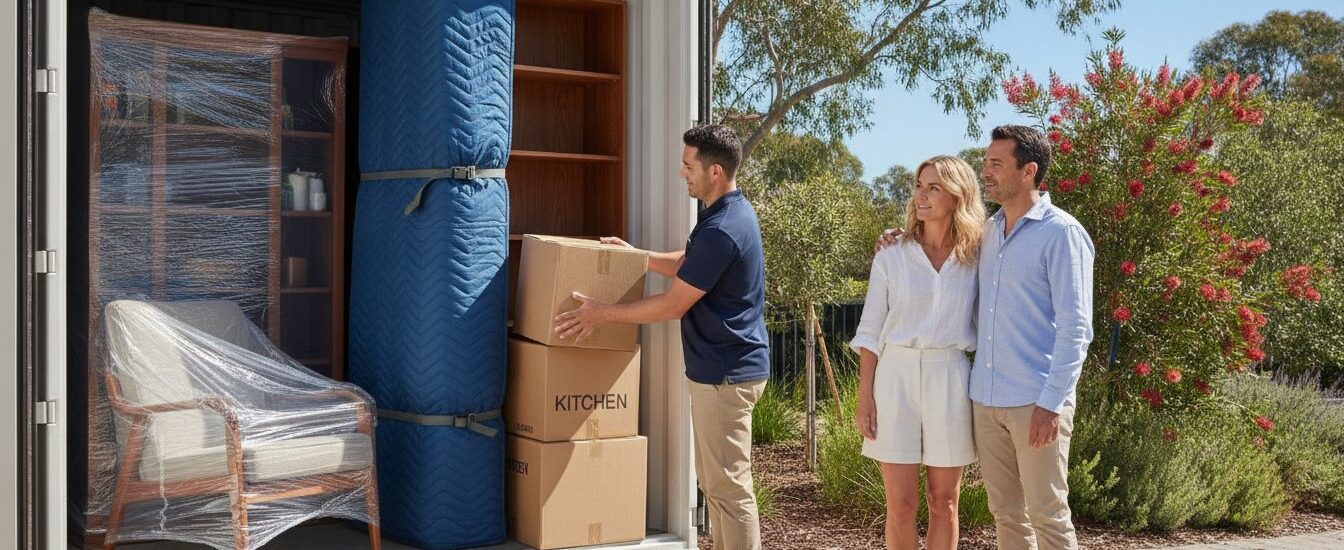
The most expensive part of long term storage isn’t actually the monthly rent; it’s the cost of replacing furniture damaged by moisture, pests, or excessive handling. Most Australians planning a major relocation feel the same weight of worry. You’re likely concerned about whether your lounge will survive six months in a shed or if the costs will spiral while you’re between homes. It’s stressful to think about your valuables sitting in a dusty unit while you’re trying to organise a new life in a different city.
You deserve a storage solution that offers genuine peace of mind and transparent pricing without the hidden risks of double-handling. This guide reveals the most secure and cost-effective ways to protect your household goods for the long haul. We’ll explore containerised options that reduce the chance of breakage, strategies to prevent mould in the Australian climate, and how to avoid the trap of high-cost monthly rentals. By the end, you’ll have a clear plan to keep your belongings safe and your relocation budget intact.
Key Takeaways
- Understand why long term storage is defined as any period over six months and how it supports complex interstate moves.
- Discover why containerised storage often proves more cost-effective than traditional units for stays exceeding one year.
- Learn how to eliminate the risk of double-handling to keep your furniture in pristine condition.
- Access a professional checklist for preparing your valuables to prevent mould and permanent staining.
- Identify the critical credentials and insurance cover you need to ensure your provider is truly secure.
What is Long Term Storage in the Moving Industry?
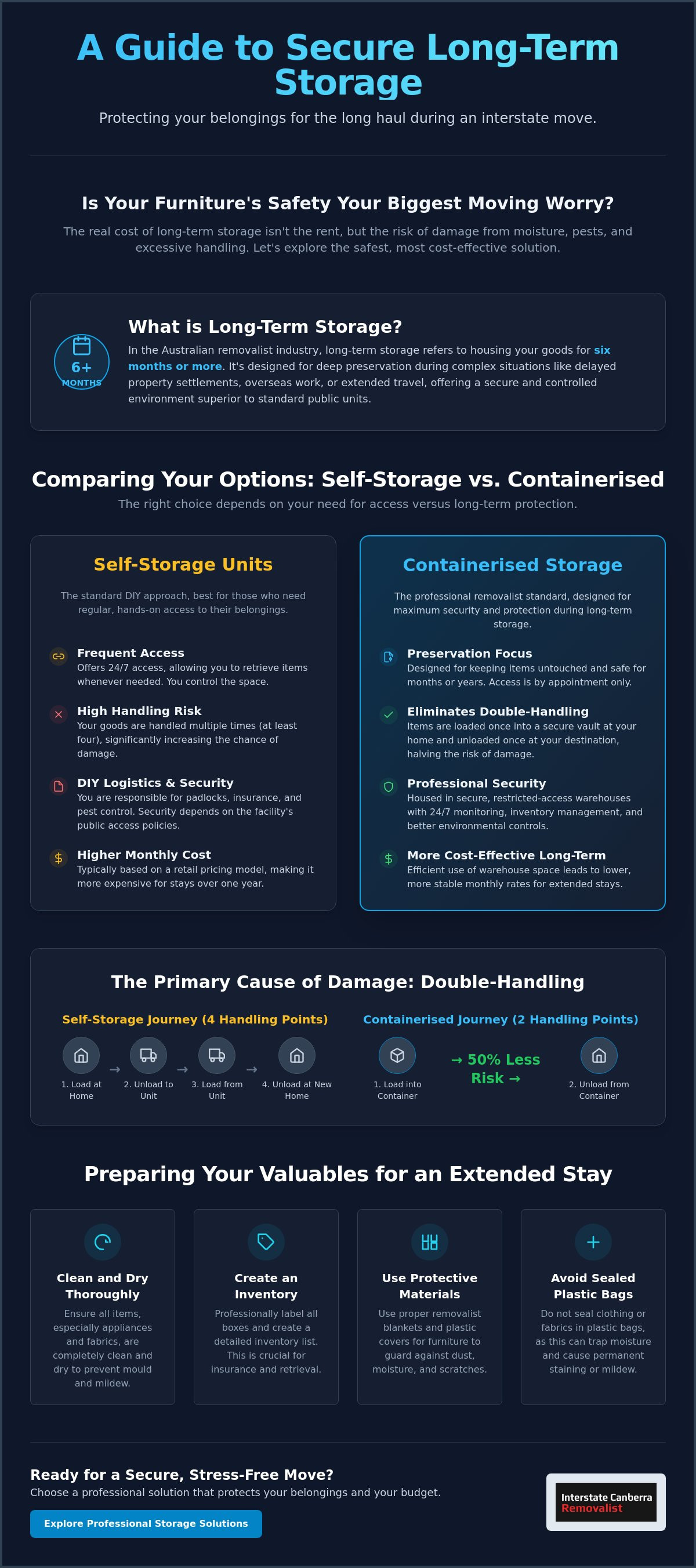
In the Australian removalist industry, long term storage refers to the secure housing of household goods for six months or more. It’s quite different from a quick two-week holding period. When you’re moving across the country, timelines don’t always align perfectly. You might need a reliable place to keep your life’s work safe while you’re in transit. This is where the distinction between active storage and deep preservation becomes vital for protecting your investment.
To understand the broader context of these services, it’s helpful to look at the history of what is self-storage and how it has evolved into the specialised warehousing we see today. For long-term needs, warehouse-based facilities are generally superior to public access units. They offer a controlled, low-traffic environment that keeps your valuables away from the dust and constant movement of a busy self-storage centre.
To better understand this concept, watch this helpful video:
When Should You Consider Long Term Solutions?
National moves are rarely simple. You might find yourself needing an extended storage phase for several reasons. Delayed property settlements are common when relocating interstate. If your new build in Queensland isn’t finished but your Canberra home has sold, you need a steady hand to manage your goods. Other scenarios include temporary overseas work postings or taking a year to travel around Australia. In these cases, long term storage provides a cost-effective alternative to paying rent on an empty property.
The Core Benefits of Professional Warehousing
Professional facilities offer a level of care that casual units can’t match. You’ll benefit from enhanced security protocols, including 24/7 monitoring and restricted access. This ensures your belongings aren’t exposed to the general public. These facilities also provide better protection from environmental factors like dust, humidity, and pests. Because these warehouses are designed for efficiency, you’ll often find significant cost savings when compared to the high monthly rates of casual public rentals.
Comparing Long Term Storage Options: Self-Storage vs. Containerised
Choosing the right model for long term storage depends on how often you need to touch your things. For stays exceeding 12 months, the cost structures of self-storage and containerised models differ significantly. Self-storage usually operates on a retail pricing model with higher overheads. Containerised storage uses warehouse space more efficiently by stacking vaults. This often results in a more stable, lower monthly rate for those who don’t need daily access to their belongings.
The Australian self-storage market is projected to reach $2.5 billion in 2026, reflecting an average growth of 4.4% per year. This demand is particularly high in suburbs of major cities like Melbourne. When evaluating your options, it’s vital to consider your consumer rights. Resources like Consumer Affairs Victoria provide essential guidance on storage contracts and industry standards to help you stay protected.
Self-Storage Units: The DIY Approach
This option is best if you need frequent, 24/7 access to your gear. It’s the standard choice for active storage where you might need to grab a suitcase or a box of files. However, there are trade-offs for long-term stays. Because units are often side-by-side with shared walls, there’s a higher risk of pest ingress from neighbouring units. You’re also responsible for the logistics. You’ll need to provide your own padlocks and arrange your own insurance. It’s a hands-on method that requires constant oversight.
Containerised Storage: The Removalist Standard
Containerised storage is the professional choice for national relocations. Your items are loaded once into a wooden or steel vault at your home. The vault is then sealed and moved to a secure warehouse. This eliminates “double-handling,” which is the primary cause of furniture damage. In a traditional move to self-storage, your furniture is handled four times: into the truck, into the unit, back into a truck months later, and finally into your new home. Containerised storage cuts this in half. Professional inventory management also ensures every item is tracked and accounted for throughout its stay.
If you’re looking for a more streamlined experience, exploring professional storage solutions can save you both money and the stress of managing a unit yourself.
Preparing Your Belongings for an Extended Stay
Preparing for long term storage is a marathon, not a sprint. The condition your items are in when they enter the warehouse determines how they’ll look years later. Physical assets degrade differently than digital files. Dust, skin oils, and microscopic food particles can cause permanent staining if left for months. Clean every surface thoroughly. Use high-quality, double-walled cartons rather than second-hand grocery boxes. Weak boxes eventually collapse under the weight of a long-term load, which risks crushing your valuables.
Professional preparation saves you from the heartbreak of damaged heirlooms. If you’re short on time, you can book our expert packing and unpacking services to ensure every item is prepared to the highest industry standards.
Preserving Furniture and Fabric
Timber furniture needs to breathe to stay in peak condition. Avoid heavy plastic wraps for long-term stays as they trap moisture and cause timber to “sweat” or rot. Use breathable fabric covers instead. Vacuum-seal your clothing and linens to block out moisture and maximise your storage space. Leather furniture requires specific conditioning before it enters long term storage. Because leather is an organic material, it can dry out and crack in a warehouse environment; applying a quality conditioner keeps the fibres supple and resilient.
Preparing Whitegoods and Appliances
Whitegoods require meticulous care to prevent mould and odours. Follow these steps for the best results:
- Defrost fridges and freezers at least 48 hours before your move.
- Ensure all internal surfaces are completely dry to prevent fungal growth.
- Clean interiors with bicarbonate of soda to neutralise any lingering odours.
- Secure all moving parts and internal glass shelving with professional-grade tape.
- Remove batteries from all electronics to prevent leaks and circuit damage.
Electronics should be stored in their original packaging if possible. If not, use anti-static bubble wrap and sturdy boxes. Keep cords organised by taping them to their respective devices. This prevents the frustration of sorting through a “cable nest” when you finally move into your new home.
Selecting a Secure Provider for Your National Move
Selecting a provider for long term storage isn’t just about finding the lowest price. It’s about finding a partner you can trust with your entire life’s contents. In Australia, the removalist industry is governed by the Australian Consumer Law and the Heavy Vehicle National Law. You should look for providers who adhere to the Master Industry Code of Practice released in January 2026. This ensures they meet high safety and operational standards. A detailed inventory list is your best protection. It tracks every carton and piece of furniture from the moment it leaves your home until it arrives at your final destination.
The transition from storage to your new home should be effortless. A professional provider manages the logistics so you don’t have to coordinate between different companies. This continuity of care reduces the risk of items being lost or damaged during the final leg of your journey. Reliable providers offer a structured path forward, ensuring your goods are delivered exactly when you’re ready to move in.
Security and Insurance Essentials
Verify that the facility uses a back-to-base alarm system and modern fire suppression. Security should be a top priority for any long-term stay. Always ask for a clear Product Disclosure Statement (PDS) regarding storage insurance. Don’t assume your standard home and contents insurance covers items once they leave your property. Most policies require a specific storage extension. Ensure your provider offers a written guarantee of professional handling to protect your interests and provide genuine peace of mind.
Why Interstate Canberra Removalist is the Logical Choice
Interstate Canberra Removalist offers a seamless experience for those moving interstate. We integrate transport and long term storage into one managed process. This eliminates the stress of double-handling and ensures your belongings stay in a controlled environment. Our professional packing and unpacking services prepare your goods specifically for the rigours of extended storage.
We believe in transparent billing. You won’t find hidden admin fees or sudden price hikes here. Our goal is to make your relocation as predictable and calm as possible. When you’re ready to settle into your new home, we organise the final delivery with the same meticulous care we used during the initial pack. Organise your long term storage quote today and let our experts handle the heavy lifting for you.
Secure Your Stress-Free Relocation Today
Managing a national move is a significant undertaking, but your storage phase shouldn’t be a source of stress. By choosing containerised options and preparing your items with professional care, you ensure your furniture returns in the same condition it left. Success depends on reducing double-handling and maintaining a clean, stable environment for your valuables. The right long term storage solution prioritises protection and transparency over simple floor space; this gives you the freedom to focus on your new life without worrying about your assets.
We provide the steady hand you need during this logistical transition. Our team utilises AFRA-standard packing techniques to protect high-value items and maintains detailed inventory tracking for every client. Your belongings rest in our secure, monitored warehouse facilities, protected from the elements and unauthorised access. Get an instant quote for your long term storage and interstate move to start your journey with confidence. You’ve done the hard work of planning; now let us handle the heavy lifting and keep your goods safe while you settle in.
Frequently Asked Questions
Is long term storage safe for antique furniture?
Yes, it’s very safe if you use a professional warehouse-based facility. Unlike public units, these centres minimise traffic and dust. Antiques require stable conditions and breathable fabric covers to prevent timber from drying out or sweating. Avoid high-traffic areas where items are frequently moved. Professional packing ensures your heirlooms are protected from physical damage during their extended stay in a controlled environment.
How much does long term storage cost per month in Australia?
Industry rates for long term storage vary based on the unit size and location. According to 2026 market data, small lockers typically range from $69 to $190 per month, while larger units for 4-bedroom homes can exceed $1,000. Containerised options offer a competitive alternative, with 20ft stacked containers starting around $275 per month. You should always request a comprehensive quote to understand the specific costs for your relocation.
Can I access my items while they are in containerised storage?
Access is possible but usually requires advance notice. Containerised storage is designed for deep preservation rather than frequent entry. Facilities often charge a lift fee, such as the industry standard of $99, to move your container to a safe access area. If you need daily access to your gear, a traditional self-storage unit might be a more practical choice for your specific needs.
Do I need special insurance for items stored for over a year?
You definitely need a specific storage insurance policy for long-term stays. Most standard home and contents policies stop providing cover once items leave your primary residence for an extended period. Always review the Product Disclosure Statement (PDS) provided by your storage company. It’s vital to ensure your valuables are protected against fire, theft, and environmental damage for the entire duration of their stay.
What happens if I need my goods delivered to a different state later?
Relocating your goods to a different state is a straightforward process with a national provider. Since your items are already packed for long term storage, the facility simply loads your container onto an interstate truck. This eliminates the need for double-handling and reduces the risk of transit damage. It’s a seamless way to finish your move once your new property is ready for delivery.
Should I wrap my furniture in plastic for long term storage?
You should never wrap timber or leather furniture in heavy plastic for long periods. Plastic traps moisture and causes sweating, which leads to mould growth and wood rot. Use breathable fabric covers or professional moving blankets instead. These materials allow air to circulate while still protecting your surfaces from dust. Only use plastic for non-porous items or as a very temporary measure during the initial move.