

The success of your 2026 relocation isn’t decided on moving day; it’s won weeks earlier through a rigorous administrative audit. We understand that staring at a house full of boxes while worrying about nbn connection lead times or interstate logistics is enough to keep anyone awake at night. You’re likely feeling the pressure of balancing a busy life with the fear of forgetting a critical utility transfer or safety precaution. It’s a common anxiety, but it doesn’t have to be your reality. By following a structured moving checklist, you can transform a chaotic transition into a series of manageable, organised tasks.
This guide provides a comprehensive, week-by-week roadmap designed specifically for Australian households and those tackling complex interstate moves. You’ll learn how to navigate the latest 2026 utility regulations, manage Australia Post mail redirection fees, and ensure your most precious items arrive without a scratch. We’ll walk you through the essential steps to secure your peace of mind and achieve a damage-free move. From the first box packed to the final meter reading, here’s everything you need to master your relocation with confidence.
Key Takeaways
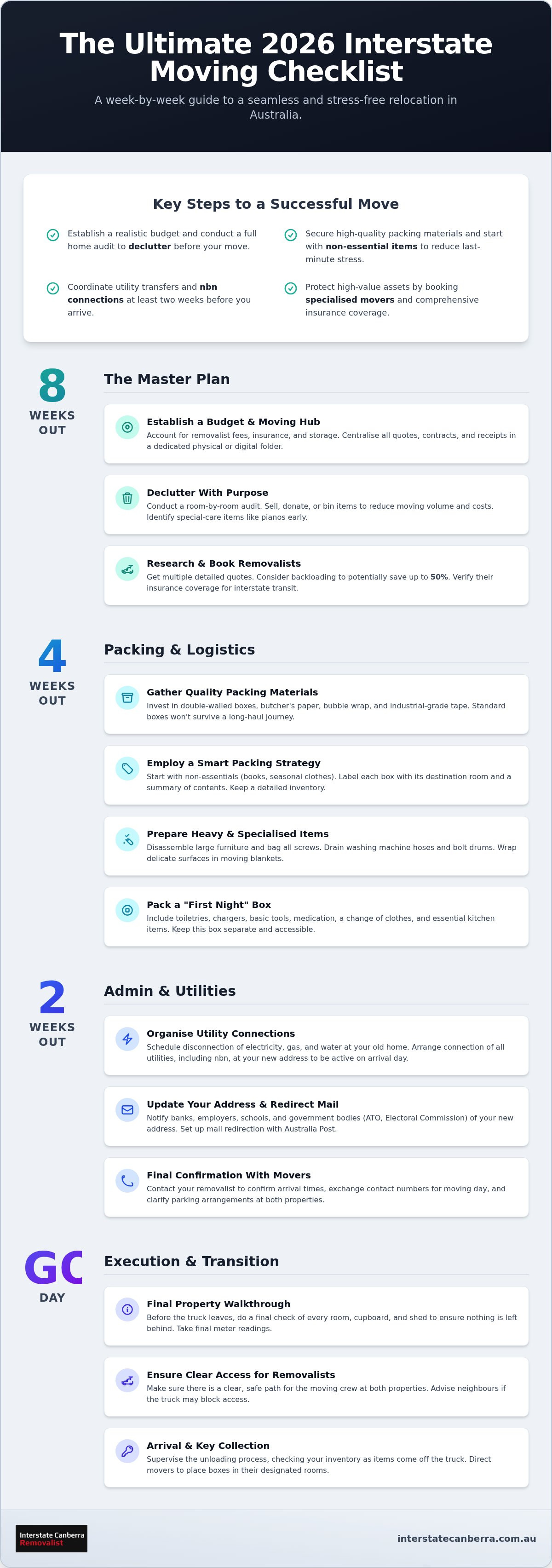
- Establish a realistic budget early and conduct a full home audit to declutter before your interstate move.
- Secure high-quality packing materials and begin with non-essential items to reduce last-minute stress.
- Use a structured moving checklist to coordinate utility transfers and nbn connections at least two weeks before you arrive.
- Protect high-value assets by booking specialised services like piano movers and comprehensive insurance coverage.
- Ensure a smooth transition on moving day with a final property walkthrough and clear access for the removalist truck.
8 Weeks Out: The Master Plan for Your Australian Move
Eight weeks is the critical window. It’s the time to transition from thinking about your move to actively managing it. A successful interstate relocation depends on early decisions that protect your budget and your sanity. Start by establishing a realistic moving budget. This should account for removalist fees, transit insurance, and potential storage costs. Secure your peace of mind by creating a Moving Hub. Whether it’s a physical folder or a digital drive, use this space to centralise every quote, contract, and receipt. This ensures you aren’t hunting for paperwork when you’re in the middle of a transition. This phase is the foundation of your moving checklist, and getting it right now prevents expensive surprises later.
Decluttering with a Purpose
Moving less is the most effective way to lower your relocation costs. Every item you sell, donate, or bin reduces the volume of the truck and the time required for loading. Conduct a room-by-room audit to identify what truly earns a place in your new home. Pay special attention to heavy or awkward items. If you own a high-value instrument, you must identify piano movers who possess the specialised equipment for safe transport. Categorise your remaining belongings by room. This simple step makes the future packing process significantly more efficient and helps removalists place boxes correctly upon arrival.
The Removalist Shortlist
Research is your best defence against a stressful move. Look for a trusted removalist with a proven track record in long-distance hauls. Request detailed, on-site or virtual quotes rather than accepting vague estimates over the phone. Compare your options carefully. Backloading is an excellent cost-saving measure, potentially saving you up to 50% by using space on a truck already returning from a one-way trip. However, if you require a specific delivery date, dedicated truck space might be the better choice. Always confirm the details of their insurance coverage. Knowing your goods are protected during the long haul across state lines is essential for a stress-free experience.
4 Weeks Out: Packing Strategies and Specialised Logistics
Four weeks before your move, the physical work begins. You’ve already decluttered; now you must protect what remains. High-quality materials are non-negotiable for an interstate journey. Standard grocery store boxes won’t survive the vibrations of a long-haul truck. Invest in double-walled boxes, plenty of butcher paper, and industrial-grade tape. Start with non-essential items like seasonal clothing, books, and formal dinnerware. As you work, update your moving checklist to include a detailed inventory of every box packed.
Labeling is your future self’s best friend. Mark each box with its destination room and a brief summary of its contents. If you find the volume of work overwhelming, consider booking professional packing and unpacking services to reclaim your time and ensure maximum protection. This is particularly valuable for large family homes where the packing process can take weeks of personal time.
Packing for Long-Distance Transit
Transit across state lines subjects your belongings to significant movement. Wrap fragile items individually and fill any gaps in boxes with crumpled paper to prevent shifting. A numbered box system is essential for interstate moves. It allows you to verify every item during unloading. Don’t forget to pack a “First Night” box. Include toiletries, chargers, basic tools, and a change of clothes so you aren’t digging through fifty boxes at midnight in your new home.
Handling Heavy and Specialised Items
Large furniture requires careful preparation. Disassemble bed frames and tables where possible, keeping all screws in labeled bags. Wrap surfaces in moving blankets to prevent scratches. For delicate, high-value assets, generic removalists aren’t enough. A dedicated piano removalist uses specialised skids and straps to protect the instrument’s internal mechanics. Finally, prepare your whitegoods. Drain washing machine hoses and bolt the drums of front-loaders to prevent internal damage during transit.
If the logistics of a large home feel daunting, our interstate moving team can manage the heavy lifting for you.
2 Weeks to Moving Day: Admin, Utilities, and the Essentials
With only fourteen days remaining, your focus must shift from cardboard boxes to administrative coordination. This is the stage where many feel the most pressure. A clear moving checklist keeps the process orderly and ensures no critical connections are missed. Start by contacting your utility providers. You should notify electricity, gas, and water companies at least two weeks before your move to ensure services are live when you arrive. Don’t forget to schedule your nbn transfer. Connection lead times can vary, so booking now prevents a week without internet in your new home.
Admin tasks require immediate attention. Notify your bank, employer, and insurance providers of your relocation. If you are moving out of a rental property, book a professional end-of-lease clean now. This is the most reliable way to secure your bond refund. If you’re overwhelmed by the logistics, our professional removalist team can handle the heavy lifting while you manage these essential updates.
The Australian Change of Address Checklist
Updating your details with government agencies is a non-negotiable step. You must contact the Australian Electoral Commission (AEC), Medicare, and your state’s transport authority for driver licensing and vehicle registration. Set up mail redirection through Australia Post to catch any stray correspondence. For a personal national redirection, fees in 2026 are $34.00 for one month, $68.00 for three months, or $170.00 for a full year. Finally, inform your healthcare providers and schools to ensure records are transferred before you depart.
Final Maintenance and Preparation
Confirm the arrival window with your removalist team to avoid moving day confusion. Start clearing out your pantry and plan to defrost your fridge and freezer 24 to 48 hours before the truck arrives. This prevents leaks and odours during transit. Gather your valuables, including jewellery and passports, and set them aside. You should carry these items personally rather than packing them in the moving truck for maximum security.
Moving Day and Beyond: Navigating the Transition
Moving day represents the final hurdle in your relocation journey. While the physical labour is handled by professionals, your role as the coordinator remains vital. Conduct a final walkthrough of your old home once the truck is loaded. Check every cupboard, the pantry, and the garden shed to ensure nothing is left behind. Providing clear access for the removalist truck at both addresses is essential for a smooth transition. Clear any parked cars or obstructions from the driveway or kerbside before the team arrives. This is the final active step on your moving checklist, and it sets the tone for the hours ahead.
Once you arrive at the new property, supervise the unloading process closely. Keep your inventory list handy and verify the condition of your items as they enter the house. Prioritise setting up the beds and the kitchen first. Having a functional place to sleep and the ability to prepare a basic meal will significantly reduce the fatigue of the first 24 hours. Don’t feel pressured to unpack everything at once. Focus on the essentials that allow your household to function normally through the first night.
Working with Your Removalist Team
Establish a single point of contact for the removalist lead. This person should be available to answer questions about furniture placement or fragile items throughout the day. A clear line of communication facilitates an efficient load-in, especially for complex interstate trucks that may be managing multiple consignments. Before the team departs, review the inventory one last time. Review and finalise all paperwork and relocation service fees to ensure the process is officially concluded.
Settling Into Your New Community
Take a moment to locate your local essentials. Identify the nearest supermarket, pharmacy, and emergency services immediately. When you begin the unpacking process, follow the “one room at a time” rule to prevent burnout. Focus on high-traffic areas before moving to secondary spaces like the study or guest room. This methodical approach keeps your home liveable during the transition. Finally, dispose of your moving boxes and packing materials responsibly. Many local councils offer specific recycling collections for cardboard, or you can offer them to others through community groups to keep your moving checklist sustainable and clutter-free.
Secure Your Move with Confidence
Successful relocations are built on early action and methodical organisation. By starting your preparations eight weeks out and managing your administrative updates with precision, you eliminate the common pitfalls of long-distance transitions. Whether you are decluttering your home or coordinating utility transfers, staying ahead of the timeline ensures you remain in control of the process from start to finish.
A well-executed moving checklist provides the structure needed to navigate the logistical hurdles of 2026. If the prospect of packing a large household or transporting high-value items feels daunting, professional support is available to bridge the gap. We provide specialised piano and heavy item handling alongside full packing and unpacking services to simplify your journey. Our seamless national relocation expertise ensures your belongings are protected across every state line.
Get an instant quote for your interstate move today and take the first step toward a stress-free transition. You’ve done the hard work of planning; now let us manage the heavy lifting. Your new home is waiting, and we’re here to help you get there safely.
Frequently Asked Questions
How soon should I start organising my moving checklist?
You should start organising your moving checklist at least eight weeks before your relocation date. This timeframe allows you to conduct a full home audit, establish a realistic budget, and secure a reputable removalist during peak periods. Starting early prevents the stress of last-minute administrative tasks and ensures you have enough time to declutter effectively before packing begins.
What is the most important thing to do when moving house interstate?
The most important task is coordinating your administrative updates and securing transit insurance for the long haul. Moving across state lines involves higher risks and more complex logistics than a local move. You must prioritise updating your details with government agencies like the AEC and Medicare while ensuring your removalist has a clear inventory list to manage the transition safely.
Do I need to hire professional removalists for an interstate move?
Hiring professional removalists is highly recommended for interstate moves to ensure the safety of your belongings over long distances. Professionals provide specialised equipment, heavy-lifting expertise, and transit insurance that DIY moves often lack. For larger households, the efficiency of a professional team reduces the risk of damage and significantly lowers the physical and mental toll on your family.
How do I transfer my nbn connection to a new address?
Contact your internet service provider at least two to three weeks before your moving date to schedule the nbn transfer. You will need to provide your new address and confirm the type of nbn technology available at the property. Booking early ensures your connection is active on day one, avoiding potential delays caused by technician availability or hardware installation requirements.
What should I not pack when moving interstate in Australia?
Do not pack hazardous materials such as gas bottles, aerosol cans, or flammable liquids like petrol and paint thinner. You should also avoid packing perishable food and live plants, as these are often subject to strict interstate quarantine regulations in states like Western Australia. Always keep your essential documents, passports, and high-value jewellery with you rather than in the moving truck.
How much does it cost to move a piano interstate?
The cost of moving a piano interstate varies based on the size of the instrument and the distance between your old and new homes. Grand pianos require more specialised equipment and labour than upright models, which influences the final service fee. You should request a detailed quote that accounts for specific access challenges, such as stairs or narrow entry points, to get an accurate estimate for your relocation.