

What if the lowest quote you receive for your move is actually the most expensive mistake you’ll make this year? It’s a common trap in the relocation industry. Many Australians find themselves facing unexpected surcharges or dealing with damaged furniture because they prioritised a cheap headline figure over a transparent service.
We understand that moving your life across state lines is a massive logistical hurdle. It’s natural to feel frustrated by opaque pricing and the fear of hidden costs appearing at the end of your journey. This guide helps you master your relocation budget by providing a comprehensive breakdown of interstate moving costs Australia. You’ll learn exactly how to spot “too good to be true” offers before you sign anything.
We’ve built a framework to help you compare quotes with confidence and understand the nuances of cubic metre pricing. You’ll also find actionable tips to reduce your final bill while ensuring your belongings stay protected during long-distance transit. Let’s get your move organised with total financial clarity and a steady hand guiding the process.
Key Takeaways
- Understand why volume is the critical factor in your quote and how the cubic metre standard dictates your total spend.
- Identify the “Hidden Three” variables, including access issues, specialist items, and seasonal peak times, that often cause price spikes.
- Compare the realistic costs of DIY truck rentals against professional removals to find the safest and most efficient path for your move.
- Discover how to use backloading and decluttering strategies to slash your interstate moving costs Australia by up to 50 per cent.
- Master a clear framework for comparing removalist quotes to spot hidden fees and secure a reliable, all-inclusive price.
Understanding How Interstate Moving Costs are Calculated
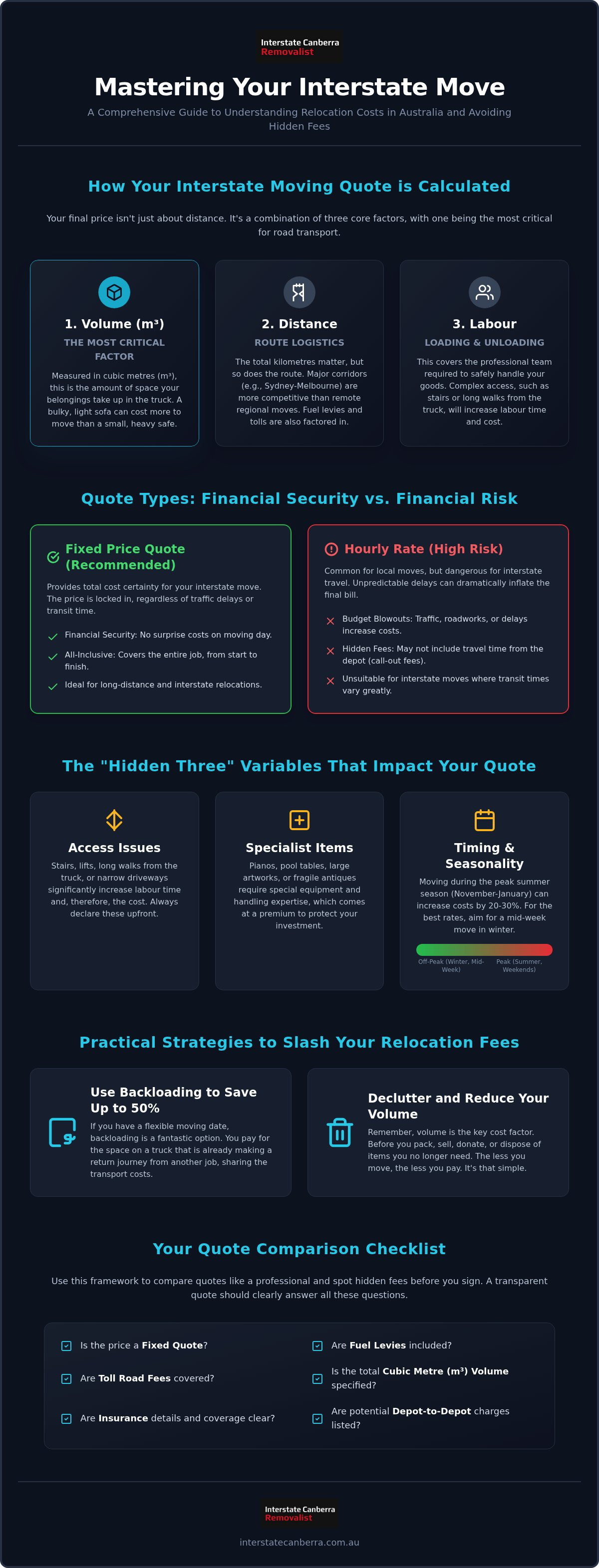
Calculating interstate moving costs Australia isn’t just about the distance between two points. It involves a combination of three core factors: the total volume of your goods, the travel distance, and the labour required for loading and unloading. While weight matters for air freight, road transport relies on the cubic metre (m3) standard. This measurement represents the space your belongings occupy in the truck. Space is the most valuable commodity on a long-haul vehicle. A bulky but light sofa often costs more to move than a heavy, compact chest of drawers.
Professional removalists use this volume-based approach to ensure efficiency and safety. Managing the process of moving requires a precise inventory to avoid mid-move price hikes. If your actual load exceeds the initial estimate, the company may need to source a larger vehicle or a second crew at the last minute. This is why providing an accurate list of every item, from a grand piano to the smallest boxes, is essential for a reliable quote.
To better understand this concept, watch this helpful video:
Fixed Quote vs. Hourly Rates
Local moves often use hourly rates, but this model is risky for interstate travel. Traffic delays on the M1 or roadworks in regional areas can quickly blow out an hourly budget. A fixed-price quote provides financial security. It covers the entire job regardless of transit time. Always check if your quote includes call-out fees or depot-to-depot charges. These represent the cost of the truck travelling from the company’s base to your home and back again. A transparent quote should leave no room for guesswork.
The Impact of Distance and Route Logistics
Distance is a baseline, but the specific route dictates the final price. Major corridors like Sydney to Melbourne are highly competitive and frequently travelled. This often results in lower rates due to high demand and backloading opportunities. Moving to regional areas involves higher fuel consumption and less frequent return loads. Professional quotes also account for fluctuating fuel levies, which align with national petrol prices. Ensure your quote explicitly includes toll road fees to avoid small charges appearing on your final invoice.
Variables That Can Increase or Decrease Your Moving Quote
Your initial estimate is a baseline. Several variables shift the final figure. The “Hidden Three” often catch residents off guard: access issues, specialist items, and timing. If your new home has three flights of stairs or a narrow driveway, the labour time increases significantly. These logistical hurdles directly impact interstate moving costs Australia.
Seasonality plays a massive role in availability. Moving during the peak summer window from November to January can increase costs by 20-30 per cent. Aim for a mid-week move in winter to secure the best rates. For smaller relocations like studio apartments or small office shifts, a man and a van service provides a nimble, cost-effective alternative to a full-sized truck. However, expect a premium for weekend slots or urgent same day removalist requests.
Specialist Item Handling and Pianos
Heavy or delicate items require unique logistics. Professional piano movers use tail-lifts, custom trolleys, and ramps to ensure your instrument arrives in tune. This isn’t just about muscle; it’s about specialised engineering. Paying for this expertise protects your investment and ensures your Australian Consumer Law guarantees remain valid. Risk mitigation saves you from the extreme expense of repairing high-value furniture damaged in transit.
Packing Services and Material Costs
Professional packing services offer two main tiers: “Fragiles Only” or a “Full Pack”. While DIY packing seems cheaper, supermarket boxes often fail under the pressure of a long-distance haul. Professional-grade boxes are designed to stack safely without collapsing. High-quality packing by a trained team often results in lower insurance premiums because the risk of breakage is significantly reduced. If you want to see how these factors apply to your specific inventory, you can get an instant online quote to start your planning today.
Professional Removalists vs. DIY: The Real Cost Comparison
The “Mate’s Ute” fallacy is a common trap when calculating interstate moving costs Australia. While a trailer and a few favours might cover a local shift, a 1,000-kilometre journey requires a different level of logistical planning. Many people assume DIY is the budget-friendly choice, but the math often tells a different story. When you manage the move yourself, you aren’t just paying for a truck; you’re paying a “stress tax” that includes physical exhaustion and the mental load of navigating a heavy vehicle through unfamiliar cities.
Professional removalists provide an all-inclusive service that bundles labour, equipment, and transit into a single figure. This removes the volatility of a DIY budget. Driving a large rental truck is a specialised skill, and the risk of physical injury or property damage is significantly higher for an untrained person. Engaging a professional team means you’re hiring a steady hand to manage the complex logistics while you focus on settling into your new state.
The Hidden Costs of DIY Moving
The price on the rental website is rarely the final cost. Large rental trucks typically consume between 18 and 25 litres of diesel per 100km when fully loaded. On a Sydney to Brisbane run, fuel alone can cost hundreds of dollars. One-way “drop-off” fees are another common sting; rental companies often charge a premium to recover vehicles left in different states. You must also budget for multi-day transit costs, including hotels, road tolls, and meals for your helpers. These small expenses quickly erode the perceived savings of a DIY approach.
Insurance: Protecting Your Assets
There’s a critical difference between “Public Liability” and “Transit Insurance”. Most rental truck policies only cover damage to the vehicle or third-party property, often with an excess reaching $5,000 or more for overhead damage. Your home contents policy likely won’t cover your items once they leave the house. The Australian Furniture Removers Association highlights that professional accreditation ensures your mover understands the specific risks of long-distance transit. Professional contracts allow you to evaluate “Value per Box” coverage, giving you peace of mind that your assets are protected.
Avoid the hidden fees and physical strain of a DIY move. You can book a professional interstate move today and let our team manage the logistics for you.
Practical Strategies to Minimise Your Relocation Fees
Reducing your total volume is the most effective way to lower your quote. Since we’ve established that space is the primary driver of interstate moving costs Australia, the “Declutter First” rule is your best financial tool. Every item you sell, donate, or discard directly reduces the cubic metre count on your inventory. This simple step can save you hundreds of dollars before the truck even arrives. Using accurate moving checklists ensures you don’t forget small items that add up to large volumes at the last minute.
Flexibility is your next greatest asset. If you can move mid-week or during off-peak months like May or June, you’ll avoid the high-demand surcharges common in the summer. According to industry data, moving during the off-peak season can result in savings of 20 to 30 per cent. Avoid school holidays and the end-of-month rush when removalists are most heavily booked. A steady, planned approach always yields better rates than a frantic, last-minute booking.
The Art of Backloading
Backloading is a highly efficient model where you utilise the spare capacity of a truck already on a specific route. You might share the trailer with another household or take up the space on a vehicle’s return journey. This strategy can lead to savings of up to 50 per cent compared to a dedicated service. While you may have slightly less flexibility with exact delivery windows, it’s the most eco-friendly way to move. It ensures trucks aren’t travelling half-empty across the Hay Plain or up the Pacific Highway.
Securing an Accurate Quote
A “No Surprises” move starts with a meticulous home survey. Whether it’s a virtual walkthrough or an in-person visit, show the removalist everything. Be upfront about “difficult access” points like narrow driveways, high-rise lifts, or steep stairs. Listing these factors early prevents the crew from applying “difficult carry” surcharges on the day. Before you sign, ensure your quote is all-inclusive. It should clearly state the cubic metre allowance, fuel levies, and any specialist handling fees to keep your budget firmly under control.
Secure Your Moving Budget Today
Mastering your relocation budget is about more than just finding a low number. It requires understanding the cubic metre standard and identifying the variables that drive interstate moving costs Australia. By decluttering your home and considering backloading options, you can significantly reduce your final bill while maintaining a high standard of care. Choosing a professional team over a risky DIY approach ensures your belongings are protected by expert logistics and comprehensive transit insurance. This proactive approach eliminates the stress of hidden fees and unexpected delays.
Whether you’re planning a residential move or a complex office relocation, our team provides the steady hand you need. We offer specialist expertise for piano and heavy item moves, along with secure storage solutions for delayed settlements. Take the guesswork out of your planning and get an instant interstate moving quote today. We are ready to manage the logistics so you can focus on your new beginning with total peace of mind. Your seamless transition to a new state starts with clear, professional advice.
Frequently Asked Questions
How much does it cost to move a 3-bedroom house interstate in Australia?
The cost generally ranges between $2,000 and $6,000 for a standard load, though long-distance routes can exceed $10,000. These figures depend on the total volume in cubic metres and the distance between your current and new home. A 3-bedroom house typically requires a large truck and a full day of loading labour. To get a precise figure for your specific inventory, it’s best to request a fixed-price quote that accounts for your unique requirements.
Is it cheaper to sell my furniture and buy new or move it interstate?
Replacing furniture is often more expensive once you account for the retail price of new items and delivery fees. High-quality or sentimental pieces are almost always worth the investment of professional transport. However, if you own bulky, low-value flat-pack furniture, the cost of space in the truck might outweigh the item’s replacement value. Evaluate your inventory based on the cost per cubic metre to decide which items truly justify their spot in the load.
What is backloading and is it safe for my belongings?
Backloading is a secure method of transport where your goods occupy the spare capacity of a truck already travelling your route. It’s a highly safe option when managed by professional removalists who use inventory tracking and internal dividers to keep loads separate. While it offers significant savings on interstate moving costs Australia, you may have less flexibility with exact delivery times. It’s an excellent choice for those with flexible schedules looking for a cost-effective solution.
Do interstate moving quotes include packing materials and boxes?
Standard quotes usually cover the labour and transport, while packing materials are typically an additional cost. Professional-grade boxes, tape, and bubble wrap are essential for protecting your belongings during long-distance transit. If you opt for a full packing and unpacking service, these materials are often bundled into the service fee. Always confirm with your removalist whether they provide a starter pack of boxes or if you need to purchase them separately before the move begins.
How much notice do I need to give for an interstate move?
Providing four to six weeks of notice is ideal to secure your preferred moving date and the best possible rates. During the peak summer season from November to January, trucks often book out months in advance. If you have a short-notice requirement, ask about same day removalist availability or man and a van options for smaller loads. Early booking allows the steady hand of a professional team to organise the complex logistics without unnecessary stress.
Are there extra fees for moving heavy items like a piano or pool table?
Yes, specialist items like pianos or pool tables incur additional fees due to the unique equipment and extra labour required. These items need custom trolleys, ramps, and often a tail-lift truck to ensure they aren’t damaged during the transition. Professional piano movers prioritise the safety of the instrument’s internal mechanisms and your home’s flooring. Listing these heavy items upfront ensures your quote is accurate and that the crew arrives with the correct specialised gear for the job.