Can you really trust your life’s belongings to a truck that’s already half-full of someone else’s gear? Many Australians worry that choosing a budget-friendly option means risking their valuables. You might be asking yourself, is backloading safe for furniture when it’s being shared with another person’s inventory? It’s a valid concern. With over 400,000 people moving interstate every year, the pressure to find a balance between cost and security is higher than ever. You want the savings, but you don’t want the heartbreak of a broken heirloom or a missing couch.
Professional standards in 2026 have made backloading a reliable and smart choice for savvy movers. This guide reveals how professional removalists protect your goods and why this method is often just as secure as a dedicated truck. Learn how to navigate inventory tracking, understand transit insurance, and prepare your items for a seamless journey across state lines. By the end of this article, you’ll know exactly how to organise a damage-free move that keeps your budget intact. You can enjoy significant savings without sacrificing the safety of your home’s contents.
Key Takeaways
- Learn how backloading utilises empty space on existing routes to provide a cost-effective interstate move without sacrificing professional care.
- Understand the digital inventory management systems that professional removalists use to answer the common concern: is backloading safe for furniture?
- Discover the specialised packing techniques and heavy-duty protective gear used to secure your valuables during shared transit.
- Identify the key differences between backloading and dedicated truck services to make an informed choice for your specific relocation needs.
- Follow our step-by-step security checklist to verify removalist standards and ensure total peace of mind for your journey.
Understanding Backloading: Is It Really a Risky Way to Move?
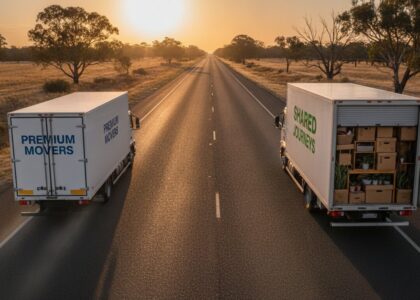
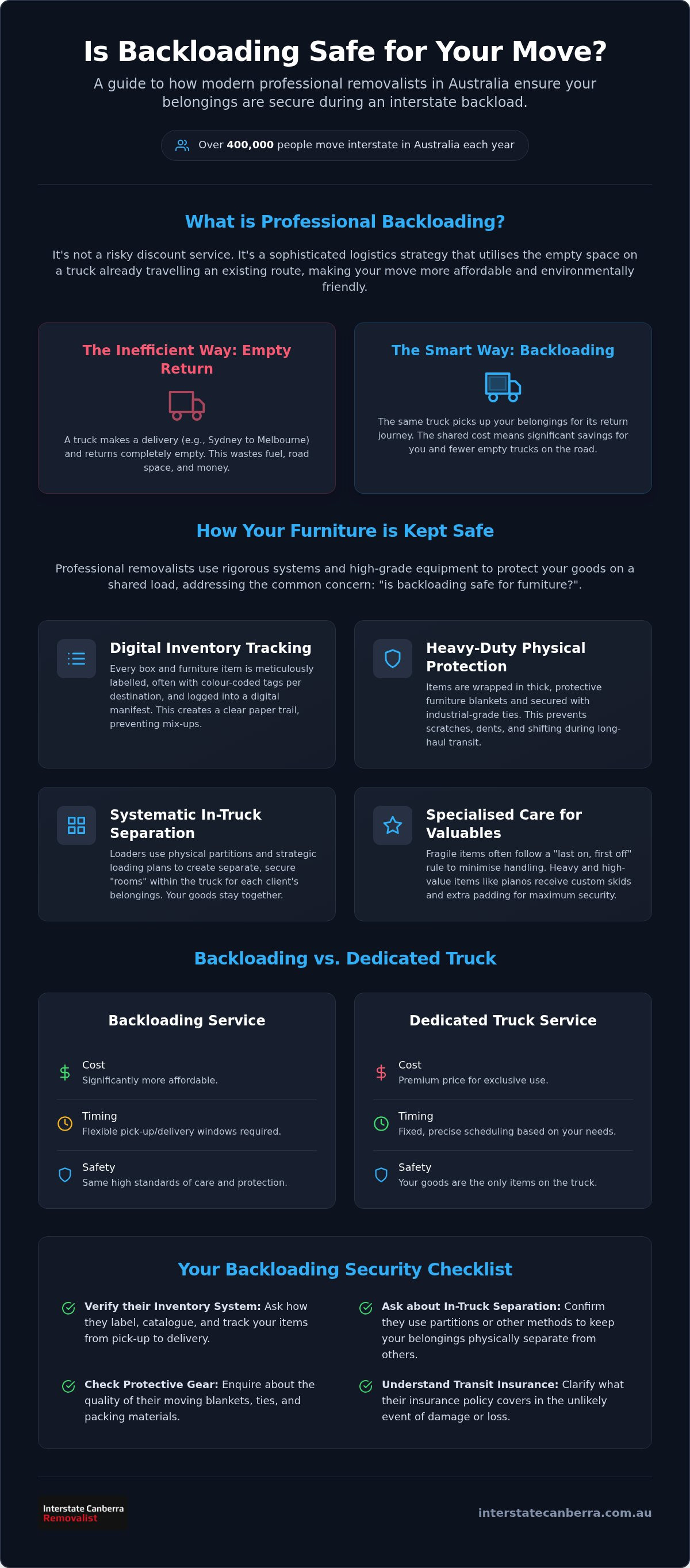
Backloading is often misunderstood as a “discount” service where safety takes a backseat. In reality, it is a sophisticated logistics strategy. It involves utilising the available space on a truck that is either returning from a delivery or already travelling along a specific interstate route. Instead of a truck returning empty from Sydney to Melbourne, it carries your goods, making the journey efficient and cost-effective. Professional removalists view this as a standard procedure to ensure trucks aren’t running half-empty across the Nullarbor or up the East Coast.
How Backloading Works in 2026
Modern interstate removals rely on consolidated loads. This follows the same principles as less-than-truckload shipping used by major global freight companies. Professional removalists use this method to maximise truck capacity, which directly lowers the price for the consumer. While “budget” operators might simply stack items without a plan, professional backloading ensures your furniture is secured with the same high-grade equipment used in dedicated moves. It is a smart way to move that reduces the number of empty trucks on Australian highways, making it a significantly greener way to relocate across Australia.
Common Safety Concerns Addressed
The biggest fear for most families is the “mix-up.” You don’t want your dining table ending up in a stranger’s house in Brisbane while you’re waiting in Adelaide. Professional removalists prevent this through rigorous inventory systems. Every box and piece of furniture is labelled and logged before it even touches the truck ramp. So, is backloading safe for furniture? Yes, provided you choose an expert team that treats a shared load with the same meticulous care as a private one.
The trade-off for these savings isn’t safety; it’s timing. Because the truck is on a set route with multiple stops, you may need to be flexible with your pick-up and delivery windows. This flexibility is the key to unlocking lower costs. Every item receives the same professional-grade padding and strapping. Your belongings are protected by seasoned experts who understand the complexities of long-haul travel. When handled correctly, is backloading safe for furniture? Absolutely. You get the benefit of a professional service at a fraction of the usual price.
How Professional Removalists Secure Your Furniture During a Backload
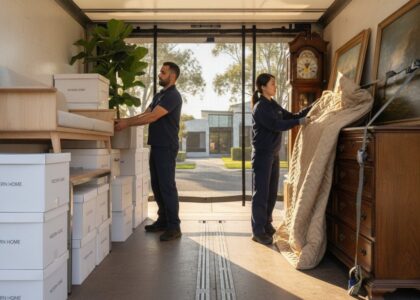
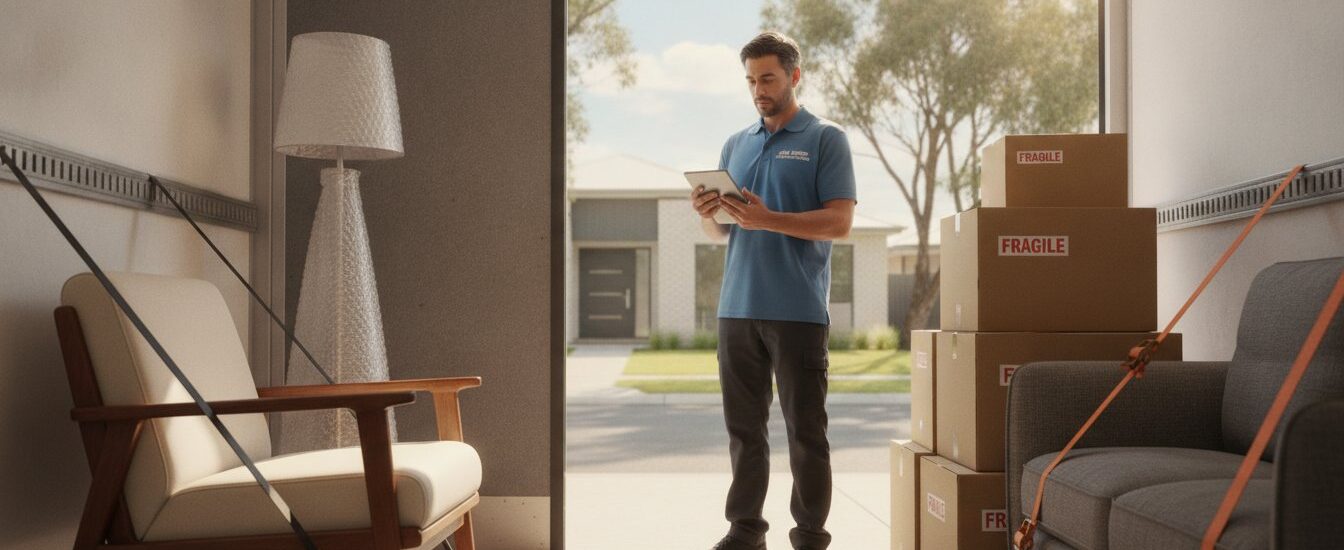
Professional security starts with physical protection. Many people ask, is backloading safe for furniture when multiple loads are on the same truck? The answer lies in the equipment and systems used. Every item is wrapped in heavy-duty furniture blankets and secured with industrial-grade ties. This prevents movement during long-haul transit across state borders. For maximum security, many clients choose professional packing and unpacking services to ensure items are boxed to industry standards before they ever touch the truck ramp.
Inventory Tracking and Separation
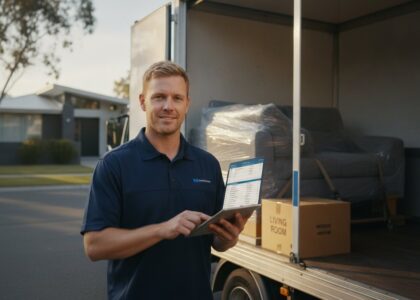
Modern removalists use digital manifest systems to track every single item. Each box receives a unique label, often colour-coded by destination or household. This creates a digital paper trail from the moment your goods leave your home until they arrive. It follows the high standards of transparency found in consumer resources like FMCSA’s Protect Your Move program, ensuring accountability at every step. Loaders also use internal truck partitions to physically separate different clients’ belongings, effectively creating “rooms” within the truck. This methodical approach ensures your goods stay together and never get mixed with another person’s inventory.
Specialised Care for Fragile and Heavy Items
Heavy or high-value items require extra attention, even in a shared load. Specialist piano movers apply specific techniques in a backloading environment, using custom skids and specialised padding to protect delicate internal components. Fragile items often follow a “last on, first off” logic. This reduces handling and ensures they aren’t placed under heavier crates. With 85.3% of Australians finding moving to be a stressful experience, these protective measures are designed to provide absolute peace of mind. If you are worried about the logistics of your relocation, you can book a professional interstate service that prioritises these safety protocols.
Professional backloading is not about cutting corners. It is about maximising efficiency while maintaining the highest standards of care. By using the same protective gear and inventory systems as a dedicated move, expert removalists ensure your furniture arrives in the same condition it left. When you choose a reputable provider, is backloading safe for furniture? The answer is a definitive yes.
Backloading vs. Dedicated Truck: A Safety and Service Comparison
Choosing between a backload and a dedicated truck often comes down to balancing your budget with your need for control. While a dedicated truck offers a specific, exclusive schedule, backloading provides significant savings by sharing space. Many ask, is backloading safe for furniture compared to a private truck? The safety protocols are actually remarkably similar. For smaller relocations, a man and a van backload can offer the perfect mix of flexibility and professional care without the price tag of a full-scale semi-trailer.
The Handling Factor
A common misconception is that backloading involves “double handling,” where items are moved on and off the truck multiple times. Professional removalists avoid this through meticulous route planning. Your goods are loaded once and stay in their designated partition until they reach the destination. Efficient loading techniques ensure that furniture is packed tightly to prevent shifting during the long haul across Australia. This reduces the risk of vibration damage, which is a primary concern for long-distance transit. Expert loaders treat every piece of furniture with the same respect, regardless of whether it fills the whole truck or just a small corner.
Insurance and Liability
Regardless of the service type, transit insurance is a non-negotiable requirement for a secure move. While professional removalists maintain high standards, insurance provides a safety net for unpredictable road conditions or accidents. You should always verify the extent of the cover provided. For reference on what to look for in moving protections, you can consult official government moving resources to understand standard industry expectations for consumer safety. The only real risk to your furniture comes from “cheap” operators who lack proper insurance and professional accreditation.
When assessing whether is backloading safe for furniture, the quality of the removalist matters more than the truck’s contents. A reputable company uses the same high-grade blankets and inventory systems for every client. If you need a reliable solution that fits your budget, you can request an interstate moving quote today to see how we manage secure backloads.
Making the Safe Choice: Your Backloading Security Checklist
Vetting a removalist shouldn’t be a guessing game. While the logistics of shared truck space are efficient, the safety of your belongings depends entirely on the company’s internal protocols. When assessing a provider, your primary question should always be: is backloading safe for furniture with this specific team? Use this 2026 security checklist to ensure your interstate move meets professional standards.
- Verify AFRA Membership: Ensure the removalist is a member of the Australian Furniture Removers Association. This confirms they adhere to strict national standards for equipment, staff training, and vehicle maintenance.
- Demand Inventory Transparency: Ask for a detailed explanation of their digital tracking system. A professional team will log every item and box before it is loaded.
- Confirm Protective Gear: Verify the use of heavy-duty furniture blankets, plastic wrap for upholstery, and industrial-grade strapping. “Budget” operators often skip these essentials.
- Check National Support: Ensure the company has a national network. This provides local support and secure storage options if there are transit gaps during your long-haul journey.
- Review Route Expertise: Check their specific experience on your route. For example, if you are moving from Canberra to Melbourne, ensure they run this leg frequently enough to offer reliable schedules.
Questions to Ask Your Removalist
Don’t be afraid to dig into the details. A reputable removalist will be happy to explain their process to provide peace of mind. Ask these three critical questions before signing a contract:
- “How will my items be physically separated from other customers’ goods inside the truck?”
- “What is your protocol for communication if there is a delay in the truck’s interstate schedule?”
- “Does your transit insurance specifically cover furniture in a shared backloading environment?”
Preparing Your Furniture for Maximum Safety
Safety is a partnership between you and the removalist. While the professionals handle the heavy lifting, your preparation makes a significant difference. Start with clear labelling. Use high-visibility stickers that match the removalist’s inventory log to prevent any confusion during unloading. If you are handling your own packing, use double-walled boxes and high-quality tape. Avoid overfilling cartons; heavy items should always go in smaller boxes to prevent structural failure. Finally, consider a professional pre-move assessment. This allows the team to identify items that require custom crating or specialised handling before the truck arrives. When these steps are followed, is backloading safe for furniture? It is one of the most secure and cost-effective ways to move across Australia.
Secure Your Interstate Move with Confidence
Backloading is no longer the risky gamble it once was. In 2026, professional logistics and digital inventory systems have transformed this service into a smart, sustainable choice for Australians moving across the country. You’ve seen that sharing truck space doesn’t mean sharing risks. By choosing a provider with transparent tracking and rigorous protective standards, you can enjoy significant savings while keeping your valuables protected. The answer to the question is backloading safe for furniture depends entirely on the expertise and accountability of your chosen removalist.
Interstate Canberra Removalist provides a reliable Australia-wide professional network to manage your relocation with meticulous care. From specialised heavy item handling to transparent inventory tracking systems, we ensure every piece of furniture is accounted for during transit. Don’t let the stress of an interstate move weigh you down. You can Get a Secure Backloading Quote from Interstate Canberra Removalist today and start your journey with total peace of mind. Your new home is waiting, and we’re here to help you get there safely and efficiently.
Frequently Asked Questions
Is backloading safe for expensive or antique furniture?
Yes, backloading is safe for high-value items if you utilise professional packing and specialised handling. Antiques require custom crating and heavy-duty padding to withstand long-haul vibrations across the country. Reputable removalists apply the same protective standards for shared loads as they do for dedicated trucks. By ensuring your antiques are properly secured and logged in a digital inventory system, you can move expensive pieces across state lines with total confidence.
How do removalists ensure my furniture doesn’t get lost in a shared truck?
Removalists use digital inventory logs and physical truck partitions to prevent items from being misplaced. Every box and piece of furniture is labelled with a unique code that matches a master manifest. During the loading process, your goods are kept in a specific section of the truck separated from other customers. This systematic approach ensures that even when sharing space, your belongings remain separate and arrive at the correct destination every time.
Does backloading increase the risk of damage compared to a dedicated move?
No, backloading does not inherently increase the risk of damage when handled by a professional crew. The primary question of is backloading safe for furniture often stems from a fear of double handling, but expert route planning eliminates this issue. Your goods are loaded once and secured with industrial-grade blankets and ties. The risk of damage is tied to the quality of the removalist’s packing techniques rather than the truck service type.
Is transit insurance more expensive for backloading services?
Transit insurance rates are typically based on the total value of your goods rather than the specific moving method chosen. You won’t pay a premium just because you’ve opted for a backload. Most insurers view professional backloading as a standard logistics practice. It is essential to confirm that your policy specifically covers shared loads, but you will find that the costs remain comparable to insurance for a dedicated interstate truck move.
How much can I realistically save by choosing backloading over a full-service move?
You can realistically save between 30% and 60% by choosing backloading over a dedicated truck. These savings come from splitting the fuel and operational costs with other customers travelling on the same interstate route. For smaller loads or one-bedroom apartments, the price difference is particularly noticeable. It is a smart way to access professional removalist standards while staying within a tighter relocation budget for your interstate move.
What happens if the other customer on the truck has a delay?
Professional removalists build buffer time into their schedules to manage potential delays from other customers. If a significant delay occurs, the company will communicate updated arrival windows to keep you informed throughout the journey. Because trucks follow a set interstate route, the schedule is managed tightly to ensure all deliveries stay on track. This structured approach minimises the impact of any single customer’s delay on your specific delivery timeline.