

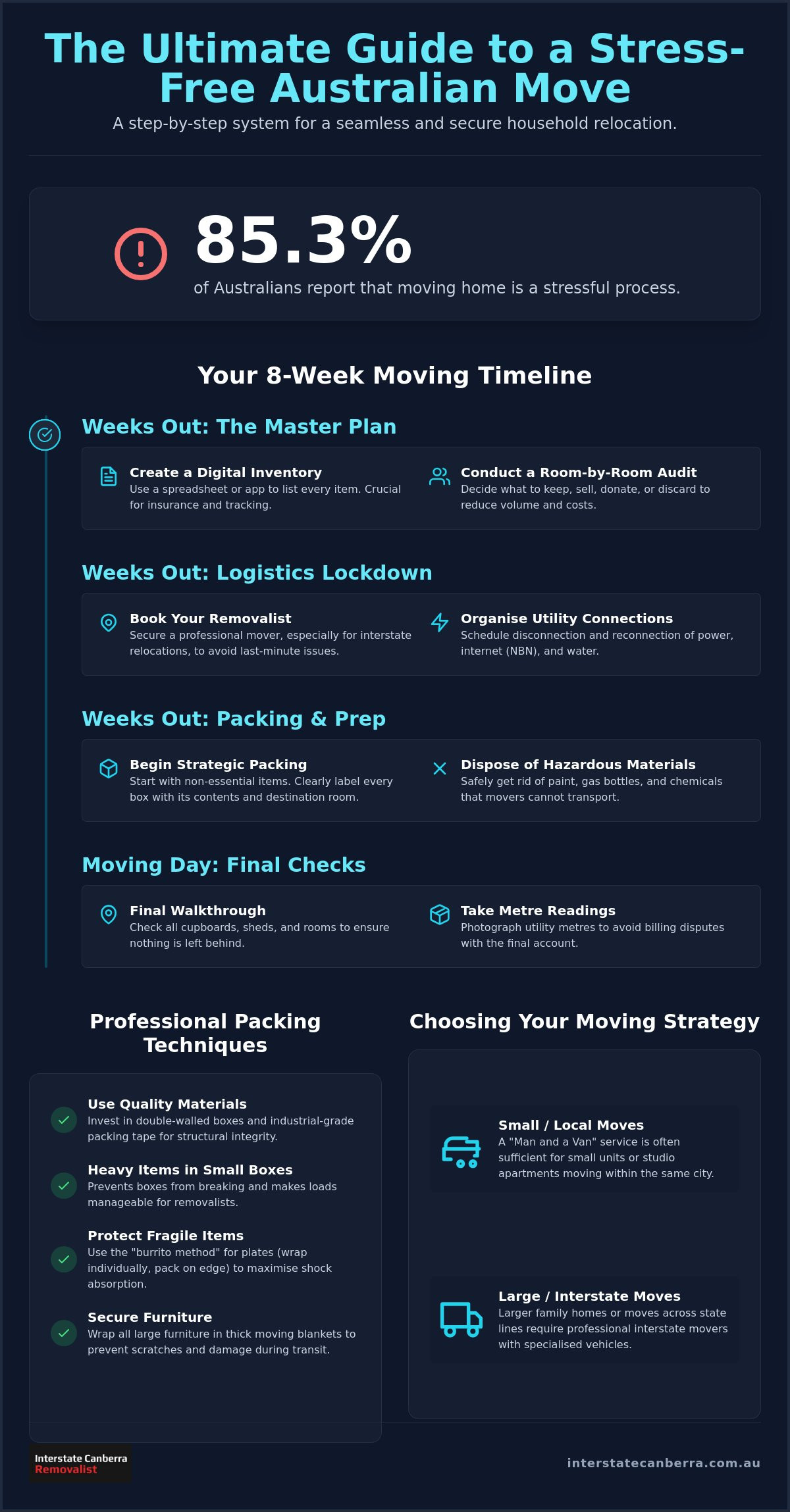
Did you know that 85.3% of Australians report that moving home is a stressful process? It’s no surprise that the thought of packing up your entire life feels overwhelming. You’re likely worried about your grandmother’s antique dresser surviving the trip or whether the NBN will actually work on day one. Between managing utility transfers and finding a removalist who won’t hit you with hidden fees, moving household often feels like a full-time job you didn’t ask for.
We understand the pressure of balancing a relocation with your professional and family commitments. This guide is designed to be your steady hand throughout the transition. We provide a professional, step-by-step system to ensure your relocation is handled with meticulous care and zero surprises. By following our clear timeline, you can secure a damage-free move and maintain total control over your budget. We’ll cover everything from early decluttering strategies to the final bond clean; ensuring your Australian move is efficient, reliable, and completely stress-free.
Key Takeaways
- Establish a clear moving timeline at least eight weeks in advance and maintain a digital inventory to stay organised.
- Use high-quality, double-walled boxes and place heavy items in smaller containers to ensure your belongings remain secure during transit.
- Streamline the process of moving household by booking your removalist and organising utility connections four to six weeks early.
- Perform a final walkthrough and take meter readings on moving day to ensure a seamless handover and avoid unexpected costs.
Organising Your Household Move: The Master Planning Phase
Success begins at least eight weeks before your target date. A well-structured timeline is the backbone of any professional move. It prevents the last-minute scramble that often leads to damaged goods or forgotten admin tasks. When you begin the process of relocating, your first step is creating a master digital inventory. Use a spreadsheet or a dedicated app to list every item in your home. This level of detail is essential for moving household goods safely and staying within your budget. You’ll need this list for insurance purposes and to ensure nothing goes missing during transit.
To better understand this concept, watch this helpful video checklist:
Once your inventory is live, categorise items by room and fragility. Assign a priority level to each box for the new house. This helps you decide what to unpack first on arrival. Identify high-risk items early. Pianos, large antiques, or heavy artwork often require specialist handling and can’t be moved with standard equipment. Factor these into your budget alongside packing materials, insurance, and professional fees. Clear financial planning at this stage ensures there are no hidden costs later. It provides the peace of mind you need to focus on the logistics.
Conducting a Room-by-Room Household Audit
Walk through every room with a critical eye. Evaluate every item and decide what to keep, sell, donate, or discard. Reducing your load is the most effective way to lower your relocation costs. Document the condition of high-value items with clear photos. These serve as vital evidence for insurance should any damage occur. Finally, estimate your total volume in cubic metres. Most professional removalists use this figure to provide an accurate quote. Getting this right prevents pricing disputes on moving day.
Choosing Your Moving Strategy
Your strategy depends on the scale of your home and the distance you’re travelling. A “Man and a Van” service is often sufficient for small units or local studio moves. However, larger family homes require more manpower and larger trucks. If you’re heading across state lines, hiring interstate movers provides the security and specialised vehicles needed for long-haul transit. You should also consider if your settlement dates align. If there’s a gap between leaving and entering your new home, look into short-term storage solutions to keep your furniture secure and protected.
Preparing Your Belongings: The Art of Decluttering and Packing
Securing your possessions for a long-distance journey requires more than just standard cardboard. When moving household goods, you must invest in high-quality, double-walled boxes. These provide the structural integrity needed to withstand the vibrations of a truck on the highway. Use industrial-grade packing tape to seal every seam; this ensures the box doesn’t burst under pressure. A critical rule to follow is placing heavy items, such as books or kitchen appliances, into small boxes. This prevents bottom-out failures and makes the load manageable for your removalists.
The Decluttering Phase: Lighten the Load
Reducing the volume of your inventory is the most effective strategy for lowering interstate moving costs Australia. Every cubic metre you remove saves you money and time. Organise a garage sale or list unwanted furniture on online marketplaces to recoup some of your relocation expenses. While sorting, remember to dispose of hazardous materials safely. Items like paint, gas bottles, and pool chemicals cannot be transported by professional movers due to safety regulations. While you’re organising your records, ensure you know how to change your address with Services Australia to keep your government records up to date.
Professional Packing Techniques for Long-Haul Transit
Standard packing often fails during interstate transit because it doesn’t account for constant movement. Use the “burrito method” for plates and glassware; wrap each item individually in packing paper and stand plates on their edges to maximise shock absorption. Secure all furniture with thick moving blankets and high-grade shrink wrap to prevent scuffs and scratches. Transit insurance is a non-negotiable requirement that protects the full replacement value of your belongings against unforeseen accidents during the journey. If you need assistance with these technical tasks, our team offers professional packing and unpacking services to ensure total security.
Label every box clearly on at least two sides. Include the destination room and a brief summary of the contents. This simple step saves hours of searching when you arrive at your new home. Finally, pack an “essentials carton” for the first 24 hours. This should contain tea, coffee, basic tools, chargers, and toiletries. Having these items accessible ensures your first night in the new house is comfortable and organised rather than a frantic search through hundreds of boxes.
Managing the Logistics: Utilities, Admin, and Removalists
Managing the administrative side of moving household requires a systematic approach to avoid service interruptions. Book your removalist at least four to six weeks in advance. During peak periods like January or the end of the financial year, six to eight weeks is a safer margin. Secure your date early to avoid the stress of unavailable slots or inflated last-minute rates. If you are moving out of a rental property, organise a professional bond clean well in advance. Professional cleaning typically costs between $300 and $600 and is the most reliable way to ensure you receive your full bond refund without disputes.
Coordinating with Professional Removalists
Verify your removalist’s accreditation and read recent customer reviews to confirm their reliability. Professionalism is paramount when your entire life is in the back of a truck. Discuss potential access issues like narrow driveways, low-hanging trees, or apartment lifts with your moving team. These factors can impact the final cost and the time required for loading. In inner-city areas like Sydney, council parking permits can take up to two weeks to process. Ensure you have a comprehensive moving checklist specifically for the handover day to track every item and task.
The Administrative Transition
Notify utility providers of your disconnection and reconnection dates at least two weeks before the move. For internet services, notify your provider two to four weeks ahead. New NBN connections can take up to a month to finalise. Set up mail redirection through Australia Post for at least three months. This service requires five business days to activate, so don’t leave it until the last minute. Update your address with the Australian Electoral Commission (AEC), your bank, and your insurance providers. If you are moving to a new region, transfer school or medical records early to ensure continuity of care and education.
Review your home and contents insurance to ensure coverage during the “gap” between houses. Most standard policies have limitations during transit. If you are moving a vehicle to New South Wales, remember you have 90 days to register it and will require a “blue slip” inspection. If you need a reliable partner to handle the heavy lifting while you manage these details, our team provides expert moving home services tailored to your specific timeline. Taking care of these administrative tasks early allows you to focus on settling into your new community with total peace of mind.
Executing the Move: Final Checks and Settling In
The final hours at your old property require a disciplined approach to ensure nothing is left behind. Perform a thorough walkthrough of every room. Check inside built-in cupboards, the pantry, and high shelves. Don’t forget the garden shed, the garage, or the space under the stairs. Once the property is clear, secure all windows and doors. Take final meter readings for electricity, gas, and water to prevent billing disputes with your providers. During the loading phase, supervise the removalists as they pack the truck. Ensure heavy furniture and appliances are placed at the base to create a stable foundation for the rest of your moving household goods.
Moving Day Management
Keep pets and small children in a safe, quiet area away from the main moving path to prevent accidents. High-traffic zones should remain clear of obstacles at all times. Provide your team with a clear floor plan of the new house. This allows them to place boxes in the correct rooms immediately, which reduces the need for double-handling later. As items are unloaded at your destination, verify your inventory list to confirm every carton has arrived safely. Focus your initial energy on assembling beds and setting up the kitchen. Having a functional place to sleep and eat on the first night makes the transition much smoother for the whole family.
Settling Into Your New Household
Check that all appliances and utilities are functioning correctly as soon as you arrive. Test the hot water, oven, and light switches immediately. If you encounter any issues with connections, contact your providers or the real estate agent straight away to resolve them. Take a moment to introduce yourself to your new neighbours. It is the fastest way to feel at home and begin integrating into your new community. For more detailed advice on long-term adjustments and regional transitions, refer to the complete guide to moving interstate. This methodical approach ensures your relocation concludes as professionally as it began, leaving you ready to enjoy your new home.
Secure Your Seamless Australian Relocation
Successful relocation relies on early planning and a methodical approach to logistics. By establishing your timeline eight weeks in advance and conducting a thorough inventory audit, you eliminate the uncertainty that causes moving-day stress. Remember that moving household goods is not just about transport; it is about protecting your most valuable assets through professional packing and rigorous administrative organisation. These foundational steps ensure your transition remains on schedule and within your budget.
Transitioning to a new home should be an exciting milestone, not a logistical burden. We provide the expertise needed to manage every detail of your move. Whether you require professional packing and unpacking services or specialist piano and heavy item movers, our team ensures your belongings arrive in pristine condition. We also offer secure storage solutions for long-distance relocations to bridge any settlement gaps and provide total flexibility.
Get an instant quote for your household move from Interstate Canberra Removalist today and take the first step toward a stress-free transition. Your new Australian chapter is waiting; let us help you get there with total confidence and professional care.
Frequently Asked Questions
How far in advance should I start packing for a household move?
You should begin the packing process at least four to six weeks before your moving date. Start with non-essential items such as seasonal clothing, books, and guest room supplies. Leaving the process until the final week creates unnecessary pressure and increases the risk of items being packed incorrectly or damaged during transit.
Is it cheaper to buy my own packing boxes or get them from a removalist?
While sourcing free boxes from local shops might seem cost-effective, professional removalist boxes are usually a better investment for security. These boxes are double-walled and designed for stackability in a moving truck. Retail or used boxes often lack the structural integrity required to protect your belongings, which can lead to crushed items and higher replacement costs.
What items are professional removalists not allowed to move?
Removalists are legally prohibited from transporting hazardous, flammable, or explosive materials. This list includes gas bottles, paint thinners, pool chemicals, and petrol cans. These items pose a significant fire risk in the enclosed environment of a moving truck. You must dispose of these safely or transport them yourself in a well-ventilated private vehicle.
How do I protect my wooden floors and carpets during the move?
Use specialised floor runners and adhesive felt pads to prevent scratches and stains during the transition. Hardwood floors are particularly vulnerable to scuffs from heavy furniture legs, while high-traffic carpeted areas can be protected with heavy-duty plastic film. This level of care is essential for moving household goods without jeopardising your rental bond or damaging your new property.
Should I defrost my fridge before the removalists arrive?
Yes, you must defrost and thoroughly dry your fridge at least 24 hours before the move. Any remaining ice will melt during transit, potentially damaging other furniture or electronic goods in the truck. Once the unit is dry, wipe down the interior to prevent mould growth and secure all internal shelves with professional packing tape.
What is the best way to move large indoor plants interstate?
Check the specific biosecurity and quarantine regulations for your destination state before relocating plants. States like Western Australia and Tasmania have strict rules regarding soil and plant species. For permitted plants, wrap the pots in bubble wrap to prevent cracking and ensure the soil is damp but not leaking. It is often safest to transport valuable plants in your own vehicle to monitor temperature and light levels.