
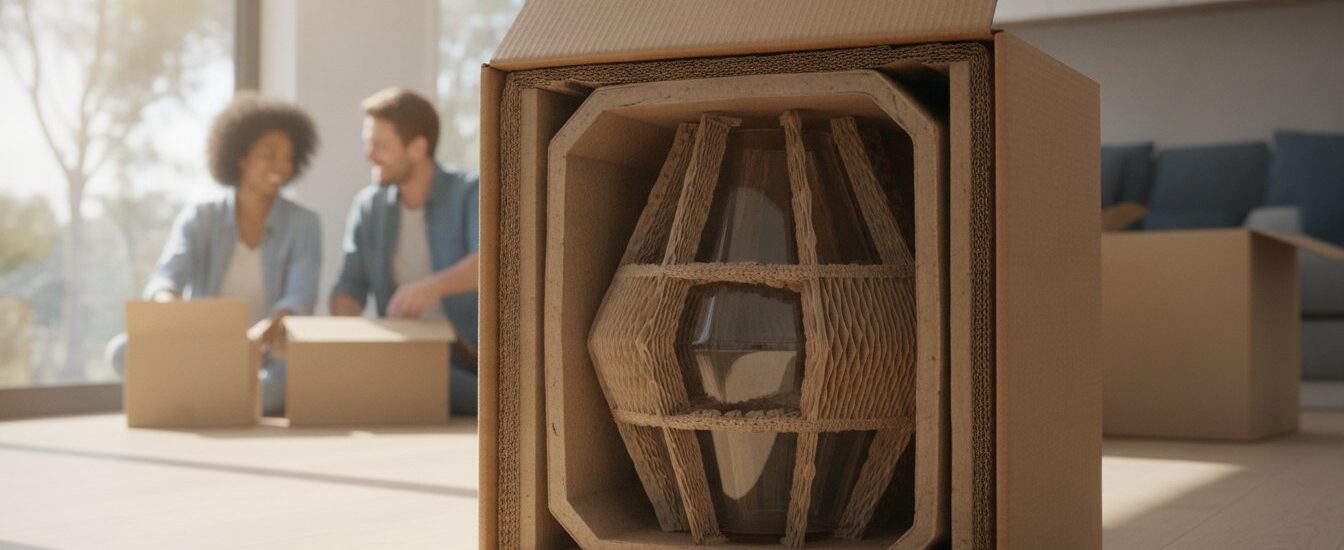
Packing for a local move is one thing, but a long-distance journey requires a completely different strategy. Most people assume bubble wrap is only there to prevent breaks from accidental drops. However, on a 1,000 kilometre haul from Canberra to the Gold Coast, the real threat is constant road vibration. If you don’t account for this, even the most expensive glassware can arrive in pieces. Learning how to safely pack fragile items moving interstate is about mastering vibration management rather than just padding for impact.
We understand the anxiety that comes with handing over your sentimental heirlooms or high-end electronics to a removalist. It’s natural to worry about the cost and heartache of replacing items that are often irreplaceable. This article promises to teach you the professional techniques used by expert removalists to ensure your delicate belongings survive the trip without a scratch. We will provide a clear checklist of essential supplies and show you how to organise your boxes like a pro. From securing heavy pianos to cushioning fine china, you’ll gain the skills needed for a completely damage-free move.
Key Takeaways
- Learn why professional-grade materials are essential and how to create an internal suspension system that shields your belongings from road vibration.
- Discover how to safely pack fragile items moving by implementing the “Six-Inch Rule” and strategic crumple zones within every carton.
- Master specific techniques for protecting electronics against internal component damage and glassware against structural failure during long hauls.
- Understand the psychology of clear labelling to ensure removalists prioritise and correctly position your most delicate boxes within the truck.
- Identify the risks of DIY moves for high-stakes items and when to utilise professional packing and unpacking services for total peace of mind.
Essential Supplies and the Logistics of Fragile Packing
Fragile packing is more than just a layer of bubble wrap. It is a dual-action system of internal suspension and external shielding. Your belongings face thousands of kilometres of high-frequency road vibration during a long-distance haul. Standard grocery store boxes simply aren’t up to the task. They are thin, often compromised by previous use, and lack the rigidity to withstand the stack-pressure found in a large removal truck. If a box at the bottom of a stack softens or buckles, everything above it is at risk.
To master how to safely pack fragile items moving interstate, you need a non-negotiable toolkit. Professional results require professional materials. Your list should include:
- Acid-free packing paper: Essential for the first layer of protection.
- Heavy-duty bubble wrap: Use large bubbles for big items and small bubbles for delicate glassware.
- High-tensile packing tape: Standard office tape will peel under the heat and pressure of a shipping container.
- Void fill: Use biodegradable foam peanuts for lightweight gaps, but use tightly crumpled butchers paper for heavier items that need dense support.
Choosing the Right Cartons for Long-Distance Travel
Professional removalists look for the Edge Crush Test (ECT) rating on every carton. For an interstate haul, you want a high ECT rating to ensure the box doesn’t collapse under the weight of the boxes stacked on top. Double-walled corrugated cardboard is mandatory for heavy breakables like kitchenware or statues. Always use new boxes. A used box can lose up to 50% of its structural integrity, which significantly increases the risk of a catastrophic collapse during transit.
The Removalist Packing Toolkit
Don’t use old newspapers. The ink often transfers and permanently stains fine china or porous ceramics. Instead, use clean butchers paper. It’s thicker and provides superior cushioning while keeping your items pristine. For specialised items, standard boxes won’t cut it. Use cell dividers for glassware to prevent “glass-on-glass” contact. For mirrors and artwork, telescopic boxes provide a custom, tight fit that eliminates movement. Finally, use printed “Fragile” tape. It doesn’t just seal the box; it acts as a critical visual cue for the removalist team to place that item in the secure top-load section of the truck.
Advanced Cushioning Techniques for Maximum Protection
Understanding how to safely pack fragile items moving across state lines means looking at the box as a protective shell. In a moving truck, your cartons aren’t just sitting still; they are subjected to constant micro-vibrations and shifting forces. To counter this, you must create “Crumple Zones” within each box. Just like a modern car, the top and bottom 10 centimetres of your carton should consist of densely crumpled packing paper. This sacrificial layer absorbs the energy from bumps and sudden stops before it ever reaches your valuables.
Reinforcing the base is your first priority. Use high-tensile tape to create an “H” pattern across the bottom flaps. This prevents “bottoming out,” where the weight of the contents forces the tape to snap or peel. Once the base is secure, apply the Six-Inch Rule. Ensure there is at least 15 centimetres of padding between any fragile object and the box walls. This buffer zone is critical. If another box shifts in the truck and presses against your carton, the padding prevents that external pressure from cracking the item inside.
The physics of a long-distance move favour tight packing. While it sounds counterintuitive, items that are packed loosely are more likely to break. Movement causes friction and impact. By filling every void with soft materials, you eliminate the “chatter” that happens when components vibrate against each other for hours on end. If the process feels overwhelming, professional packing and unpacking services can take the weight off your shoulders and ensure every box meets these rigorous standards.
The Professional Double-Boxing Method
For high-value tech, delicate porcelain, or small antiques, the double-box method is the industry gold standard. First, pack the item securely in a small, well-cushioned inner box. Next, place that smaller box inside a larger carton. You must suspend the inner box so it doesn’t touch any of the outer walls. Use at least 5cm of padding on all six sides. This creates a floating effect that virtually guarantees survival, even if the outer box takes a significant knock.
Mastering the Bundle Wrap
When packing sets of similar items like plates or records, use the bundle wrap. Wrap each item individually in paper, then group three or four together in a secondary wrap of bubble wrap to create a cushioned “log.” Always pack these bundles vertically. Plates are structurally stronger on their edges; stacking them horizontally creates a pressure point at the centre of the bottom plate that often leads to a clean snap. Before sealing, perform the “Shake Test.” Gently move the box. If you hear any movement or clicking, add more void fill until the contents are silent and secure.
Step-by-Step Guide for Specific Delicate Household Items
Every material has a different breaking point. While silicon kitchenware can handle a few bumps, ceramic and glass are unforgiving. Mastering how to safely pack fragile items moving across state lines requires you to adapt your strategy to the specific physics of each object. For complex, high-value instruments that require mechanical disassembly, see our dedicated guide for Professional Piano Movers.
Kitchenware: Glassware and Fine China
Hollow glassware is deceptively fragile because of internal air pressure. Always “stuff” the inside of wine glasses and mugs with clean paper. This supports the walls from the inside and equalises the pressure if other items lean against the box. Use cardboard cell dividers to ensure no glass-on-glass contact occurs. For stemware, wrap the “neck” of the glass with extra padding first to create a uniform cylinder shape before the final wrap. This prevents the thin stem from snapping under the weight of the bowl during a long haul.
Electronics: Screens, PCs, and Sensitive Tech
Electronics face a hidden threat: static electricity and internal component fatigue. Never use standard bubble wrap directly against bare motherboards or open circuits. The static discharge can fry delicate chips instantly. Use anti-static bags or clean paper as the first layer. For desktop PCs, heavy graphics cards and heatsinks can vibrate loose during a 10-hour drive. If you aren’t comfortable opening the case to install internal bracing, consider using professional packing services to secure your high-end gaming rigs and curved monitors.
Artwork, Mirrors, and Large Glass Panes
Large glass surfaces act like a drum skin. If transported flat, the centre point is highly vulnerable to cracking from road vibrations. Always transport mirrors and framed art on their edge. Apply a large “X” of low-tack tape across the glass surface. This doesn’t stop it from breaking, but it does hold the shards in place if an accident occurs, protecting the artwork underneath. Use plastic corner protectors and slide the item into a telescopic picture box for a snug, rigid fit that prevents any internal sliding within the truck.
Handling, Labelling, and Knowing When to Hire Professionals
The final stage of a successful relocation isn’t just about the wrap; it’s about the communication. Even the best-packed box can fail if it’s placed at the bottom of a heavy stack in a 20-tonne truck. Understanding how to safely pack fragile items moving interstate involves accounting for the logistics of the vehicle itself. Professional removalists use a “top-load” strategy for delicate cartons. This ensures your glassware and electronics sit safely above heavier furniture, protected from the compressive forces of a 1,000 kilometre journey.
DIY packing carries a hidden financial risk that many homeowners overlook. Most transit insurance policies include “Owner Packed” (PBO) clauses. If you pack the boxes yourself and an item arrives broken, insurers often deny the claim unless there is visible external damage to the carton. This is where professional packing and unpacking services provide a critical safety net. When professionals handle the process, the accountability shifts; your level of protection and peace of mind increases significantly.
Strategic Labelling for Interstate Removalists
Don’t rely on a single “Fragile” sticker. Removalists move quickly and might miss a label if it’s only on one side of the box. Label all four sides and the top of every delicate carton. Use clear “This Way Up” arrows to ensure the internal suspension system you built stays functional throughout the trip. Always include the destination room on the label. This prevents fragile kitchen boxes from being buried under heavy wardrobes in the bedroom during the high-speed rush of offloading.
The Value of Professional Packing Services
Professional teams use commercial-grade materials that far exceed retail quality. Their double-walled cartons and high-density void fills are specifically designed for the rigours of national travel. There is also a major efficiency factor to consider. A seasoned team can pack an entire kitchen in two hours, a task that usually takes a homeowner two full days. This speed doesn’t compromise care; it’s the result of repetitive, expert technique. For high-stakes items or complex relocations, hiring a specialist team ensures your move stays on schedule and your most prized possessions arrive without a scratch.
Secure Your Belongings for the Long Haul
Mastering how to safely pack fragile items moving across the country is the best way to protect your investment and your memories. You now understand the critical importance of vibration management, from creating sacrificial crumple zones to the precision of the double-boxing method. By using commercial-grade materials and following the Six-Inch Rule, you’ve moved beyond basic padding to a professional-grade protection system. These techniques ensure that even the most delicate glassware can withstand the rigours of a 1,000 kilometre journey.
If the scale of your move feels daunting, our team is ready to step in. We offer a national interstate service with a focus on safety, providing professional packing and unpacking experts who treat your home with meticulous care. Whether you need specialised piano movers or a steady hand for your fine china, we provide the reliability you need for a damage-free relocation. Get an Instant Quote for Your Interstate Move and let us handle the heavy lifting while you focus on your new chapter. You’ve done the research, and now you’re ready for a successful, stress-free move.
Frequently Asked Questions
What is the best way to pack wine glasses for a long move?
The most secure method for wine glasses is using a dedicated “cell pack” carton with cardboard dividers. You should stuff the bowl of each glass with crumpled packing paper to support the walls from the inside, then wrap the stem individually to create a uniform cylinder. This prevents the delicate stem from snapping under pressure and ensures no glass-on-glass contact occurs during the interstate journey.
Can I use old blankets instead of bubble wrap for fragile items?
You can use blankets to protect large furniture, but they are not a suitable replacement for bubble wrap when packing smaller breakables. Blankets are heavy and lack the consistent air-cushioning required to absorb high-frequency road vibrations. For smaller items, professional-grade bubble wrap and butchers paper provide better protection without adding excessive weight to your cartons.
How do I pack a flat-screen TV without the original box?
If you don’t have the original packaging, you must use a heavy-duty telescopic TV carton designed for electronics. Wrap the screen in a layer of non-abrasive foam or a clean sheet to prevent scratches, followed by several layers of large-bubble wrap. Always keep the TV in an upright position; laying it flat can cause the internal glass layers to crack under their own weight during transit.
Is it better to pack plates vertically or horizontally?
You should always pack plates vertically on their edges rather than stacking them flat. This technique is a fundamental part of how to safely pack fragile items moving across state lines. Plates are structurally much stronger on their rims. When stacked horizontally, the bottom plate bears the weight of the entire stack, making it highly susceptible to snapping when the truck encounters road bumps.
What does “Owner Packed” mean for my transit insurance?
“Owner Packed” (often abbreviated as PBO) means you handled the packing yourself rather than hiring professional removalists. Most transit insurance policies have strict limitations for PBO cartons, often only covering the contents if the entire box is lost or the vehicle is involved in an accident. They rarely cover internal breakage if the box arrives undamaged, which is why professional packing is recommended for high-value heirlooms.
How do I pack large mirrors so they don’t crack interstate?
Large mirrors require surface tension and edge-loading to survive a long haul. Apply a large “X” of low-tack tape across the glass pane to help absorb vibrations and keep shards in place if an accident occurs. Use plastic corner protectors and a telescopic mirror box for a snug fit. Ensure the mirror is always stored on its edge in the truck, as placing it flat makes it vulnerable to pressure from items stacked above.