Did you know that 85.3% of Australians find moving to be one of the most stressful life events? It’s a daunting figure, especially when you’re coordinating interstate furniture transport across thousands of kilometres of unpredictable terrain. You’re not just moving boxes; you’re relocating your life. It’s natural to worry about a favourite heirloom arriving damaged or facing unexpected costs that weren’t in the original quote.
We understand that you need more than just a truck; you need a reliable partner to manage the complex logistics of a state-to-state move. This guide provides the professional strategies you need to master your relocation with confidence and total peace of mind. We’ll show you exactly how to secure a damage-free delivery through expert packing techniques, navigate the latest 2026 transport safety regulations, and use integrated storage solutions to bridge the timing gap between your old front door and your new one. By the end, you’ll have a clear roadmap for a seamless, transparent, and efficient transition to your new home.
Key Takeaways
- Understand the critical logistical differences between local moves and long-distance travel to keep your relocation timeline on track.
- Master professional protection strategies, such as felt wrapping, to ensure your interstate furniture transport remains secure over thousands of kilometres.
- Identify the primary cost drivers of a state-to-state move, including cubic volume and regional access fees, to avoid budgeting surprises.
- Learn how to verify removalist credentials and why hiring a direct provider is safer than using a faceless broker.
- Discover how integrated storage solutions can provide a vital safety net when your move-out and move-in dates don’t perfectly align.
What is Interstate Furniture Transport and How Does it Work?
Interstate furniture transport is the specialised relocation of your household goods across state borders. Unlike a local move across town, these journeys cover thousands of kilometres. You aren’t just paying for a truck and two blokes; you’re engaging a complex logistical network designed to keep your belongings secure over long distances. To understand the foundational basics of how moving house works, it’s helpful to view it as a series of coordinated stages rather than a single trip.
The primary difference lies in the use of linehaul transport. This involves heavy vehicles specifically designed for long-haul routes between major Australian hubs like Sydney, Melbourne, and Brisbane. Because these trucks operate on set schedules and cover vast distances, the timeline is longer than a local shift. You should expect a transit window of several days or even weeks, depending on the distance and the type of service you select.
To better understand how these large-scale operations look in practice, watch this helpful video:
Dedicated Loads vs Backloading
Choosing the right transport method depends on your budget and your deadline. Dedicated transport means your furniture has the entire truck to itself. This offers the fastest delivery window and the most control over your schedule. It’s the premium choice for those who need to be in their new home by a specific date.
Backloading is a popular cost-saving trend. You utilise unused space in a truck already travelling a specific route. It requires more flexibility with your dates but can significantly reduce your overall spend. It’s an efficient way to move smaller loads or single items without paying for a full truck.
The Interstate Transport Process
The interstate furniture transport process begins with a detailed inventory and volume assessment. We measure your load in cubic metres to ensure an accurate quote. Once packed, your goods often move from your home to a transit hub. Here, they are loaded onto a larger linehaul vehicle for the long trip across the country. Final delivery requires clear access at your new address. If a large semi-trailer can’t reach your front door, a smaller “ferry” vehicle might be necessary to complete the job.
Protecting Your Belongings: Professional Handling and Packing
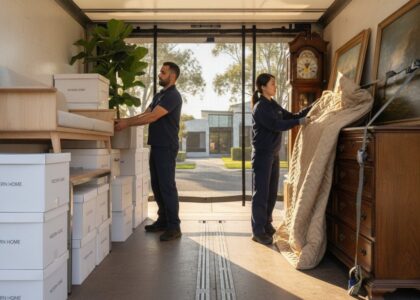
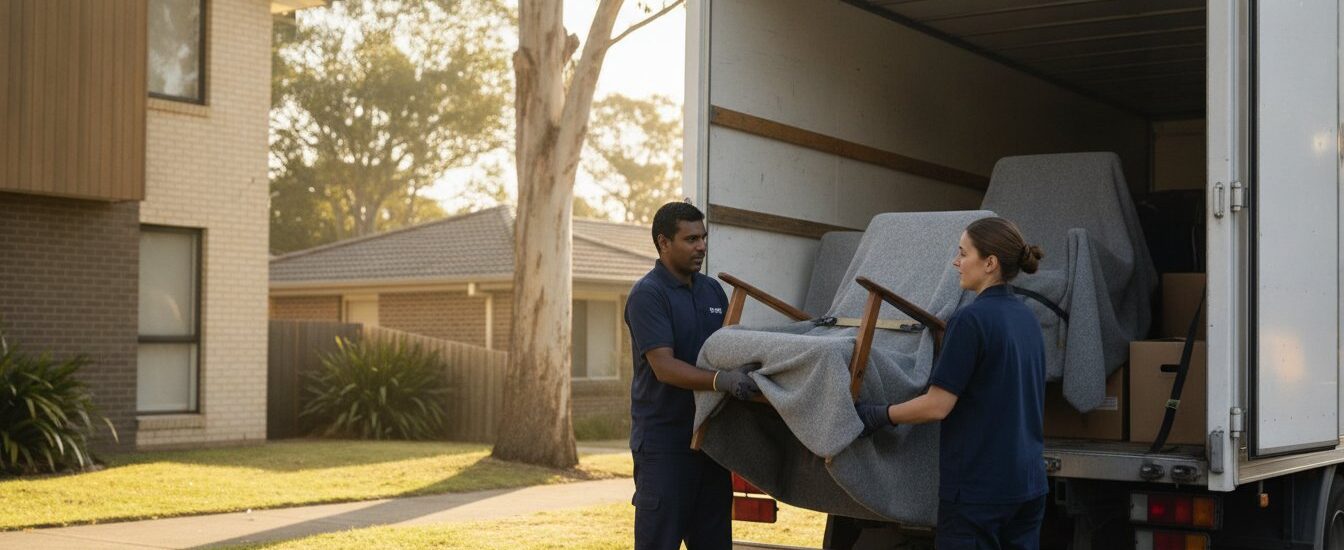
Long-distance transit is a test of endurance for your household goods. Unlike a quick trip across the suburb, interstate furniture transport involves thousands of kilometres of road vibration, temperature shifts, and potential movement inside the trailer. Standard bubble wrap often isn’t enough to prevent surface abrasions. We utilise a specialised “felt wrapping” technique, where heavy-duty moving blankets are secured around every polished surface to eliminate friction damage during the long haul across the Nullarbor or up the East Coast.
Your peace of mind depends on knowing your high-value assets are handled with technical precision. Antiques and heirloom pieces require more than just a sturdy grip; they need custom padding and specific loading positions to withstand transit forces. Engaging piano movers is essential to protect the delicate internal mechanisms of your instrument from the constant vibrations of a cross-country journey. Understanding your consumer rights when moving is also a vital step in ensuring your provider meets Australian standards for care and skill.
Essential Packing Materials for Long-Haul Moves
Cheap boxes are a liability on an interstate route. We recommend double-walled corrugated cardboard for maximum crush resistance, especially when items are stacked in a high-volume linehaul truck. Industrial-strength shrink wrap keeps upholstery clean and prevents drawers from sliding open. For fragile electronics or fine artwork, customised timber crating provides a rigid exoskeleton that absorbs external shocks. If you’re feeling overwhelmed by the volume of gear, our packing and unpacking services take the weight off your shoulders.
Furniture Dismantling and Reassembly
Large items like bed frames, dining tables, and wardrobes are safer and more efficient to transport when dismantled. This process maximises truck space and reduces the risk of structural stress on joints during transit. Organising hardware is the most critical part of this task. We secure all bolts and brackets in labelled bags attached directly to the furniture piece. Experienced removalists are skilled at handling complex office or home furniture setups, ensuring that everything from your ergonomic desk to your modular lounge is reassembled perfectly at your new destination.
Planning Your Move: Logistics and Cost Factors
Logistics for interstate furniture transport are significantly more complex than a local shift. Your primary costs are driven by the total distance travelled and the volume of your goods, measured in cubic metres. Accurate volume measurements ensure we dispatch the correct truck size, which prevents delays or the need for a second vehicle. You can get started by requesting instant online quotes to see how these factors apply to your specific route.
Don’t overlook the smaller variables that impact your final bill. Fuel levies fluctuate based on market rates; regional access fees may apply if your new home is in a remote area or a restricted city centre. To ensure you’re dealing with a legitimate operator who follows strict industry standards, always check if they are accredited by the Australian Furniture Removers Association (AFRA). This accreditation confirms the mover maintains the necessary equipment and training to protect your assets across state lines.
An accurate inventory list is your best defence against “extra item” charges on moving day. If a removalist arrives and finds more furniture than originally quoted, your price will increase immediately. List every item clearly. Be honest about that heavy oak sideboard or the additional boxes tucked away in the garage. Transparency at the start leads to a fixed, predictable price at the end.
How to Get an Accurate Interstate Quote
- Step 1: Conduct a room-by-room audit of all large furniture items and appliances.
- Step 2: Identify “special care” items, such as antiques or pianos, that require extra labour.
- Step 3: Disclose all access issues including stairs, narrow driveways, or lift restrictions.
- Step 4: Request a written quote that clearly includes insurance and fuel costs.
Storage Solutions for Staggered Relocations
Sometimes your new home isn’t ready when your furniture arrives. This is where integrated storage solutions become essential. Short-term storage allows your belongings to stay in a secure transit hub during the move. Long-term options are available if your property settlement is delayed or you’re still house hunting. Containerised storage is the most secure method for interstate furniture. Your goods are loaded into a container at your old home, sealed, and only opened when they reach your final destination. This process reduces handling and significantly lowers the risk of transit damage.
Choosing the Right Interstate Furniture Transport Provider
Selecting the right company for your interstate furniture transport is the final step in securing a stress-free move. You’ll often encounter brokers who act as middlemen. These faceless agencies don’t own trucks; they sell your job to the lowest bidder. We recommend hiring a direct provider. This ensures clear accountability, as the team you speak with on the phone is the same team handling your belongings. You gain a steady hand throughout the process, from the first inventory to the final delivery.
For smaller relocations, a full-sized linehaul truck might be unnecessary. Our man and a van service offers a flexible, cost-effective alternative for moving a few key items or a small apartment across state lines. It provides the same professional protection as a large-scale move but is tailored for smaller volumes. Regardless of the size of your load, verify that your removalist complies with the Heavy Vehicle National Law (HVNL) reforms effective from 1 August 2026. This includes having a documented Safety Management System to ensure every kilometre is travelled safely.
Mitigating risk is about more than just careful handling. Even the most professional team can face unpredictable road conditions. Understanding transit insurance is vital. Standard liability often only covers damage caused by fire, flood, or vehicle accidents. For total peace of mind, ask about full replacement cover. This protects your furniture against accidental damage during loading, transit, and unloading. It’s a small investment that secures your assets against the unexpected.
The Advantages of Professional Interstate Removalists
- Expertise: Professionals understand long-haul fatigue management and state-specific transport regulations.
- Equipment: We use specialised trolleys, ramps, and tail-lifts designed specifically for heavy or awkward furniture.
- Efficiency: Comprehensive packing and unpacking services significantly reduce your downtime and physical strain.
Final Checklist Before the Truck Arrives
A successful move relies on clear communication. Confirm your pickup window 24 hours in advance and provide secondary contact details in case your mobile battery dies during transit. Prepare a “first night” box containing essentials like chargers, basic tools, and toiletries. Keep this box in your own vehicle to avoid it being buried deep inside the furniture transport truck. Ready for a seamless move? Get an instant online quote today and let us manage the heavy lifting for you.
Secure Your Move with Confidence
Moving across state lines doesn’t have to be a gamble. You now have the roadmap to navigate the complexities of interstate furniture transport with ease. By prioritising professional protection strategies like felt wrapping and choosing a direct provider over a faceless broker, you eliminate the most common risks. Remember that accurate inventory lists and integrated storage solutions are your best tools for managing a complex timeline and avoiding hidden costs.
We provide the steady hand you need for a successful transition. Our team offers professional packing and unpacking services to save you time. We also utilise specialised piano moving equipment for your most delicate assets and provide secure storage solutions to bridge any gaps in your relocation schedule. Get an instant quote for your interstate furniture transport today and experience a move defined by transparency and meticulous care. Your new Australian chapter is waiting; let’s make sure your belongings arrive ready for the journey.
Frequently Asked Questions
How much does it cost to move furniture interstate in Australia?
The cost of interstate furniture transport depends on the volume of your items measured in cubic metres and the total distance of the route. Most quotes are calculated based on the space your belongings occupy in a linehaul truck, alongside variable factors like current fuel levies and regional access fees. Because prices fluctuate based on seasonal demand and specific service levels like backloading, we recommend requesting a detailed inventory-based quote to avoid any unexpected charges on moving day.
Can I move my piano interstate with a standard removalist team?
No, you should always engage specialised piano movers for long-distance transport. Standard teams often lack the heavy-duty trolleys, ramps, and non-marking equipment required to move a grand or upright piano safely. Because these instruments have delicate internal mechanisms, they are highly susceptible to damage from road vibrations and temperature changes. Professional specialists ensure the instrument is secured in a climate-controlled environment and handled with technical precision to maintain its structural integrity.
How long does interstate furniture transport usually take?
Interstate furniture transport usually takes between several days and two weeks depending on your specific route. While a direct dedicated load between major hubs like Sydney and Melbourne might take 2 to 4 days, a backloading service to Western Australia or Northern Queensland can take longer. Timing is influenced by linehaul schedules, driver fatigue management regulations, and the total distance covered. We recommend booking your move well in advance to secure your preferred delivery window and allow for logistical coordination.
Is my furniture insured during an interstate move?
Removalists are not automatically liable for damage unless negligence can be proven; you must confirm your specific insurance level before the move. While AFRA-accredited members are required to have public liability and goods-in-transit insurance, this may only cover catastrophic events like fire or vehicle accidents. For comprehensive protection, you should opt for full replacement cover. This ensures your belongings are protected against accidental damage during the entire loading, transit, and unloading process.
What is the cheapest way to move furniture state-to-state?
Backloading is the most cost-effective method for moving furniture across state lines. This involves utilising the empty space in a truck that is already returning from another job or has spare capacity on its current route. You can often save 30% to 60% on your transport costs by being flexible with your pickup and delivery dates. For smaller loads, a “man and a van” service provides a budget-friendly alternative without the high overheads of a full linehaul semi-trailer.
Can I pack my own boxes for an interstate move?
Yes, you can pack your own boxes, but be aware that most removalists won’t accept liability for the contents of “owner-packed” cartons. Professional packing services use industrial-strength materials and techniques designed to withstand the rigours of 1,000km+ journeys. If you choose to pack yourself, use double-walled corrugated boxes and avoid overfilling them. For high-value or fragile items, we suggest professional packing to ensure they are covered by your transit insurance policy.