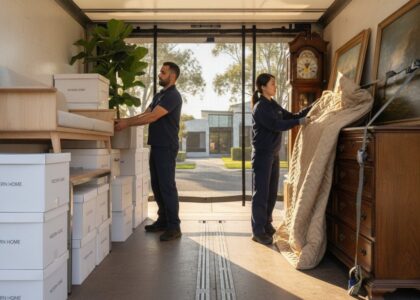
What if the most dangerous part of your relocation isn’t the distance, but the 300-kilogram safe or grand piano sitting in your hallway? It’s natural to feel a sense of dread when you consider moving oversized goods. You likely worry about gouged floorboards, crushed doorframes, or the very real risk of personal injury from a DIY attempt. You need to know that your high-value possessions are in safe hands. Hiring expert heavy item movers is about more than just muscle; it’s about employing a disciplined system of leverage and specialised protection to ensure a seamless transition.
This guide provides a clear look at the professional strategies and equipment required to move heavy goods without incident in 2026. You will learn exactly what to look for in a qualified team, from hydraulic lifts to custom crating. We will also outline the critical safety protocols that prevent property damage and give you total peace of mind throughout the process. By understanding the risks and the professional solutions available, you can ensure your move is handled with the precision and care it deserves.
Key Takeaways
- Identify which oversized goods require specialist handling by understanding the 80kg weight threshold and the unique physics of unbalanced loads.
- Discover the advanced technology used by professional heavy item movers, such as motorised stair climbers and non-marking dollies, to protect your property.
- Master the preparation process with a practical checklist for clearing access paths and the essential requirement of emptying internal contents before the team arrives.
- Learn why a physical site inspection is non-negotiable for complex relocations to ensure the correct crew size and equipment are allocated.
- Equip yourself with the critical questions to ask a removalist to verify their expertise in managing high-value, oversized items safely.
What Defines a Heavy Item and Why Does it Require Specialist Handling?
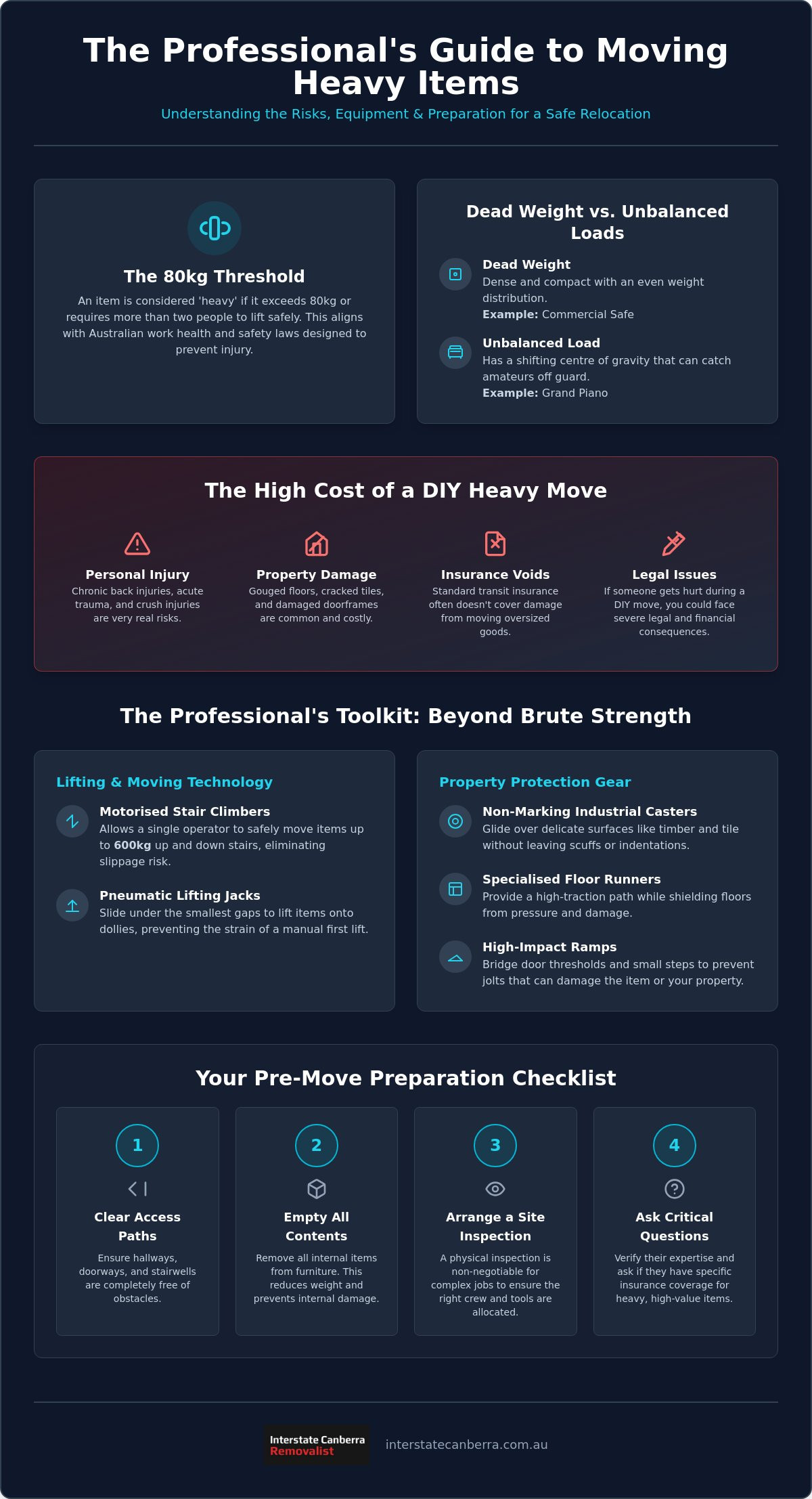
A heavy item isn’t just something that feels a bit bulky. In the professional moving industry, we define a heavy item as any object exceeding 80kg or requiring more than two people to lift safely. This isn’t an arbitrary figure. It aligns with Australian manual handling regulations designed to prevent chronic back injuries and acute trauma. Australian work health and safety laws place a heavy burden of care on anyone directing a lift. If you attempt a DIY move and someone gets hurt, the legal and financial complications can be severe. Expert heavy item movers understand the physics of the load before they even touch the object.
To better understand the mechanics involved in shifting oversized goods, watch this helpful video:
There is a significant difference between “dead weight” and “unbalanced loads”. A commercial safe is typically dead weight; it is dense, compact, and its weight is distributed evenly. A piano or a large piece of industrial machinery is an unbalanced load. These items have shifting centres of gravity that can catch an amateur off guard. If the weight shifts suddenly during a lift, the result is often a dropped item or a serious injury. Professional heavy item movers use leverage and mechanical advantage to manage these variables safely.
The Threshold of Danger: When Muscle is Not Enough
Billiard tables, commercial safes, and industrial gym equipment are common “nightmare” items for the inexperienced. These objects often require disassembly or specific bracing to move without damage. For instance, piano movers must account for the heavy internal cast-iron plates that make the instrument prone to tipping. Without the right training, the risk of “crush injuries” is high. When muscle is no longer enough to control the momentum of an object, professional expertise becomes your only safety net.
The Impact on Your Property and Insurance
Your property is just as vulnerable as your back. Improper weight distribution can easily crack floor tiles or leave deep, permanent gouges in timber floorboards. In extreme cases, a very heavy item can even stress floor joists if it isn’t moved along a reinforced path. Doorframes are another common casualty; when an item is within millimetres of a frame, any slight tilt can result in structural damage that is expensive to repair. Standard transit insurance often fails to cover the specific complexities of oversized goods. You should always verify that your team has specialised heavy item coverage to protect your investment. Ultimately, specialised handling is defined as the use of specialised equipment for moving heavy items to eliminate manual lifting risks and protect your property.
Specialised Equipment Used by Professional Heavy Item Movers
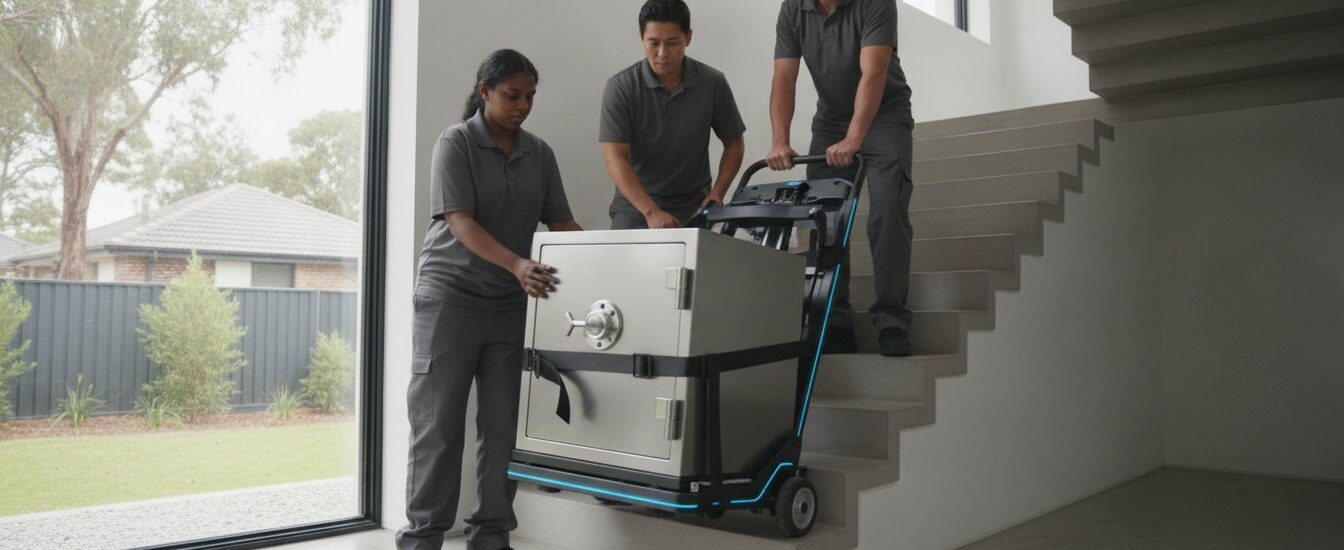
Professional heavy item movers don’t rely on brute strength. They use mechanical advantage. One of the most critical tools in a modern removalist’s arsenal is the “Hercules” motorised stair climber. This device allows a single operator to move items up to 600kg up and down stairs with absolute control. It eliminates the risk of an item slipping or pinning a mover against a wall. For low-clearance furniture or heavy machinery, we utilise pneumatic lifting jacks. These jacks slide under the smallest gaps and lift the item just enough to place it onto a dolly, preventing the strain of a manual lift.
Protecting your home is just as vital as moving the item itself. We deploy a range of protective equipment to ensure your residence remains in pristine condition during the process:
- Non-marking industrial casters: These wheels glide over delicate surfaces without leaving scuffs or indentations.
- Specialised floor runners: These provide a high-traction path while shielding timber and tile from pressure.
- High-impact ramps: These bridge door thresholds and small steps to prevent jolts and frame damage.
This equipment is specifically designed to reduce the “force-per-square-inch” exerted on your flooring. By distributing the weight across a larger surface area, we prevent the cracks and dents that often occur during amateur moving attempts.
Mechanical Aids for Vertical and Horizontal Transit
Navigating narrow hallways or multi-storey homes requires specific geometry. Motorised climbers are essential here because they maintain a level centre of gravity on stairs, preventing the load from tipping unexpectedly. For extremely tight corners, we use hoisting straps and “piano skids” to provide extra grip and protection. When handling large glass panels or stone benchtops, A-frame trolleys provide a stable base that prevents the material from flexing or shattering. If you need to shift a particularly awkward object, it is wise to organise a professional assessment to see which specialised tools your move requires.
Securing the Load for Long-Distance Transport
The job isn’t finished once the item is on the truck. We use hydraulic tailgates to lift oversized goods smoothly from the road to the cargo hold, avoiding the jolts of a manual ramp. Once inside, the item is secured using industrial-grade ratchet straps fixed to internal tie-down points. Every piece is wrapped in heavy-duty furniture blankets and industrial shrink wrap to provide a multi-layered shield against vibration. This level of security is why professional heavy item movers are the preferred choice for high-value logistics; they ensure that even the heaviest safe remains stationary throughout the journey.
How to Prepare Your Oversized Items for a Seamless Move
Preparation is the difference between a smooth transition and a logistical disaster. Heavy item movers provide the specialised equipment, but they need a clear runway to operate efficiently. Start by emptying all internal contents. A commercial filing cabinet or a safe might not seem significantly heavier with a few files inside, but this “dead weight” adds up quickly. More importantly, loose items can shift during transit, causing the centre of gravity to move unexpectedly or jamming internal locking mechanisms. Every gram removed makes the move safer for both the crew and your property.
For heavy industrial appliances like commercial fridges or oversized washing machines, ensure all power and water lines are disconnected at least 24 hours before the team arrives. This allows units to defrost or drain completely. Water leaks during a move create serious slip hazards and can damage the protective floor runners used by the removalists. If you are handling high-value or complex items, investing in professional packing and unpacking services ensures that delicate internal components are properly braced and shielded before they are ever lifted.
Measuring and Clearing the Path
Don’t guess your clearances. Measure the “smallest point” of your entire exit route, paying close attention to protruding door handles, low-hanging light fixtures, and tight stairwell turns. Often, removing internal doors from their hinges is the only way to gain the vital centimetres needed for a safe passage. Clear all rugs, small furniture, and wall decorations from the path. We also recommend protecting vulnerable corners with corrugated cardboard or bubble-wrap shields to prevent accidental scuffs during the transit of bulky goods.
Disassembly and Component Protection
Determine which items should be partially dismantled to reduce weight and size. Pool table slates, heavy gym weights, and detachable furniture legs should always be handled separately. For moving parts that cannot be removed, such as internal drawers or mechanical arms, use industrial-grade shrink wrap to secure them firmly in place. This prevents internal shifting that could lead to mechanical failure. If you are preparing a musical instrument for relocation, refer to our comprehensive piano transport guide for specific instrument instructions. If the preparation feels like too much to manage alone, you can request a professional removalist quote to have our expert team handle the entire process from start to finish.
Choosing the Right Heavy Item Removalist: What to Ask
Selecting heavy item movers requires a different approach than hiring a standard furniture removalist. Brute strength is often a liability without a disciplined strategy. You need a partner who prioritises technical skill and property protection over mere speed. A physical site inspection is the first sign of a professional operation. This allows the team to identify narrow corridors, tight turns, or structural weak points before the moving day begins. Without a site visit, you risk facing unexpected surcharges or a crew that arrives without the necessary tools to finish the job safely.
For clients moving interstate, the stakes are significantly higher. Vibrations over long distances can cause heavy loads to settle or shift, potentially damaging internal mechanisms if they aren’t secured with industrial precision. Always demand a written contract that clearly outlines the insurance terms. Ensure the policy covers both the item being moved and the structural integrity of your residence. A clear agreement on paper provides the accountability needed for high-value logistics.
Verifying Expertise and Equipment
Don’t hesitate to grill your potential removalist about their methodology. Ask specifically: “Do you use motorised lifting aids or just manual trolleys?” A team using a motorised stair climber is far less likely to suffer a fatigue-related accident than one using muscle alone. Enquire about the training of the specific crew assigned to your heavy item. You want specialists who understand the physics of the load, not general labourers. Finally, request a breakdown of the specialised handling fee. A transparent business will explain exactly how this covers the cost of rigging equipment and additional insurance premiums.
The Value of Professional Peace of Mind
The lowest quote is often the highest risk when it involves oversized goods. A cheap price often indicates a lack of proper equipment or insufficient insurance coverage. For commercial clients, the focus should be on minimising business downtime during office relocations. Professional movers work with surgical efficiency to get your heavy assets back in operation as quickly as possible. If you want to ensure your oversized goods are handled with meticulous care, get an instant quote to see how a specialist team manages the load.
Secure Your Heavy Assets with Confidence
Relocating oversized goods doesn’t have to be a source of anxiety. By understanding weight thresholds and the mechanical advantages of modern equipment, you can protect both your property and your personal safety. Professional heavy item movers bring more than just strength to your doorstep; they bring a disciplined system designed to eliminate risk. Whether you’re shifting a 300kg safe or a delicate instrument, the right preparation and equipment make all the difference.
Our expert teams are specifically trained in piano and safe relocation, ensuring every move is handled with surgical precision. We utilise specialised “Hercules” lifting equipment to navigate stairs and tight spaces effortlessly. For those moving long distances, our fully insured interstate transit provides the security you need for high-value goods. Take the weight off your shoulders and organise your heavy item move with the experts at Interstate Canberra Removalist. You deserve a relocation experience that is efficient, secure, and entirely stress-free.
Frequently Asked Questions
Can regular removalists move a piano or a pool table?
Most general removalists lack the specialised rigging and motorised equipment needed to handle these items safely. Pianos have complex internal mechanics and a shifting centre of gravity that requires the expertise of dedicated piano movers. Pool tables often require the careful removal of heavy slate beds. Without the correct tools, regular movers risk causing structural damage to the item or your property.
How much does it cost to move a heavy item interstate?
The cost depends on the item’s weight, its dimensions, and the specific access requirements at both locations. Factors like narrow stairwells or the need for a crane will influence the final price. You should always request a comprehensive quote that includes specialised transit insurance. This ensures your high-value assets are protected against the unique vibrations and stresses of a long-distance journey across state lines.
Do I need to empty my safe or filing cabinet before the movers arrive?
You must empty all contents from safes, filing cabinets, and heavy cupboards before the team arrives. This reduces the total weight and prevents internal items from shifting during transit. A shifting load is dangerous because it can change the item’s balance mid-lift. Emptying these items also protects your sensitive documents or valuables from being crushed or jamming the internal locking mechanisms while in motion.
Will heavy item movers protect my hardwood floors and carpets?
Professional heavy item movers use a combination of non-marking industrial casters and specialised floor runners to shield your surfaces. These tools are designed to distribute the weight of the load across a larger surface area. This prevents the high-pressure cracks or deep gouges that often occur when using standard trolleys. We also use high-traction mats to protect carpets and ensure the crew has a stable footing.
What happens if a heavy item is damaged during the move?
If damage occurs, the claim is handled according to the specific insurance terms in your moving contract. Professional removalists conduct a thorough pre-move inspection to document the condition of your item and the surrounding property. You should always verify that your provider carries comprehensive coverage. This should include protection for the item itself and any accidental structural damage to doorframes or flooring during the relocation process.
Is there a weight limit for what a professional heavy item mover can handle?
Weight limits are generally determined by the capacity of the motorised lifting aids and the size of the crew. Many professional teams can safely manage items exceeding 600kg using motorised stair climbers and hydraulic systems. For exceptionally large industrial goods, specific state-level permits and escort requirements may apply. Always provide the exact dimensions and weight during your enquiry so the correct specialised gear can be prepared for the job.