
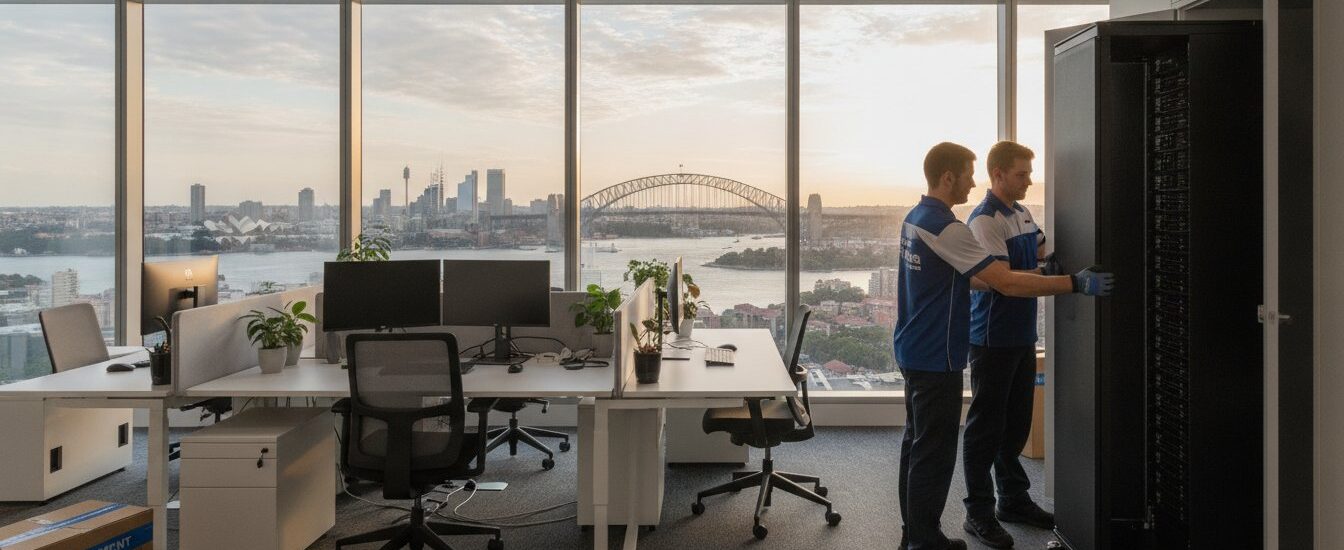
A successful business relocation isn’t just about shifting desks; it’s a high-stakes logistics operation where your IT infrastructure and staff productivity are on the line. You’ve likely spent weeks worrying about the potential for damaged servers or the nightmare of a Monday morning where the office is in chaos. It’s a valid concern, as the wrong choice in office movers can lead to expensive downtime and unexpected budget blowouts that haunt your quarterly reports.
You deserve a transition managed with a steady hand and absolute transparency. This guide will help you master the logistics of your move by showing you how to select specialists who prioritise asset safety and zero downtime. We’ll walk you through the process of securing fixed-price quoting and organising a weekend schedule so your assets are accounted for and your team stays productive. From vetting equipment handling to managing the final layout, you’ll learn how to turn a complex relocation into a seamless, stress-free transition.
Key Takeaways
- Define the specific scale and distance of your relocation to ensure your logistics plan matches your business’s unique requirements.
- Protect high-value IT infrastructure by choosing specialised office movers who understand the technical demands of server and workstation migration.
- Verify essential credentials, including comprehensive public liability insurance and interstate experience, to protect your assets against unforeseen risks.
- Master the timing of your shift to achieve a seamless transition from Friday afternoon to Monday morning with zero business downtime.
- Minimise staff disruption and maintain operational focus by utilising professional packing services and a clear internal communication strategy.
Evaluating Your Commercial Relocation Requirements
A successful relocation begins with a clear assessment of your specific business needs. Every office is different, and a one-size-fits-all approach usually leads to logistical bottlenecks. You must first identify the scale of the operation. Moving a small boutique studio is a world away from relocating a multi-floor corporate headquarters. The distance involved also changes the complexity. While a local shift across the CBD is straightforward, a complex interstate relocation requires meticulous planning and coordination with experienced office movers.
Audit your specialised assets before the trucks arrive. High-density filing systems, server racks, and heavy machinery aren’t just bulky; they’re sensitive. Standard moving company services might handle desks and chairs, but commercial infrastructure requires a higher level of care. Finally, establish your timeline. You might choose a high-impact weekend move to ensure everyone is back at work by Monday morning, or a phased departmental shift if you need to keep certain teams operational throughout the transition.
To better understand how to categorise your move, watch this helpful video:
Defining Your Scope of Work
Don’t overlook the hidden corners of your current premises. Kitchenettes, utility rooms, and archives often contain more inventory than your main floor space. List everything. You also need to identify access constraints at both your current and new business centres. Check the height of loading docks and the availability of goods lifts. Decide early whether you want a full-service pack or if your team will organise their own personal items to keep things moving quickly.
Setting a Realistic Moving Budget
A realistic budget covers more than just the base transport fee. When hiring office movers, you need to account for insurance, specialised IT crating, and potential storage rental fees. These costs ensure your high-value assets are protected during transit. Always set aside a contingency fund for unforeseen issues. Building access delays or last-minute timing changes can occur; having a financial buffer will keep the project on track without causing unnecessary stress for your management team.
Protecting High-Value IT and Specialised Assets
General removalists often lack the specialised tools required for commercial IT infrastructure. While they might handle a standard desk with ease, high-value assets like server racks and multi-function printers require a higher level of technical care. Professional office movers prioritise the physical integrity of your hardware to ensure your digital operations remain intact. When planning a cross-country office move, the security of your data during physical transport is just as critical as the speed of the truck. You don’t want to find out your backup drives were rattling in the back of a standard van without proper suspension.
Server and Network Infrastructure Safety
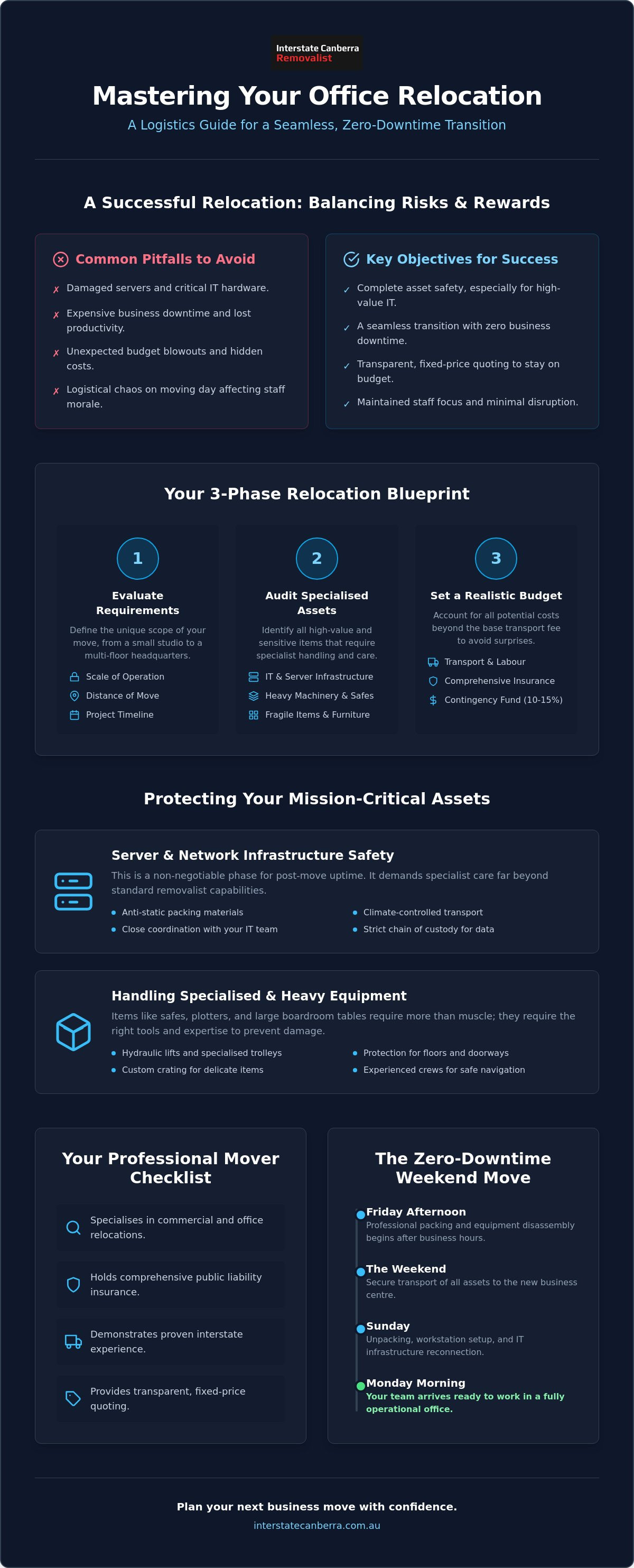
Server room migration is a mission-critical logistics phase that dictates your post-move uptime. This process requires anti-static packing materials and climate-controlled transport to prevent hardware failure. Your internal IT team should work closely with the removalist crew to map out cable management and rack configurations before the first server is unplugged. This coordination ensures that everything is reconnected correctly in the new business centre. Maintaining a strict chain of custody for your storage devices is essential for meeting your data security obligations.
Handling Specialised and Heavy Equipment
Professional office movers understand that industrial-scale items like heavy safes, large-scale plotters, or boardroom tables require more than just muscle. Experienced crews utilise hydraulic lifts and specialised trolleys to navigate these items through narrow corridors and onto loading docks without damaging floor surfaces. If your reception area features high-value instruments, engaging professional piano movers ensures these delicate items are crated and handled with precision. Fragile glass partitioning and workstations must be individually bubble-wrapped and secured in custom crates to prevent hairline fractures during transit. Every asset must be accounted for and protected with a steady hand.
If you’re concerned about the safety of your high-value equipment, you can request a specialised commercial quote to see how we manage complex assets.
How to Vet and Select Professional Office Movers
Selecting a relocation partner is a critical exercise in risk mitigation. You need to verify that your chosen office movers hold comprehensive commercial insurance and public liability coverage before any equipment is touched. This isn’t just a formality; it’s your primary safety net against accidental damage or site incidents. If your business is moving between Australian states, verify their specific experience with long-haul transit and interstate logistics. Consulting a professional corporate relocation guide can help you understand the standard compliance requirements expected of modern service providers.
The quoting process should provide absolute clarity. Vague estimates often lead to budget blowouts, so insist on fixed-price certainty based on a detailed inventory. Professional crews should also demonstrate rigorous staff training protocols. You need to know that the team handling your ergonomic workstations and sensitive glass partitions is trained in specific commercial handling techniques rather than general household moving.
Analysing Quotes and Service Agreements
Ensure every quote includes all labour and equipment rental fees upfront. You should look for “hidden” charges that some companies tuck away in the fine print, such as fuel surcharges or stair-carry fees. For a small satellite office, a simple “man and a van” model might be the most efficient choice. However, larger corporate headquarters require full crews and a dedicated project manager to oversee the workflow. Compare these service levels objectively to ensure the resource allocation matches your move’s complexity.
Checking Credentials and Track Records
Don’t rely on generic testimonials. Ask for case studies involving businesses of a similar size and industry to yours. Effective office movers must be familiar with the specific loading dock requirements and goods lift protocols of major business centres. You can find further advice on vetting potential partners in our guide on how to choose the best removalists in Australia. A proven track record in the commercial sector is the best indicator of a stress-free transition.
Ready to secure a fixed-price quote for your next move? Get an instant online quote today to lock in your relocation costs with total transparency.
Executing the Move: Minimising Business Downtime
The goal of any commercial relocation is zero Monday downtime. Achieving this requires a “Friday Night to Monday Morning” strategy where your office movers handle the bulk of the physical transition while your staff are offline. This compressed timeline ensures that when your team arrives at the new premises, their workstations are ready and the network is live. Effective communication is the backbone of this process. Send regular updates to your staff to manage expectations and provide clear instructions on how to access the new building and where to find essential facilities.
If your new site isn’t quite ready for full occupancy, utilise secure storage solutions for a phased move-in. This allows you to clear your old premises on time without cluttering the new office before the final layout is finalised. A steady hand during this transition prevents the chaos of misplaced files or unorganised equipment. Professional post-move support, including debris removal and desk setup, ensures that your business environment is professional and functional from the first hour of trade.
The Move-Day Logistics Plan
Assign dedicated floor wardens from your own staff to oversee the placement of items in the new layout. These individuals act as the primary point of contact for the office movers, ensuring every desk and crate lands in its designated spot. Use a meticulous labelling system where every box and piece of tech is colour-coded by department or floor. For a comprehensive list of tasks to manage on the day, refer to our office relocation checklist to stay on track.
Settling into the New Workspace
Prioritise the setup of the network and common areas to get your business operational immediately. Once the infrastructure is stable, the focus shifts to individual workstations. You can significantly speed up this process by using professional office packing services for both the pack-up and the unpacking phase. This allows your team to focus on their actual work rather than wrestling with bubble wrap and boxes. Finally, conduct a thorough walkthrough of your old premises to ensure all “make good” requirements are met and the site is ready for hand-back to the landlord.
Securing Your Business Continuity
Relocating your business is a significant milestone that requires meticulous planning and a steady hand. By prioritising the safety of your IT infrastructure and vetting your partners for transparency, you protect your company from the risks of equipment damage and budget blowouts. Successful transitions depend on a clear logistics plan that eliminates downtime and keeps your team focused on their core work. You now have the framework to turn a complex shift into a routine operation managed with professional precision.
The right office movers act as a strategic partner, managing everything from national interstate coverage to secure storage and packing solutions. With specialised commercial logistics expertise, you can ensure that every server, workstation, and boardroom table arrives at your new business centre in perfect condition. This level of care allows you to focus on your company’s future while the physical shift is handled by experts who value punctuality and asset security.
Ready to start your next chapter without the stress of logistical delays? Get an instant quote for your office relocation today. Your new workspace is waiting, and we’re here to help you get there with confidence.
Frequently Asked Questions
How far in advance should I book office movers for a large relocation?
You should book your office movers at least 8 to 12 weeks in advance for a large corporate relocation. This lead time allows for comprehensive site audits, floor plan mapping, and securing necessary permits for loading docks at both business centres. Booking early also ensures you secure your preferred dates, which is vital if you’re planning a weekend move to avoid weekday business disruption.
Can office movers handle the disconnection and reconnection of our IT servers?
Specialised office movers handle the physical transport and secure crating of servers, but they typically coordinate with your internal IT team for the technical disconnection. While removalists manage the heavy lifting and anti-static packing, your IT specialists should oversee the software shutdowns and cable mapping. This collaborative approach ensures that your hardware is protected while your data integrity remains a priority during the shift.
What is the difference between a residential removalist and a commercial office mover?
Commercial office movers specialise in high-value assets, complex logistics, and minimising business downtime, whereas residential removalists focus on household furniture. Office relocations involve sensitive IT infrastructure, heavy machinery, and strict building access protocols that standard home movers aren’t equipped to handle. Commercial specialists also use specialised trolleys and hydraulic lifts designed for industrial-scale items like large printers and safes.
Do office movers provide insurance for our company’s high-value assets?
Professional office movers provide public liability and transit insurance, but you should verify the specific coverage limits for your high-value commercial assets. Standard protection is often based on weight, so many businesses opt for full value cover or specialised cargo insurance. Always check that your provider’s policy covers the replacement value of servers, specialised equipment, and custom workstations before the move begins.
How can we minimise business downtime during an interstate office move?
Minimising downtime during an interstate shift requires a phased relocation plan or a compressed weekend schedule. You can have your movers pack non-essential departments first, followed by a rapid transit of core infrastructure over a Friday to Sunday window. Using professional packing services also speeds up the setup at the new premises, allowing your team to be operational by Monday morning with zero interruption.
Should we ask our employees to pack their own desks or hire professionals?
You should hire professionals for the bulk of the office packing to maintain staff productivity and ensure items are secured correctly. While employees can manage their personal effects, professional packing services reduce the risk of injury and ensure that sensitive files and tech are crated to commercial standards. This approach keeps your team focused on their roles and speeds up the overall unpacking process at the new premises.