
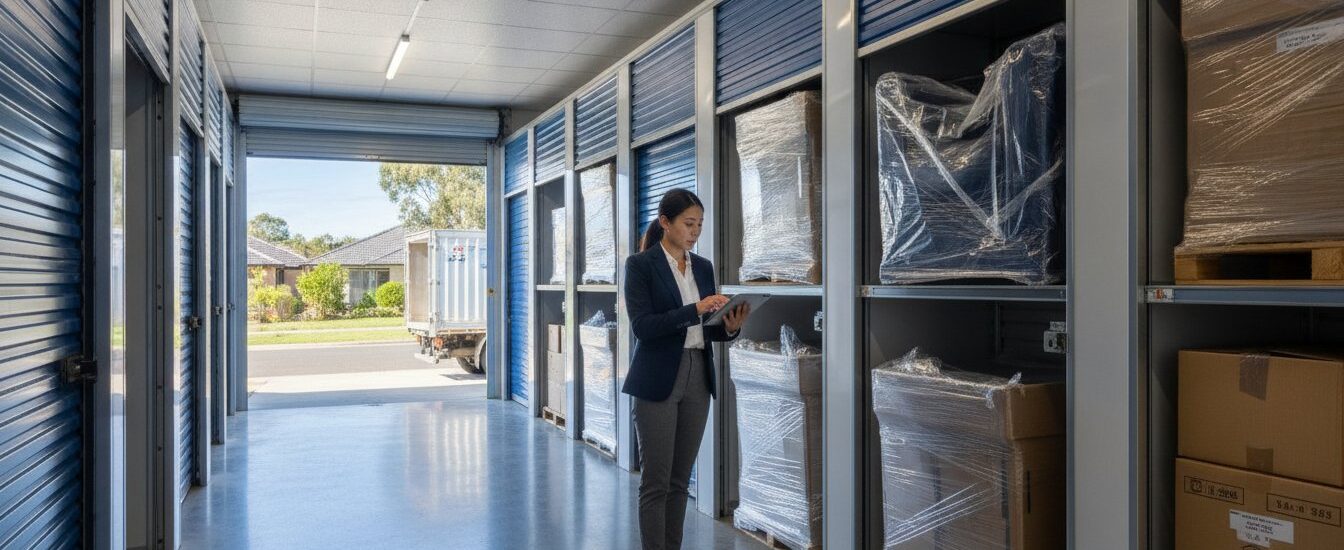
Most people assume the hardest part of moving interstate is getting everything into the truck. It’s not. The real challenge is what happens to your belongings in between, when you’re caught between settlement dates, waiting on a new lease, or simply need a safe place to land your furniture while life catches up with the plan. That’s where the right storage solutions make all the difference.
If you’ve ever worried about your couch sitting in a damp unit, discovered unexpected fees buried in a rental agreement, or tried to coordinate truck access with a storage facility’s opening hours, you already know how quickly this part of a move can unravel. Those concerns are completely valid, and they’re far more common than most removal companies will admit.
This guide cuts through the confusion. You’ll walk away with a clear picture of short-term versus long-term storage costs, a solid understanding of what professional, managed storage actually looks like compared to a standard self-storage unit, and a practical framework for planning a seamless transition from your old home through to your new one. Whether you’re moving next month or still in the planning stages, here’s everything you need to know.
Key Takeaways
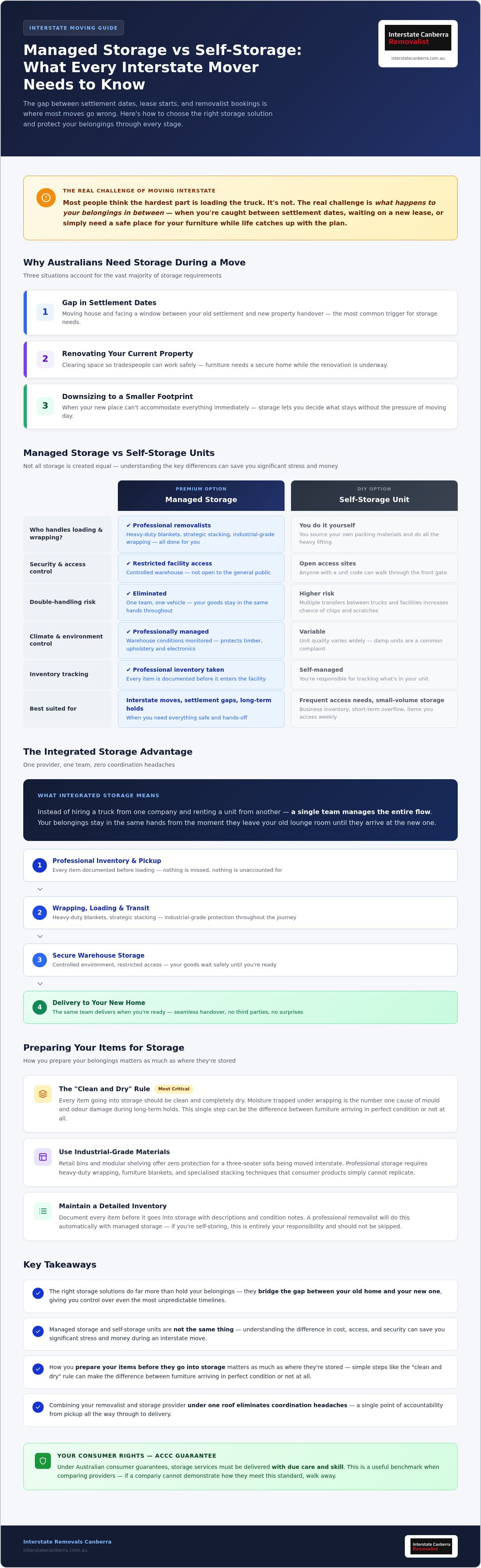
- The right storage solutions do far more than hold your belongings — they bridge the gap between your old home and your new one, giving you control over even the most unpredictable timelines.
- Managed storage and self-storage units are not the same thing, and understanding the difference in cost, access, and security can save you significant stress and money during an interstate move.
- How you prepare your items before they go into storage matters as much as where they’re stored — simple steps like the “clean and dry” rule can be the difference between furniture arriving in perfect condition or not at all.
- Combining your removalist and storage provider under one roof eliminates the coordination headaches that derail so many moves, with a single point of accountability from pickup to delivery.
Understanding Storage Solutions for Australian Relocations
In the context of an Australian relocation, storage solutions represent a critical logistical bridge. It’s not just about finding a spare corner for your boxes. It’s about a managed system that protects your assets while they’re in transit or between permanent residences. True storage is a secure, professional extension of the moving process itself.
Many people confuse professional storage with home organisation. While retail bins and modular shelving are excellent for keeping a pantry tidy, they offer zero protection for a three-seater sofa being moved interstate. Professional storage involves industrial-grade materials and secure environments designed for durability. Most Australians require these services for three specific reasons: they’re moving house and facing a gap in settlement dates, renovating their current property, or downsizing to a smaller footprint.
This is where “Integrated Storage” becomes a game-changer. Instead of hiring a truck from one company and a unit from another, you use a single team to manage the entire flow. This approach ensures your belongings stay in the same hands from the moment they leave your old lounge room until they arrive at the new one.
Why Home Organisation is Different from Moving Storage
Decorative storage focuses on accessibility and aesthetics. Moving storage focuses on industrial-grade protection. When your goods are destined for a warehouse, they require heavy-duty wrapping and specialised stacking techniques that retail products can’t provide. Professional storage solutions prioritise the structural integrity of your furniture during long-term stays. By keeping transport and warehousing under one roof, you eliminate the risk of double-handling. Every time a piece of furniture is moved between different trucks or facilities, the risk of chips or scratches increases.
The Role of Professional Removalists in Modern Storage
Modern removalists have transformed the industry by providing a mobile solution that essentially comes to your front door. A professional inventory is taken before anything is loaded, ensuring every item is accounted for before it enters the facility. To understand how these services evolved from simple lock-ups to high-security warehouses, you can review a self-storage industry overview. Managed storage is a comprehensive service where professional removalists oversee the security, climate control, and strategic placement of your goods within a secure facility.
Comparing Managed Storage vs Self-Storage Units
Not all storage is created equal. The choice between managed warehouse storage and a self-storage unit isn’t just about price per square metre; it’s about how much of your time, energy, and risk you’re prepared to absorb during an already demanding interstate move.
The core question to ask yourself is simple: do you need regular access to your belongings, or do you just need them safe until you’re ready to move in? Your honest answer to that will point you in the right direction before you sign anything.
Managed Storage: The Premium, Stress-Free Choice
With managed storage, professional removalists handle every stage of the process. They load, wrap, stack, and secure your items inside a controlled warehouse environment. Furniture is protected with heavy-duty blankets and professional wrapping materials, and items are stacked strategically to prevent shifting or pressure damage over weeks or months. You don’t touch a thing until you’re ready for delivery.
This model works particularly well for interstate moves where you’re in a holding pattern, waiting on settlement, a lease start date, or a renovation to wrap up. Your goods sit in a secure, professionally managed facility with restricted public access, which is a significant security advantage over standard self-storage sites where anyone with a unit code can walk through the front gate.
It’s also worth understanding your rights before committing to any storage contract. The Australian consumer guarantees for storage services outlined by the ACCC confirm that services must be delivered with due care and skill, which is a useful benchmark when comparing providers.
Self-Storage: When to Choose the DIY Route
Self-storage units make sense in specific circumstances. If you’re a small business owner who needs weekly access to inventory, or you’re storing a handful of items during a short local renovation, a self-storage unit can be a cost-effective fit.
The hidden reality, though, is that “self” storage means exactly that. You’re responsible for:
- Hiring a van or truck to transport your items to the facility
- Loading and unloading without professional equipment or support
- Repeating that process every time you need something, or when you’re finally ready to move out
For smaller loads where you only need a single trip, a man and a van service can bridge the gap. It’s a practical middle ground that gives you some professional help without the full managed storage commitment. That said, for a full interstate move with a household’s worth of furniture, the cumulative effort and risk of a DIY approach rarely justifies the initial cost saving.
If you’re weighing up your storage solutions and want a hands-off approach that keeps your belongings secure from pickup to final delivery, talk to an interstate removalist who can manage the entire process under one roof.
How to Organise and Protect Items for Long-Term Storage
Getting your belongings into storage is one thing. Getting them out in the same condition is another entirely. The difference almost always comes down to preparation, specifically what you do before a single box is sealed or a piece of furniture is wrapped.
Start with the right materials. Double-walled boxes are non-negotiable for anything going into long-term storage; single-walled boxes compress under weight and fail over time. Bubble wrap handles fragile items, but furniture felt is equally important for protecting surfaces from scratches during stacking. These aren’t optional extras. They’re the baseline.
The “Clean and Dry” Rule
Every item entering storage must be clean and completely dry. This is the single most overlooked step in the entire process. Moisture trapped inside a box or within upholstery fibres will cause mould and mildew within weeks, particularly during Australia’s humid summer months. Wipe down hard surfaces, allow soft furnishings to air thoroughly, and never pack anything that’s even slightly damp. One affected item can spread damage to everything around it.
Australia’s climate adds another layer of complexity. In coastal regions, humidity is a constant threat. In inland areas, extreme heat can warp timber and crack leather. Climate-aware storage solutions account for these conditions by controlling the environment inside the facility, something a standard outdoor unit simply cannot offer.
Labelling for Stress-Free Unpacking
Label every box before it goes in, not after. Use a consistent system:
- Room: Kitchen, master bedroom, study
- Priority: Unpack first, unpack last, seasonal
- Contents summary: A brief description on at least two sides of the box
This small investment of time saves hours when you’re finally ready to move in and don’t want to open fifteen boxes looking for the kettle.
Specialist Care for Fragile and Heavy Goods
Electronics need anti-static wrapping, not just bubble wrap. Static discharge can damage components even when a device is powered off. Seal electronics in anti-static bags first, then wrap for cushioning.
Large instruments require a different approach altogether. If you’re placing a piano into storage, professional piano movers are essential. Instruments are sensitive to temperature shifts, humidity changes, and improper handling, and a single misstep can cause damage that costs far more to repair than the move itself.
For large furniture, disassemble where possible. Bed frames, dining tables, and modular shelving all take up significantly less space when broken down, and removing stress points protects the structural integrity of joints and fixings over a long storage period.
Inventory Management: Knowing What is Where
Before anything goes into the facility, create a master list. Number each box, photograph its contents, and keep a digital copy you can access from your phone. This documentation serves two purposes: it gives you peace of mind, and it provides evidence if you ever need to make an insurance claim.
A professional inventory completed by your removalist is the most effective way to prevent lost items during a multi-stage move. It creates a clear chain of accountability from pickup to final delivery.
When your storage solutions are backed by a documented inventory and proper packing standards, you’re not just storing belongings. You’re protecting them. Talk to an interstate removalist about managed storage that covers every stage of the process.
The Professional Advantage: Integrated Moving and Storage
The smartest decision you can make during an interstate move is choosing one provider for both removal and storage. Not because it’s convenient, though it is, but because it fundamentally changes who’s responsible for your belongings at every stage. When two separate companies are involved, accountability gaps appear the moment your furniture changes hands. With an integrated approach, that gap doesn’t exist.
This is the “Single Point of Accountability” model. One quote covers everything. One contact manages the process. One team handles your goods from the moment they leave your home until they’re delivered to your new address. If something needs to change, you make one phone call. There’s no back-and-forth between a removalist blaming the storage facility or vice versa.
Professional packing services are a critical part of why this model works so well. Items packed by trained professionals are storage-ready from the start. They’re wrapped correctly, boxed appropriately, and loaded in a sequence that makes sense for long-term warehousing. There’s no repacking required when goods arrive at the facility, which eliminates a significant source of handling damage.
Streamlining the Logistics of an Interstate Move
Settlement dates shift. Rental handovers get delayed. Renovations run over schedule. Managed storage absorbs all of that uncertainty without disrupting your timeline. Your belongings sit safely in a professional facility until you’re genuinely ready, not just ready enough.
The cost savings are real, too. Hiring a truck to a self-storage unit, then hiring another truck when you’re ready to move in, adds up quickly. Double-handling fees, fuel costs, and the physical effort of loading and unloading twice are all eliminated when your removalist manages the entire chain. The mental load of coordinating multiple providers during an already stressful period is a cost that rarely appears on a quote but is always felt.
Next Steps: Getting Your Custom Storage Quote
Before you contact a provider, do a rough estimate of your volume. Walk through each room and note large furniture pieces, the number of boxes you expect to pack, and anything requiring specialist handling. This gives your removalist enough information to provide an accurate quote rather than a vague ballpark.
When you speak to a provider, ask these questions directly:
- Security: Is the facility monitored, and who has access beyond staff?
- Pest control: What measures are in place, and how often are they conducted?
- Insurance: Are your goods covered while in storage, and what’s the claims process?
- Flexibility: Can your storage period be extended if your timeline changes?
Every move has its own timeline, and the right storage solutions should flex around yours, not the other way around. If you’re planning an interstate relocation and want a single, managed process from pickup to final delivery, reach out to Interstate Canberra Removalist for a tailored quote that covers your specific needs.
Your Move Deserves a Plan That Holds Together
An interstate move has too many moving parts to leave any of them to chance. The right storage solutions give you a genuine buffer when timelines shift, settlements drag out, or renovations run long. That buffer matters more than most people realise until they need it.
The three things worth carrying forward from this guide: preparation before items go into storage protects them far better than any facility can on its own; managed warehousing offers a level of security and accountability that self-storage simply can’t match; and keeping your removalist and storage provider under one roof removes the coordination headaches that derail even the most carefully planned moves.
Interstate Canberra Removalist brings all of that together with secure, managed warehousing, expert packing and handling included as standard, and a national interstate moving network built for exactly these situations.
Your belongings deserve to arrive in the same condition they left. Get an instant quote for professional storage and moving and take the first step towards a move that actually goes to plan.
Frequently Asked Questions About Storage Solutions
How much do storage solutions cost for a three-bedroom house?
Storage costs vary depending on whether you choose managed warehousing or a self-storage unit, how long you need the space, and your location. Rather than quoting figures that may not reflect your specific situation, the most reliable approach is to get a tailored quote based on your actual volume. Walk through each room, note your large furniture pieces and estimated box count, and give that information to your provider upfront so the quote reflects reality.
Keep in mind that the headline price of a self-storage unit rarely tells the whole story. Van hire, insurance, access fees, and the cost of your own time loading and unloading can add up considerably. A managed storage quote that bundles professional handling often works out more competitively than it first appears.
Is my furniture insured while it is in a professional storage facility?
Insurance coverage for stored goods varies between providers, so you should ask this question directly before signing any agreement. Confirm whether coverage is included as standard or available as an add-on, what the claims process looks like, and whether there are any exclusions for high-value items. Don’t assume coverage exists simply because a facility looks professional.
It’s also worth checking your home and contents policy. Some insurers extend coverage to goods in transit or storage, which could reduce the cost of additional cover. A professional inventory completed at the point of pickup is your strongest supporting document if you ever need to make a claim, so ensure your provider offers one.
Can I store my piano in a standard storage unit?
A standard self-storage unit is not suitable for a piano. Pianos are highly sensitive to temperature fluctuations and humidity changes, both of which are difficult to control in a typical outdoor or non-climate-managed unit. Exposure to these conditions can cause the soundboard to crack, keys to warp, and tuning to deteriorate significantly, damage that is expensive to reverse and sometimes permanent.
Professional piano movers use specialist equipment and place instruments in controlled environments designed to maintain stable conditions. If your move involves a piano, this is one area where cutting corners genuinely costs more in the long run. Ask your removalist specifically about their piano storage capability before committing to any facility.
What is the difference between short-term and long-term storage solutions?
Short-term storage typically covers periods of a few days to a few weeks, usually bridging a gap between moving out and moving in. Long-term storage spans months and is common during extended renovations, delayed settlements, or significant life transitions. The practical difference isn’t just duration; it’s how your goods need to be packed and positioned within the facility to remain in good condition over time.
Items in long-term storage solutions require more thorough preparation, including full disassembly of large furniture, anti-moisture measures, and strategic stacking to prevent pressure damage. A provider experienced in both short and long-term arrangements will adjust their approach accordingly, which is one reason professional managed storage tends to outperform the DIY alternative for anything beyond a brief handover period.
Do I need to pack my own boxes if I use professional storage?
No. If you use a managed storage service that includes professional packing, the removalist team handles everything. They bring the appropriate materials, wrap your furniture, box your belongings using double-walled cartons, and load everything in a sequence that suits long-term warehousing. You don’t need to source materials or lift a finger before the team arrives.
If you prefer to pack some items yourself, that’s generally fine, but discuss it with your provider beforehand. Boxes packed without double-walled cartons or adequate internal cushioning may not meet the standards required for safe stacking in a warehouse environment, and your provider may need to repack certain items before they go into the facility.
How do I prevent my furniture from getting mouldy in storage?
The single most effective step is ensuring every item is completely clean and dry before it goes into storage. Moisture trapped in upholstery, inside drawers, or under cushions will cause mould within weeks, particularly during humid conditions. Wipe down hard surfaces, air soft furnishings thoroughly, and never pack anything that feels even slightly damp. One affected item can spread damage to everything stored nearby.
Beyond preparation, the facility itself matters. A professionally managed warehouse with controlled conditions provides a far more stable environment than an outdoor or poorly ventilated self-storage unit. If you’re storing goods for more than a few weeks, ask your provider specifically what environmental controls are in place, including ventilation, humidity management, and pest control protocols.