
A piano is not just furniture; it’s a complex piece of precision engineering that can be compromised by a single centimetre of shift during transit. With regional relocation in Australia reaching record highs in 2026, more families are facing the daunting task of moving these heavy, delicate instruments across state lines. You probably worry that the vibrations of a long haul will cause internal mechanical damage or that a simple slip-up might lead to a permanent structural crack. Professional piano transport is a specialised field for a reason. It requires a level of care and technical knowledge that goes far beyond standard moving services.
You deserve the peace of mind that comes with knowing your investment is protected. This article outlines the essential logistics of safe piano transport and explains how to shield your instrument from the rigours of a national move. We’ll preview the specialised equipment experts use, the necessity of climate considerations, and how to find a removalist who treats your grand piano with the respect it deserves. By the end, you’ll have a clear plan to ensure your instrument arrives in perfect condition, ready for its first tuning in your new home.
Key Takeaways
- Understand why standard moving methods risk structural failure and why technical rigging is essential for instrument longevity.
- Discover how specialised tools like the piano skid provide a secure foundation for safe piano transport across long distances.
- Learn to prepare your home by measuring tight corners and doorways to ensure a seamless transition on moving day.
- Identify the specific criteria for vetting removalists, including the necessity of transit insurance for high-value items.
- Gain a clear overview of the logistics involved in national relocation to keep your instrument protected at every stage.
Why Specialist Piano Transport is Essential for Instrument Longevity
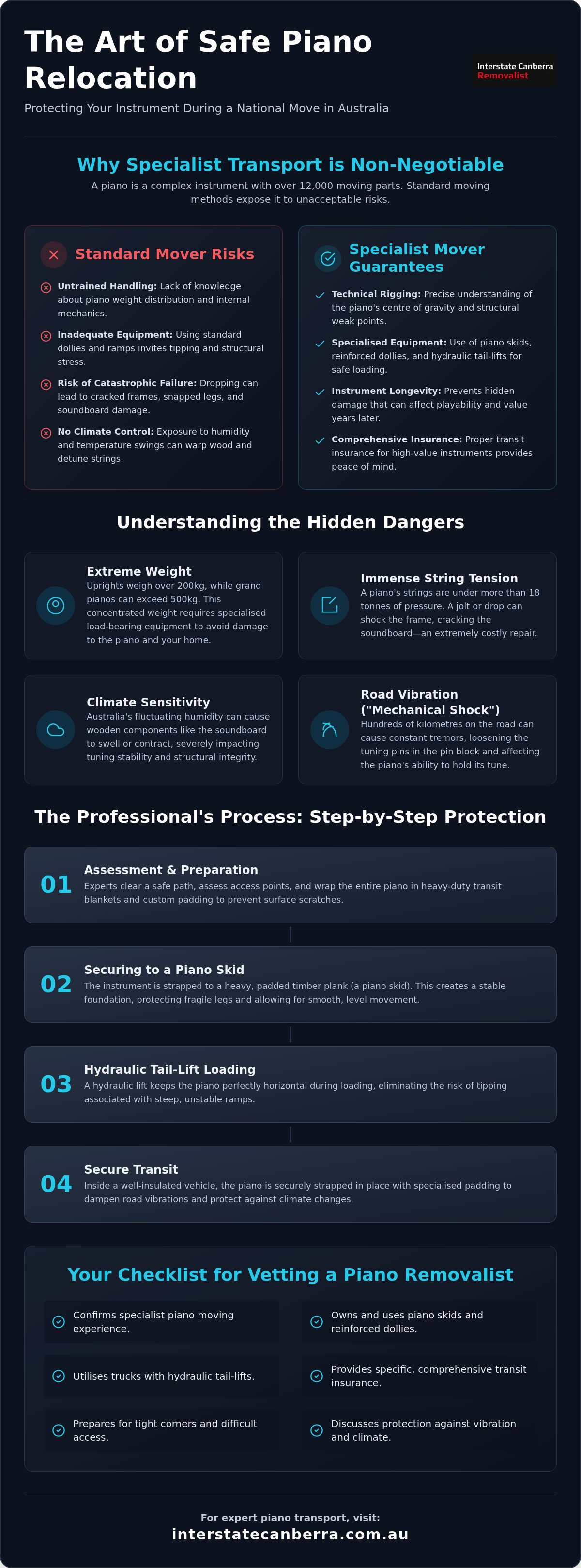
A piano is a complex mechanical instrument, not a standard piece of household furniture. Professional piano transport is a specialised removalist service that goes beyond simple lifting. It involves technical rigging and a precise understanding of the instrument’s internal architecture. Hiring a general “two blokes and a truck” service risks catastrophic structural failure. Most general movers aren’t trained to handle the specific tension and weight distribution of a piano, which can lead to warped frames or snapped internal components.
Weight distribution is a significant challenge for any national move. Upright pianos are notoriously top-heavy, making them prone to tipping during transit. Grand pianos are even more complex, requiring partial disassembly and the use of specialised equipment to move safely. By employing professional piano moving techniques, experts ensure the instrument’s centre of gravity remains stable. This prevents the frame from twisting and protects the delicate legs from snapping under lateral pressure.
The Risks of DIY Piano Moving
Attempting a DIY move is physically dangerous. Many acoustic pianos weigh over 200kg, and some grand models exceed 500kg. Without the right equipment, you risk serious personal injury and permanent damage to your home. Common DIY mishaps include “pedal box” damage and internal string tension shifts. A piano’s strings are under immense pressure, sometimes exceeding 18 tonnes. If the instrument is jolted or dropped, the shock can cause the soundboard to crack. Repairing these cracks is a delicate process that often costs more than the move itself.
Understanding Piano Sensitivity to Climate and Vibration
Australia’s climate presents unique hurdles for long-distance moves. Sudden humidity fluctuations can cause the wooden soundboard to expand or contract, which directly impacts tuning stability. During national piano transport, the instrument is also subject to “mechanical shock” from road vibrations. These constant tremors can loosen the pin block over hundreds of kilometres. To protect your investment, professional removalists use well-insulated vehicles and secure the instrument using specialised padding to dampen these vibrations. This meticulous care ensures the instrument arrives in a condition that only requires a routine post-move tuning rather than a major mechanical overhaul.
Logistics and Equipment: How Professionals Organise Piano Moves
Professional piano transport relies on a methodical preparation phase before the instrument ever leaves its room. Expert removalists first assess the instrument’s structural integrity and clear a path. They then wrap the entire casing in heavy-duty transit blankets and custom padding. This layer of protection prevents surface scratches and provides a buffer against minor bumps. Every corner is reinforced to ensure the delicate timber veneer remains untouched during the move.
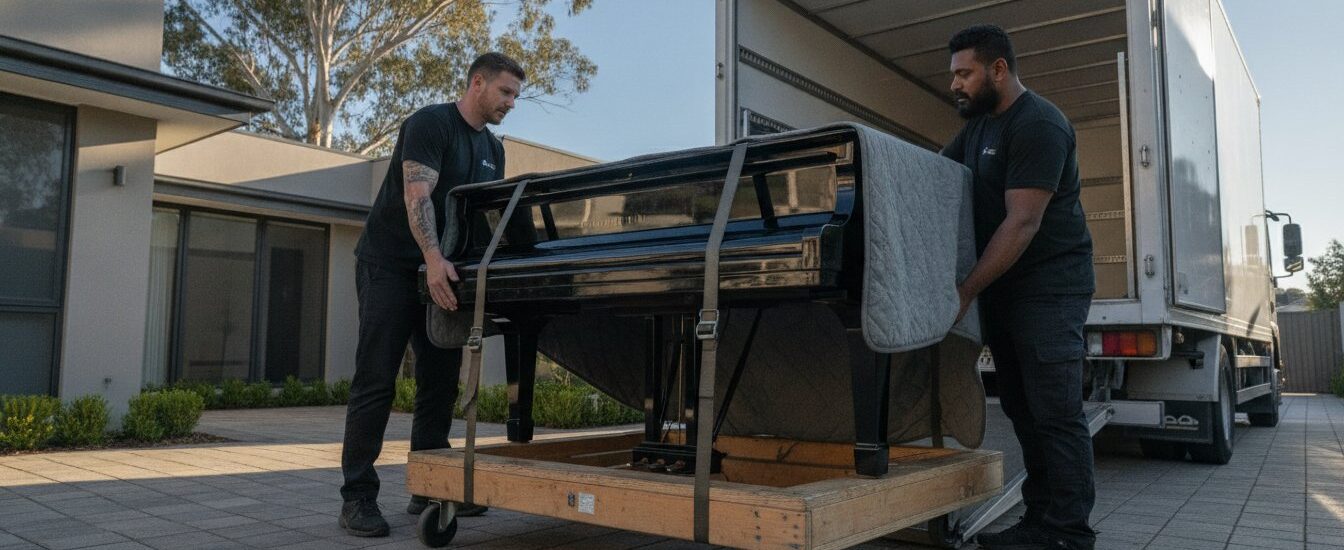
A core component of this process is the “piano skid” or piano board. This is a heavy, padded timber plank that serves as a temporary foundation. The piano is strapped securely to the skid, which allows it to be moved on its side for grand pianos or kept perfectly level for uprights without putting stress on the fragile legs. Following Piano Technicians Guild guidelines ensures that these mechanical stressors are minimised throughout the journey. This foundation protects the base and allows for smoother movement over different floor surfaces.
Loading the instrument requires a hydraulic tail-lift. Unlike steep ramps, which can be dangerous for 300kg loads, a hydraulic lift keeps the piano perfectly horizontal while moving it from the ground to the truck bed. This level of precision is why many people prefer to hire specialised piano movers rather than attempting a standard move. It eliminates the risk of the instrument slipping or tipping during the most vulnerable part of the loading process.
Specialist Tools for Safe Manoeuvring
A standard removalist trolley isn’t enough for this job. Professionals use reinforced piano dollies with non-marking rubber wheels designed to support concentrated weight. For grand pianos, “lyre” removal is a non-negotiable step. The lyre, which is the assembly holding the pedals, is too delicate to bear any weight. Removing it ensures the pedals aren’t snapped off during the tilt onto the skid. For homes with difficult access, experts utilise heavy-duty ramps and stair-climbing equipment to maintain a steady pace without jolting the internal action.
Securing the Instrument for the Long Haul
Once inside the vehicle, the piano is strapped to internal rails using high-tensile webbing. These straps are tightened just enough to eliminate movement without crushing the padding. Vehicles used for national relocation often feature non-slip flooring to prevent micro-movements caused by braking or cornering. Strategically, the piano is often the “first in” or placed directly over the rear axle where the suspension is most stable. This placement reduces the vertical bounce that can lead to pin block issues over long distances.
Preparing Your Piano for a National Relocation
You play a vital role in the success of your instrument’s journey. Before the removalists arrive, you must prepare the environment for a smooth transition. Start by clearing the path. Measure every doorway, hallway, and tight corner at both your current home and your new destination. If a grand piano needs to navigate a narrow corridor, knowing the exact dimensions beforehand prevents costly delays. This data allows the piano transport team to select the most efficient equipment and staffing levels for the job.
Avoid the temptation to book a tuner just before you leave. Tuning a piano immediately before a move is a waste of resources. The unavoidable shifts in humidity and the physical movement of the instrument will cause the pitch to drift during transit. Instead, focus your energy on documentation. Take high-resolution photos of the casing, keys, and internal soundboard from multiple angles. This creates a clear digital paper trail for insurance purposes, providing you with peace of mind throughout the long-distance haul.
Pre-Move Inspection and Documentation
Perform a thorough walkthrough of the instrument. Look for any existing hairline fractures in the timber or loose internal components that may be sensitive to vibration. Secure the keyboard cover and the main lid. If the locks are functional, use them; otherwise, the removalists will use specialised non-adhesive ties. Remove all external accessories, including music stands, metronomes, and lamp fixtures. Packing these separately ensures they don’t rattle against the finish or become lost during the relocation process.
Post-Move Care and Acclimatisation
Your piano needs time to settle after its journey. The timber and internal felt require at least 2 to 4 weeks to acclimatise to the humidity and temperature of the new environment. Positioning is critical for long-term stability. Place the instrument on an internal wall, far away from direct sunlight, draughty windows, and air conditioning vents. Rapid temperature changes cause the wood to expand and contract, which ruins the tuning. Once the settling period is complete, you can arrange your piano move and schedule a professional tuner to restore the instrument to its peak performance.
Choosing a Reliable Piano Removalist in Australia
Selecting a partner for piano transport is the most critical decision in your relocation journey. You need a team that views your instrument as a mechanical masterpiece rather than just another heavy box. A professional removalist will provide a clear, itemised quote that accounts for the specific risks of long-distance travel. Transparency is a hallmark of a seasoned expert. If a company glosses over stair fees or potential access challenges, they likely lack the experience to manage a complex national move.
Specific “Transit Insurance” is essential for high-value items. Standard household moving insurance often excludes damage to internal piano mechanisms. Ensure your chosen provider offers comprehensive coverage that specifically mentions pianos. Interstate Canberra Removalist manages these logistics with a focus on accountability. They act as the steady hand throughout the process, ensuring every detail from the initial lift to the final placement is documented and protected.
Vetting Your Removalist’s Experience
Don’t be afraid to ask for specific examples of recent piano relocations. A reputable company will confirm they have the correct piano movers equipment ready on the truck. Check online reviews for mentions of heavy or fragile items. This feedback provides a realistic view of how they handle pressure. If the reviews consistently highlight punctuality and meticulous care, you’ve likely found a reliable specialist.
Obtaining an Accurate Quote
To receive a precise estimate, you must provide detailed information about your instrument. Specify whether it is an upright, baby grand, or full grand piano. Mention any access hurdles such as gravel driveways, narrow hallways, or multi-storey lifts. These details allow the team to allocate the right resources. For more context on the broader logistics of moving across the country, refer to our moving interstate guide. Clear communication at this stage prevents surprises on moving day and ensures your piano arrives in perfect condition.
Secure Your Instrument for the Road Ahead
Relocating a piano across Australia is a significant undertaking that requires more than just muscle. It demands a technical understanding of the instrument’s delicate internal architecture and the right specialised equipment to manage its immense weight. By prioritising professional piano transport, you protect the structural integrity of your soundboard and ensure the pin block remains stable throughout the journey. Remember to document the instrument’s condition beforehand and allow it several weeks to acclimatise to its new environment before booking a tuner.
Interstate Canberra Removalist provides the steady hand you need for a seamless move. Our team is trained in expert instrument handling and uses custom rigging to navigate even the most challenging access points. We offer comprehensive national transit insurance options to give you total peace of mind while your piano is on the road. Don’t leave your investment to chance with general movers who lack the specific tools for the job.
Get an Instant Quote for Professional Piano Transport
Your piano is a lifetime investment that deserves the highest standard of care. With the right preparation and a specialist team by your side, you can look forward to many more years of music in your new home.
Frequently Asked Questions
How much does it cost to move a piano interstate in Australia?
Interstate relocation costs depend on the distance, the model of the instrument, and any specific access challenges at either end. Factors such as stairs, narrow corridors, or gravel driveways will influence the final amount. It’s best to request an itemised quote that includes specialised handling fees to ensure you have a clear understanding of the logistics involved.
Can a standard removalist move a grand piano?
Standard removalists generally don’t have the specialised rigging or disassembly skills required for a grand piano. These instruments require the legs and lyre to be carefully removed and the body secured to a padded piano skid. Without this specific training and equipment, you risk permanent structural damage to the instrument’s frame and internal components.
Do I need to tune my piano after it has been transported?
You must tune your piano after it arrives, but wait until the instrument has fully acclimatised to its new environment. The physical movement and changes in humidity during piano transport will cause the string tension to shift. Professional tuners recommend waiting at least two to four weeks for the timber to settle before performing any maintenance.
Is my piano covered by insurance during a long-distance move?
Your piano should be covered by specific transit insurance during a national relocation. Most professional services offer coverage that protects against both external casing damage and internal mechanical failure. Always review the Product Disclosure Statement to confirm that the insurance limits are sufficient to cover the full replacement value of your instrument.
How many people does it take to safely move an upright piano?
A safe upright piano move usually requires a team of two to three specialised removalists. While the weight is a factor, the main challenge is the top-heavy nature of the instrument. A trained team uses coordinated lifting techniques and heavy-duty dollies to maintain a stable centre of gravity and prevent the piano from tipping.
What is the safest way to move a piano on stairs?
Moving a piano on stairs requires technical rigging and specialised equipment like stair-climbing dollies or heavy-duty ramps. Professionals use high-tensile straps to maintain a controlled pace and ensure the weight is distributed evenly. This methodical approach prevents the instrument from gaining momentum and protects your home’s flooring and walls from damage.