

Would you trust a standard cardboard box to protect your most fragile possessions during a three-day journey across the Nullarbor? An interstate relocation is a high-stakes logistical challenge where your items must survive thousands of kilometres of constant road vibration and fluctuating humidity. To ensure a smooth transition, you need the specific packing tips interstate move Australia professionals rely on to safeguard cargo against the rugged demands of our transcontinental routes.
You’re likely feeling the pressure of a mounting to-do list and the fear that your favourite belongings might not survive the trip intact. It’s a significant undertaking, but a structured approach can turn that chaos into a controlled, efficient process. We’ve compiled an expert Australian checklist to help you master long-distance packing for a damage-free arrival and an organised start in your new home. We’ll show you how to choose the right materials and maximise every centimetre of space to keep your removalist costs manageable.
Key Takeaways
- Identify why transcontinental relocations require higher-grade materials to protect belongings from thousands of kilometres of road vibration.
- Lower your total removalist fees by using professional decluttering strategies to reduce the volume of items being transported.
- Apply the specialised packing tips interstate move Australia experts use, including the box-in-box technique for high-value kitchen appliances.
- Recognise when specialised handling is required for heavy or high-value items like pianos and electronics to prevent transit damage.
- Develop a comprehensive First Night kit to ensure your family and pets have immediate access to essentials upon arrival.
Master the Logistics of Long-Distance Packing
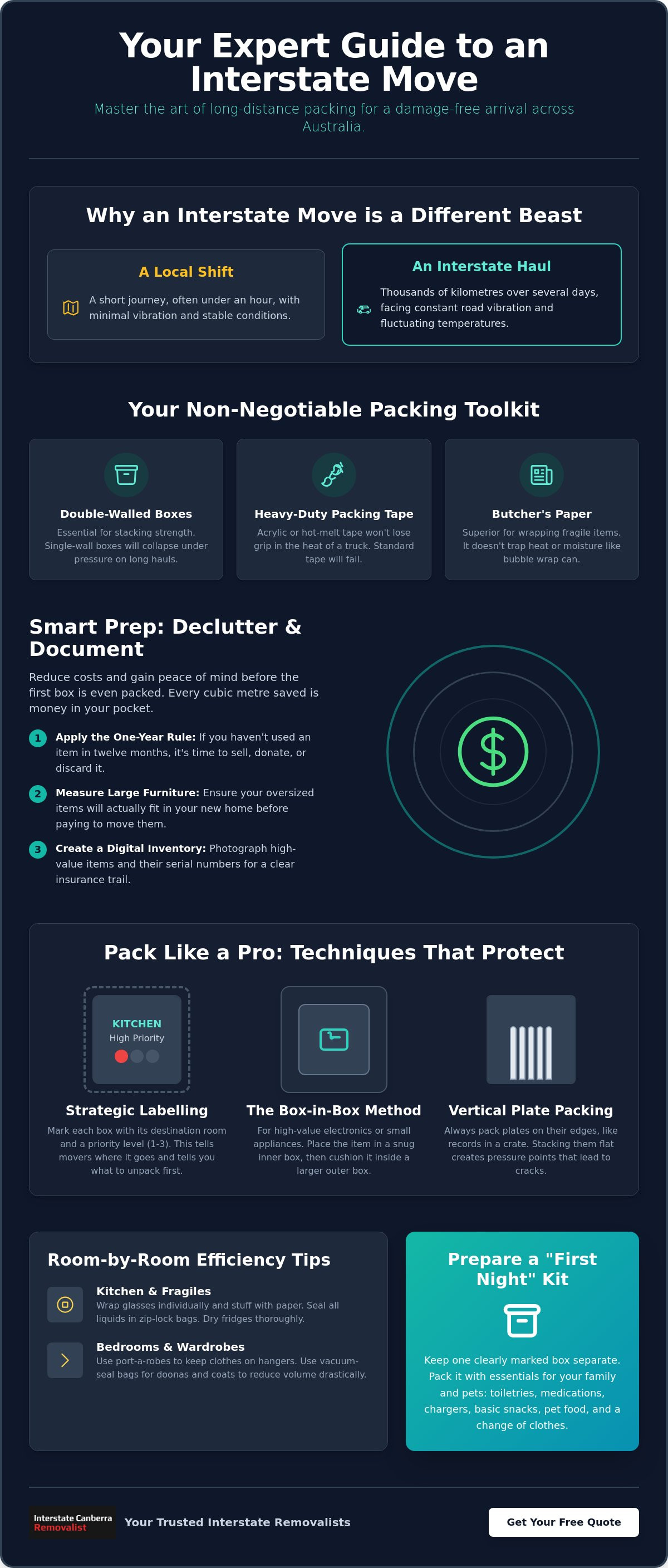
Moving house across the street is a different beast compared to crossing state lines. A local shift might involve a twenty-minute drive; an interstate journey involves thousands of kilometres, varying climates, and constant road vibration. Understanding the logistics of moving over long distances is the first step to protecting your assets. Applying the right packing tips interstate move Australia professionals use ensures your belongings survive the journey intact. You need higher-grade materials that can withstand being stacked in a heavy-duty truck for days on end.
To better understand how professionals handle these long-haul challenges, watch this helpful video:
Professional-grade, double-walled corrugated boxes are non-negotiable for an interstate trek. Standard single-wall boxes often collapse under the pressure of a fully loaded removalist van. Beyond physical protection, you must create a digital inventory. Photograph every high-value item and its serial number before it goes into a box. This creates a clear digital trail for insurance purposes if anything goes wrong during transit. These methodical steps provide peace of mind while your life is in transit.
The Essential Interstate Packing Kit
Don’t rely on standard stationery tape. It loses its grip in the high temperatures found in the back of a truck during an Australian summer. Use heavy-duty acrylic or hot-melt packing tape instead. While bubble wrap is great for impact, butchers paper is often superior for wrapping fragile items like glassware. It doesn’t trap heat or sweat against delicate surfaces. Keep a dedicated kit with a tape dispenser, high-visibility permanent markers, and a sharp box cutter to stay organised throughout the process.
Decluttering for a Leaner Relocation
Every cubic metre of space in a removalist truck costs money. Reducing your volume is the most effective way to lower your total removalist fees. Apply the one-year rule: if you haven’t used it in the shed or spare room for twelve months, it doesn’t need to cross the border. Organise a garage sale or donate to local charities to lighten the load. Finally, measure your large furniture pieces. If your oversized lounge won’t fit the floor plan of your new home, sell it now rather than paying to move it across the country.
Strategic Room-by-Room Packing Techniques
Successful packing is a phased operation. Don’t try to tackle the high-traffic areas first. Start with off-season rooms like the guest bedroom or the study. These areas contain items you won’t need in the final weeks, allowing you to clear space early. As you fill boxes, implement a strict labelling system. Mark each carton by room and assign a priority level from one to three. This ensures your removalists know exactly where to place items and which boxes you need to access immediately upon arrival.
For high-value kitchen appliances, a standard single box isn’t enough for a 2,000km journey. Use the box-in-box method. Place the item in its original packaging or a snug box, then place that box inside a larger, cushioned carton. For your dinnerware, always pack plates vertically on their edges. Stacking them flat creates pressure points that lead to cracks when the truck hits a bump on a regional highway. These specific packing tips interstate move Australia experts recommend are what prevent heartbreak at the other end.
If you are currently renting, ensure you cross-reference your packing schedule with a professional renter’s moving checklist to meet your notice and cleaning obligations. For those who feel overwhelmed by the sheer volume of rooms to manage, our professional packing and unpacking services can handle the heavy lifting for you.
The Kitchen and Fragile Glassware
Wrap wine glasses and crystal individually in butchers paper. Stuff the globes with paper to provide internal support. For a deeper understanding of the professional techniques used to protect delicate items like these during transit, our guide on how to safely pack fragile items moving covers the exact methods seasoned removalists rely on. For the pantry, seal all liquids in zip-lock bags and discard perishables that won’t survive the heat. Ensure your fridge and dishwasher are completely dry and the doors are taped shut to prevent internal damage or mould growth during the long-distance haul.
Bedrooms and Wardrobe Efficiency
Keep your clothes on their hangers by using port-a-robes. This saves hours of folding and ironing at your destination. For bulky items like doonas and winter coats, use vacuum-seal bags. They can reduce the volume of your linens by up to 75 percent, saving significant cubic space in the truck. Always pack a last in, first out box for bedroom essentials like fresh sheets and pillows so you can sleep comfortably on your first night.
Safeguarding Specialised and High-Value Items
Interstate transit exposes your most expensive items to prolonged vibration and internal truck temperatures that can exceed 50 degrees Celsius. Electronics are particularly vulnerable to static and thermal stress. If you don’t have the original boxes, invest in anti-static bubble wrap and sturdy, double-walled cartons. While you can use creative packing hacks for common household goods, your high-value assets require a more disciplined approach. Always keep an Essentials Box containing your passports, property deeds, and family jewellery in your personal vehicle. These items are too critical to be placed in the main cargo hold for a multi-day journey.
Soft furnishings like lounges and mattresses also need protection from the dust and moisture that can accumulate during a long drive. Use heavy-duty plastic covers and seal them completely with tape. This prevents the “old truck” smell from permeating your fabrics. These packing tips interstate move Australia experts recommend are designed to ensure your home arrives in the same condition it left.
Packing Electronics and IT Equipment
Photograph your cable configurations before you unplug anything. It’s a simple step that saves hours of frustration during setup at your new home. Label each cable with its corresponding device using masking tape or coloured stickers. For your television, avoid standard boxes. Use specialised flat-pack crates designed for large screens to prevent pressure damage to the panel. Secure all internal components in your PC tower to prevent them from rattling loose on regional highways.
Protecting Bulky Furniture and Pianos
Bulky furniture and instruments face significant structural stress during a long-haul journey across Australia. Use professional moving blankets and shrink wrap to seal out dust and prevent surface scratches. If you own a piano, don’t attempt to move it yourself. Its delicate internal components and extreme weight require professional piano movers who understand how to brace the instrument against road shock. Dismantle any flat-pack furniture before loading. The joints on these pieces aren’t designed to handle the lateral forces of a multi-day truck journey and may fail if moved while fully assembled.
If you’re concerned about the safety of your high-value items, contact our team to discuss our tailored professional removalist services today.
Final Preparations and the First Night Strategy
The final 48 hours of a long-distance relocation are often the most frantic. You’ve followed the packing tips interstate move Australia experts suggest, but the transition period requires its own specific plan. A “First Night” kit is essential for every family member, including your pets. This box shouldn’t go on the removalist truck. It stays in your personal vehicle to ensure you aren’t digging through a hundred cartons at midnight just to find a toothbrush or the dog’s lead. Planning for this gap in access to your belongings reduces the immediate stress of arrival.
Before you hand over the keys, perform a systematic final sweep of your old home. Check the “hidden” spots that are frequently overlooked during the rush. The oven, the dishwasher, and the ceiling cavity are common places where items are left behind. Don’t forget the garden shed or the storage area under the stairs. Once the house is empty, coordinate closely with your removalist. Confirm the expected arrival times and discuss any specific access points at your new property. If there are steep driveways, narrow gates, or low-hanging trees at the destination, tell the crew now to avoid delays on delivery day.
The Interstate Survival Kit
Your survival kit should cover the first two days of life in your new home. Pack a kettle, coffee, tea, and plenty of snacks to keep energy levels up during the initial unload. Include a basic toolkit with a screwdriver and pliers for reassembling furniture. Keep your most important documents in a dedicated folder: rental agreements, settlement papers, and identification. Ensure you have enough medication for the transition period and keep all phone and laptop chargers easily accessible in your handbag or backpack.
Quarantine and Biosecurity Compliance
Australia has strict domestic quarantine rules that many people overlook until they reach the border. If you are moving into Western Australia or Tasmania, you cannot simply pack your backyard garden. There are significant restrictions on moving plants, soil, and even certain types of fruit and vegetables across state lines. Grapes are restricted in Queensland, while South Australia has strict rules regarding cucumbers and tomatoes. You may face on-the-spot fines if prohibited items are found in your cargo.
Before the truck arrives, ensure all outdoor furniture, lawnmowers, and bicycles are thoroughly cleaned. They must be free of dirt, seeds, and spiders to pass state biosecurity inspections. For more on the complex logistics of a cross-country shift, see our Ultimate Guide to Moving Interstate. Staying compliant not only protects the environment but also prevents your shipment from being held up at a quarantine checkpoint.
Start Your New Chapter With Confidence
An interstate relocation across Australia is a significant milestone that requires meticulous planning and the right equipment. By choosing high-grade, double-walled boxes and applying the strategic packing tips interstate move Australia professionals rely on, you protect your life’s work from the rigours of the road. Success comes down to early decluttering, precise inventory management, and having your essential survival kit ready for that first night in your new home.
You don’t have to manage this massive undertaking alone. We offer expert packing and unpacking services to save you time and specialist piano and heavy item handling for your most delicate possessions. If your move involves a gap between houses, we provide secure storage solutions for every stage of the process. Get an instant quote for your interstate move today and let our experienced team handle the logistics while you focus on the journey ahead. Your new home is waiting; let’s get you there safely.
Frequently Asked Questions
How far in advance should I start packing for an interstate move?
You should start the packing process at least six to eight weeks before your scheduled move date. Begin with “off-season” areas like the guest bedroom, storage shed, or study to clear space early. This timeframe allows you to declutter effectively and reduces the volume of goods you need to transport. It also gives you enough time to source the high-grade, double-walled boxes required for long-haul transit across Australia.
What are the quarantine rules for moving plants interstate in Australia?
Moving plants interstate is subject to strict biosecurity regulations that vary by state to prevent the spread of pests and diseases. Western Australia and Tasmania have particularly rigorous rules regarding soil, seeds, and specific plant species. You may face on-the-spot fines for transporting prohibited items like grapes into Queensland or tomatoes into South Australia. Always check the official Australian interstate quarantine website for the latest requirements before you pack your garden.
Is it cheaper to pack myself or hire professional packing services?
DIY packing is generally cheaper in terms of upfront costs, but professional packing services offer superior protection for high-value items. Professional packers use specialised techniques and materials that significantly reduce the risk of transit damage during a multi-day journey. When you factor in the cost of high-quality materials and the time saved, professional services often provide better overall value for a stress-free relocation across thousands of kilometres.
How do I protect my furniture from the heat during a long-distance move?
Protect your furniture from the heat by using breathable moving blankets rather than wrapping plastic directly against timber or leather. High temperatures in the back of a truck can cause plastic to sweat or fuse to delicate surfaces during a summer relocation. Applying these specific packing tips interstate move Australia experts suggest ensures your furniture arrives without heat-related warping or surface damage. Ensure all items are completely dry before they are wrapped to prevent mould growth.
What items are removalists not allowed to carry interstate?
Removalists are legally prohibited from carrying dangerous goods, including gas bottles, aerosol cans, fuel, and pool chemicals. You also cannot transport perishable food items or restricted plants and fruits across certain state borders due to biosecurity laws. It is your responsibility to dispose of these hazardous or restricted items before the truck arrives. Always ask your moving company for their specific list of prohibited items well before loading day to avoid last-minute delays.
How should I label my boxes for a multi-room interstate relocation?
Label your boxes clearly with the destination room and a priority level from one to three. Use high-visibility permanent markers on the side of the box rather than the top so the labels remain visible when cartons are stacked. This system helps your removalists place cartons in the correct rooms immediately upon arrival. It also ensures you can find your bedroom and kitchen essentials without opening every box in the house on your first night.