The secret to a breakage-free move isn’t just about how much bubble wrap you use; it’s about mastering the “physics of suspension” to eliminate internal movement. You’ve likely spent years collecting sentimental heirlooms and expensive electronics, so the thought of a single pothole shattering your valuables is enough to cause a sleepless night. Mastering how to safely pack fragile items moving requires more than just tape and boxes. It demands a systematic approach that prioritises security and professional-grade care.
We understand the pressure of protecting your most delicate belongings during a complex relocation. This guide shares the professional techniques used by seasoned removalists to ensure your items survive an interstate journey without a scratch. You’ll discover which packing materials actually work in 2026, how to organise a foolproof packing schedule, and the exact methods to secure everything from fine china to delicate electronics. By the end of this guide, you’ll have the confidence and the plan needed for a seamless, stress-free arrival at your new home.
Key Takeaways
- Use heavy-duty, double-walled corrugated boxes and clean butcher’s paper to prevent structural failure and permanent ink stains.
- Apply the “H-Tape” method to reinforce box bases, creating a secure foundation for your most delicate items.
- Master how to safely pack fragile items moving by implementing the professional “double-buffer” method to eliminate internal movement.
- Use category-specific techniques for kitchenware and electronics to protect vulnerable rims and pressure-sensitive screens.
- Organise your transit logistics with professional labelling and strategic loading to ensure fragile boxes receive priority handling.
Essential Supplies for Packing Fragile Items in Australia
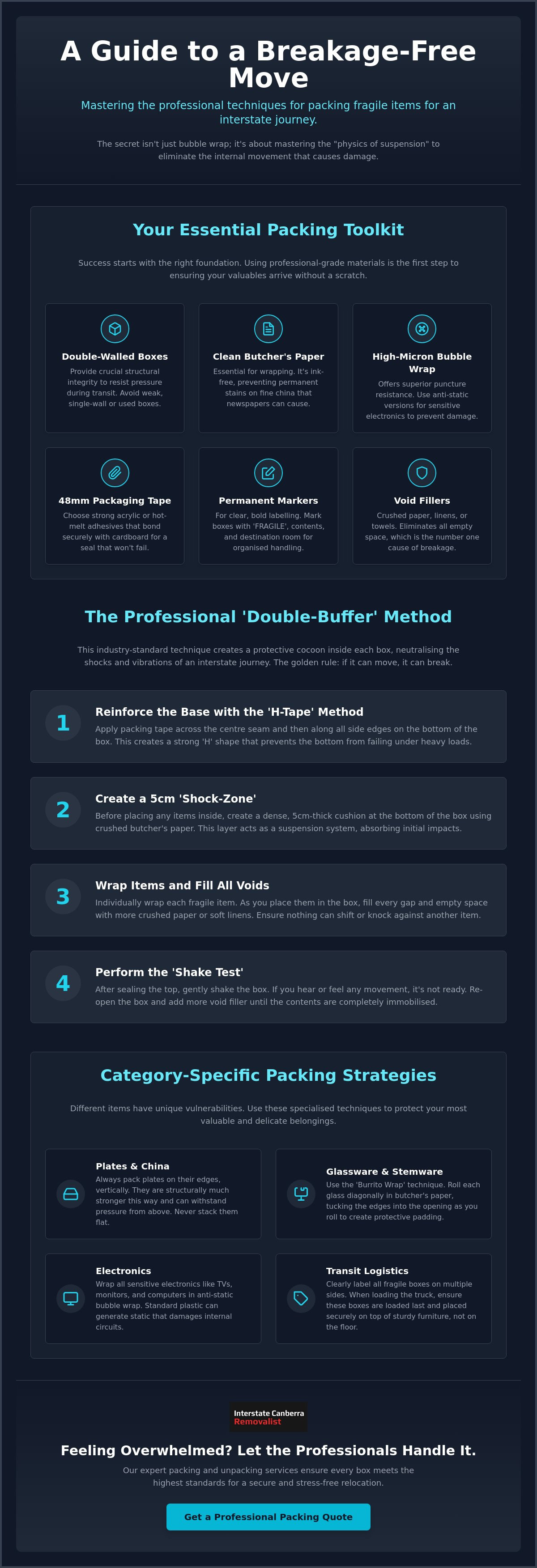
Success starts with the right foundation. If you are learning how to safely pack fragile items moving, you must invest in heavy-duty, double-walled corrugated boxes. Standard single-wall boxes often collapse under the weight of a stacked truck during long interstate hauls. Professional removalists insist on double-walled options because they provide the structural integrity needed to protect delicate porcelain and glassware from external pressure. Avoid using old grocery store boxes or second-hand containers that have already lost their rigidity.
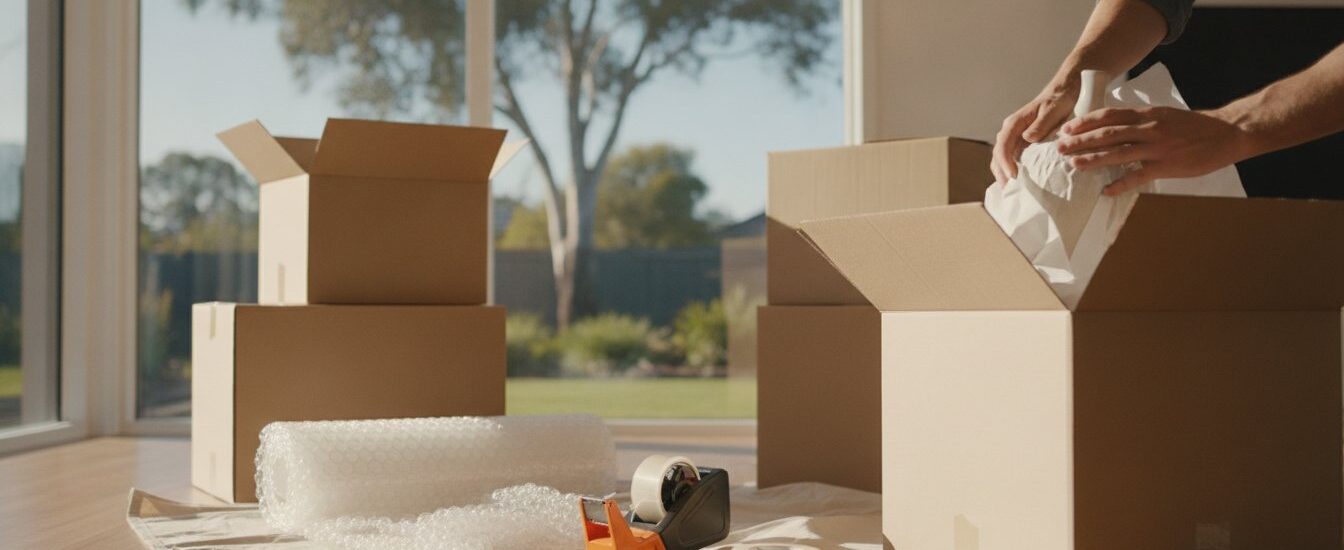
Your choice of wrapping material is equally vital. Many people reach for old newspapers, but the acidic ink can permanently stain fine china and porous ceramics. Instead, use clean Butcher’s paper. It is inexpensive, ink-free, and provides a neutral layer of protection. For high-value items, combine this with high-micron bubble wrap. The thicker plastic offers superior puncture resistance compared to the thin, budget rolls found in local supermarkets. Don’t settle for cheap stationery tape; use 48mm acrylic or hot-melt packaging tape. These adhesives bond with cardboard fibres, ensuring your boxes stay sealed even in high humidity.
To better understand this concept, watch this helpful video:
Choosing Your Boxes Wisely
Small boxes are your best friend for heavy, fragile items. Packing books or plates into large cartons makes them difficult to lift and increases the risk of the bottom falling out. Use the “No-Flex” rule: if the sides of the box bulge when you press them, it is too weak for the bottom of a stack. For glassware, professional “Dish Packs” with internal cardboard dividers are the gold standard. They keep each stem separate, preventing the clinking that leads to hairline fractures during transit.
The Secret Weapon: Void Fillers
Eliminating empty space is the most critical step in how to safely pack fragile items moving. Crushing Butcher’s paper into balls creates far better shock absorption than wrapping items in flat sheets. These paper cushions act like a spring system inside the box. For a cost-effective and eco-friendly alternative, use your soft linens, towels, and thick socks to fill gaps. However, for sensitive home electronics, always use anti-static bubble wrap. Standard plastic generates static electricity that can damage internal circuits during the move.
The Professional “Double-Buffer” Packing Method
Australian interstate roads are notoriously demanding. Long stretches of highway and constant vehicle vibrations create a high-stress environment for your belongings. To combat this, professional removalists use the “Double-Buffer” method. This technique focuses on the golden rule of relocation: if an item can move, it can break. By eliminating internal movement, you negate the physics of the road that cause most breakages.
The process begins with structural reinforcement. Use the H-Tape method to secure the bottom of your double-walled box. Once the base is solid, create a 5cm “shock-zone” using crushed butcher’s paper. This layer acts as a suspension system, absorbing impacts before they reach your valuables. If you find the process overwhelming, engaging a professional packing and unpacking service can ensure every box meets these rigorous standards.
Reinforcing the Structure
Apply extra tape across the centre seams and all side edges of the box. For extremely delicate items, use cardboard inserts to create individual “cells” within a standard carton. This prevents items from knocking against each other during transit. The H-Tape method is the industry standard for security because it seals all open seams and reinforces the box’s structural integrity against heavy loads. This simple step prevents the catastrophic “bottom-out” that occurs when tape fails under pressure.
The Art of Individual Wrapping
Mastering how to safely pack fragile items moving involves specific wrapping techniques for different shapes. Use the “Burrito Wrap” for stemware. Place the glass on a corner of butcher’s paper and roll it diagonally, tucking the edges into the globe as you go. Always pack plates on their edges, never flat. Plates are structurally stronger when standing vertically, allowing them to withstand downward pressure from boxes stacked above. For multi-piece items like pots with lids, use clinging film to keep them together before wrapping. Finally, perform the “Shake Test.” If you hear any movement when gently shaking the box, add more void filler until it is silent.
Category-Specific Strategies for High-Value Breakables
Every room in your home presents different logistical challenges. Standard techniques work for general goods; however, high-value breakables require a customised approach. When considering how to safely pack fragile items moving, you must account for the specific vulnerabilities of each category. Kitchenware, electronics, and fine art all face unique risks during a long-haul journey across Australia.
For fine art and large mirrors, the “X” tape method is a professional staple. Apply a large “X” of masking tape across the glass surface. This doesn’t prevent breakage, but it does hold the glass in place if it shatters, protecting the artwork or mirror frame underneath. Combine this with rigid cardboard corner protectors to safeguard the frame’s most vulnerable points. If you are planning a large-scale relocation, our professional removalists can provide the specialised crates and equipment needed for these high-value items.
Glassware and Ceramics
Protecting the delicate rims of wine glasses and the handles of ceramic mugs is essential. Always fill the “hollow” of glasses with crushed butcher’s paper. This internal support helps the item resist external pressure during transit. Use cardboard dividers to ensure there is no glass-on-glass contact within the box. When stacking bowls, nest them together with a layer of paper between each. Place the heaviest, largest bowls at the bottom to avoid putting structural stress on smaller, more delicate pieces.
Electronics and Screens
Original packaging remains the best option for TVs, monitors, and soundbars. These boxes are designed with custom foam inserts that provide the exact clearance needed for safe transport. If you’ve discarded the original box, use anti-static bubble wrap to protect ports and delicate buttons before placing the unit in a heavy-duty carton. Label every cable clearly using masking tape and a marker pen. This simple step ensures a stress-free setup at your new home. For sentimental heirlooms that are truly irreplaceable, consider packing them in a dedicated “essentials” box and transporting them in your personal vehicle for total peace of mind.
Mastering how to safely pack fragile items moving is about more than just protection; it’s about organization. Categorising your breakables ensures that the most vulnerable items receive the specific attention they deserve during the loading process.
Transit Logistics and Safe Unpacking
Effective labelling is the final line of defence for your breakables. Clearly mark every fragile box on at least three sides with “Fragile,” “This Way Up,” and “Top Load Only.” This ensures removalists can identify delicate items instantly, regardless of how the boxes are stacked. Use a broad, dark marker to make these instructions impossible to miss. When you understand how to safely pack fragile items moving, you realise that clear communication with your moving team is just as important as the padding inside the box.
Managing the Australian climate is a critical consideration for long-haul transit. Temperatures inside a non-insulated van can soar during a summer interstate journey. Avoid packing heat-sensitive items like candles, vintage vinyl records, or delicate adhesives in boxes that will sit in the sun for several days. If you are moving during the peak summer months, prioritise these items for your personal vehicle to ensure they remain in a temperature-controlled environment. For a comprehensive overview of how trained specialists handle every aspect of a relocation, our guide to professional packing service methods for stress-free Australian relocations explains exactly what to expect when you hand the process to the experts.
Stacking and Loading for Interstate Roads
Strategic loading prevents structural damage during transit. Fragile boxes must be the last items loaded onto the truck and the first ones removed. This “last on, first off” protocol ensures they are never buried under heavy furniture or whitegoods. Use “soft” items like mattresses or couches as buffers to pin fragile boxes in place; this prevents them from sliding during sudden stops on the highway. For more comprehensive advice on preparing for your journey, check out our Top Packing Tips for a Stress-Free Interstate Move in Australia 2026.
The Safe Unpacking Process
The risk of breakage does not end when the truck stops. Set up a dedicated “Unpacking Station” in your new home with plenty of clear counter space. When opening boxes, never use a deep blade. A long blade can easily slice through tape and damage upholstered items or wrapped surfaces underneath. Use a safety cutter with a shallow depth setting instead. Once you’ve inspected your items, organise your cardboard and paper for responsible recycling. Many local councils offer dedicated collection points for moving debris, which helps you clear the clutter while staying eco-friendly.
Secure Your Belongings for the Road Ahead
Relocating across Australia is a major undertaking, but your breakables don’t have to be a source of stress. By using heavy-duty materials and mastering the “double-buffer” method, you eliminate the internal movement that leads to damage. Remember that structural reinforcement and category-specific wrapping are the keys to success. Learning how to safely pack fragile items moving is an investment in your peace of mind and the safety of your most cherished heirlooms.
If you prefer to leave the heavy lifting to the experts, we are here to help. Our team provides national interstate coverage and full packing and unpacking services to streamline your journey. We also offer specialised piano and heavy item handling for those truly difficult pieces. Get an instant quote for professional packing and interstate moving services today. With the right techniques and a systematic plan in place, you can look forward to a seamless arrival at your new home.
Frequently Asked Questions
What is the best material for wrapping extremely fragile items?
High-micron bubble wrap combined with clean butcher’s paper provides the highest level of protection for delicate belongings. The paper prevents surface scratches while the bubble wrap absorbs heavy impacts. For the most delicate items, use a double-layer approach by wrapping first in paper and then in bubble wrap. This combination creates a professional-grade barrier against the constant vibrations common on Australian interstate routes.
Is it cheaper to pack my own fragile items or hire professional removalists?
DIY packing is cheaper in terms of upfront costs, but hiring professionals often pays for itself by preventing expensive breakages. Professional packing services for a 3-bedroom home typically range from $300 to $800 depending on the volume of goods. This fee includes high-quality materials and expert labour. When you consider the cost of replacing damaged electronics or sentimental heirlooms, professional assistance offers significant value and peace of mind. To understand exactly what is included and how the process works, read our complete guide to professional packing service options for Australian relocations.
How do I pack large mirrors or glass-framed artwork for an interstate move?
Use the “X-tape” method across the glass and secure the item in a specialised telescopic mirror carton. The tape prevents glass shards from moving if a crack occurs, while the heavy-duty carton protects the frame. Ensure you use cardboard corner protectors to safeguard the edges. Always load these items on their side rather than laying them flat to reduce the risk of pressure-related cracks during transit.
Should I use bubble wrap or packing paper for my kitchen glassware?
Clean butcher’s paper is the superior choice for standard kitchen glassware because it allows for tighter nesting and better shock absorption. While bubble wrap is excellent for outer protection, paper is more efficient for filling the “hollows” of glasses. Mastering how to safely pack fragile items moving often involves using paper for the internal layers and reserving bubble wrap for the most vulnerable external surfaces.
Can I use clothes and towels to pack my breakables to save money?
You can use soft linens and towels as eco-friendly void fillers, but they shouldn’t replace professional wrapping materials for high-value items. Textiles lack the consistent density of crushed butcher’s paper and can shift during transit. Use your towels to line the bottom of boxes or fill large gaps. This saves money on materials while ensuring your breakables remain immobile throughout the journey.
What happens if a removalist breaks a fragile item I packed myself?
Most removalists aren’t liable for internal damage if you packed the boxes yourself. Transit insurance policies usually only cover DIY-packed boxes if there is visible external damage to the carton caused by the movers. To ensure full coverage, many homeowners opt for professional packing services. This guarantees that the removalist takes full accountability for the safe arrival of every item inside the box.