

What if the most expensive mistake in your relocation isn’t the removalist fee, but the forty-eight hour gap between settlement dates when your belongings have nowhere to go? It’s a common Australian nightmare. You’re likely already feeling the physical burden of packing and the valid fear that hidden fees or moisture damage could ruin your high-value assets. Finding reliable short term storage for moving shouldn’t feel like a gamble with your furniture’s safety or your bank balance.
We understand that a seamless transition between properties requires more than just a spare room. You need a strategy that prioritises security and transparency. This guide provides everything you need to master temporary logistics in 2026. You’ll learn how to navigate the latest SSAA standard agreements, understand current market rates across major population centres, and implement clear inventory management. We’ll show you how to protect your items from the elements while ensuring your move remains professional, efficient, and entirely under your control.
Key Takeaways
- Learn how to bridge settlement gaps and manage transitional periods with flexible, month-to-month storage solutions.
- Compare the cost-effectiveness of fixed self-storage units against the hands-off efficiency of managed warehouse storage.
- Discover professional packing techniques and decluttering strategies to protect your assets and reduce unnecessary costs.
- Master the Storage-in-Transit model to integrate short term storage for moving directly into your relocation logistics.
- Understand how strategic furniture staging facilitates a smoother office relocation and minimises business downtime.
What is Short Term Storage for Moving and Why Use It?
Short term storage for moving is a flexible, month-to-month solution designed to support you during transitional periods. Unlike long-term warehouse leases, these arrangements prioritise agility and ease of access. If you’ve ever asked What is Self-Storage? in a practical context; it’s a secure holding pattern for your belongings while the logistics of your relocation settle into place.
This “buffer zone” provides essential psychological relief during an interstate move. It removes the intense pressure of a single, high-stakes moving day. Instead of rushing to unpack into a property that might not be ready, you gain the time needed to coordinate cleaners, locksmiths, or minor repairs. It’s the steady hand that keeps your move organised and your stress levels low.
To better understand this concept, watch this helpful video:
The Australian market offers two distinct paths: traditional DIY self-storage and the removalist-managed model. While DIY units offer frequent access, the managed model is often the superior choice for those moving across state lines. In this setup, your removalist handles the loading and transit, keeping your items in a secure, climate-controlled environment until you’re ready for delivery.
Common Scenarios for Temporary Storage
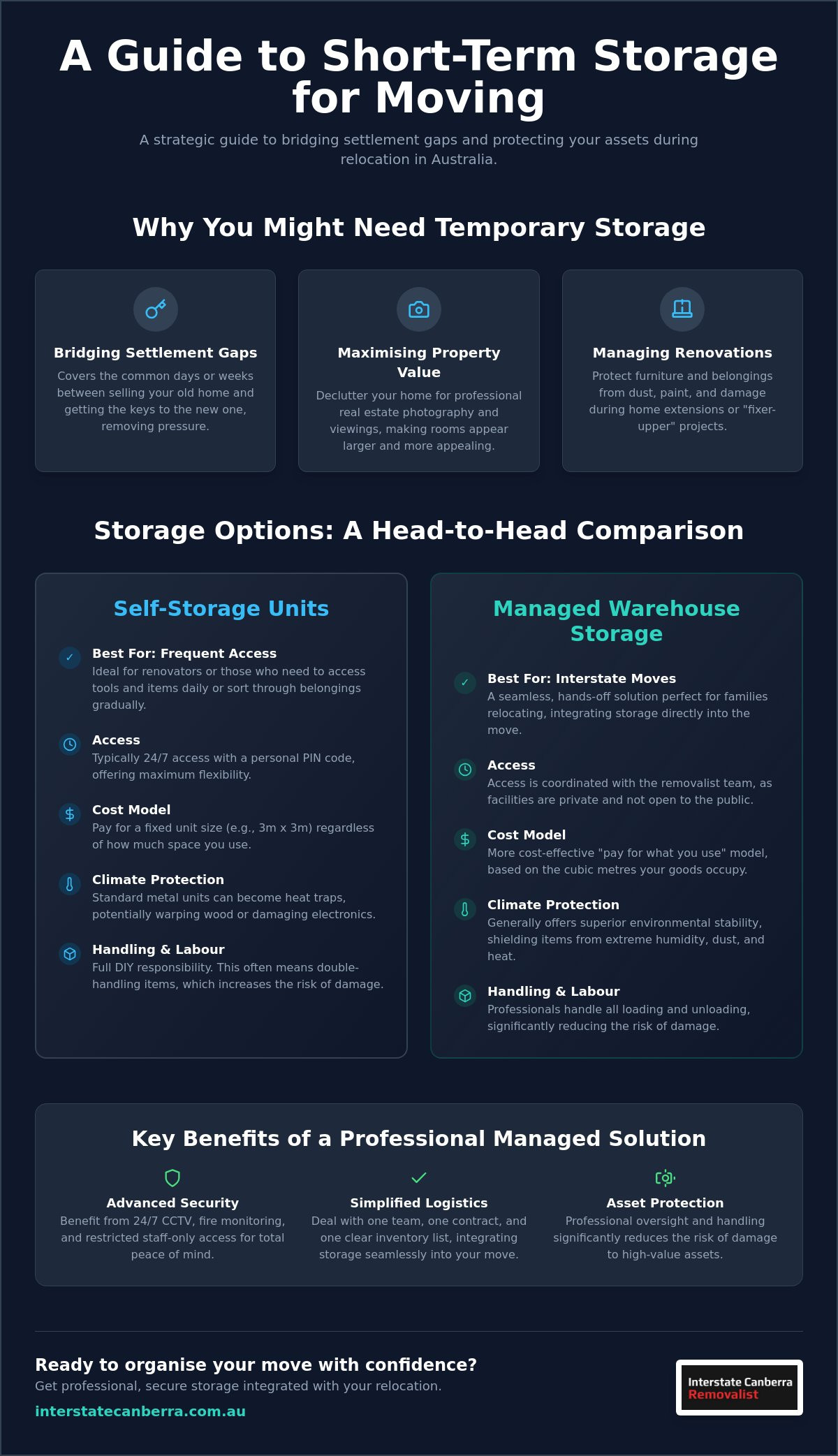
- Bridging settlement gaps: This is the most frequent use case. It covers the days or weeks between selling your old home and receiving the keys to your new property.
- Maximising property value: Professional home staging often requires removing non-essential items to make rooms appear larger and more inviting for real estate photography.
- Managing renovations: If you’re moving into a “fixer-upper,” storage protects your furniture from the dust and debris of home extensions or painting projects.
The Benefits of Professional Managed Solutions
Choosing a professional solution ensures your high-value assets remain protected. Managed facilities feature advanced security such as 24/7 CCTV, fire monitoring, and restricted access. This professional oversight significantly reduces the risk of damage compared to double-handling items yourself. Additionally, integrating storage with your plans for moving interstate simplifies your logistics. You deal with one team, one contract, and one clear inventory list.
Comparing Self-Storage Units and Managed Warehouse Storage
Choosing the right short term storage for moving depends on how often you need to access your belongings. Self-storage is the traditional “garage away from home,” while managed warehousing is a professional logistics solution. In Australia, the climate is a critical factor often overlooked. Standard metal units in self-storage facilities can become heat traps during summer, reaching temperatures that warp wood or damage electronics. Managed warehouses generally offer better environmental stability, shielding your furniture from the extreme humidity and dust common in national relocations.
Cost structures also differ between these two models. Self-storage usually requires you to pay for a fixed unit size, such as a 3m x 3m space, regardless of whether you fill it. Managed storage often uses a cubic metre model. You only pay for the volume your items actually occupy. Security is another key distinction. Public facilities allow anyone with a PIN code onto the premises at any hour. Private warehouses are restricted to authorised staff only. It’s essential to know your consumer rights when moving so you can choose a provider that prioritises the safety of your assets.
When to Choose a Self-Storage Unit
Self-storage is the best fit if you need frequent, 24/7 access to your goods. If you’re renovating and need your tools daily, or if you’re downsizing and need to sort through items gradually, the DIY approach is sensible. Be prepared for the physical workload. You are responsible for packing, stacking, and organising the unit. This often results in double-handling; moving items into a truck, then into a unit, and finally into your new home; which increases the risk of accidental damage.
The Advantages of Managed Warehouse Storage
For families moving across state lines, managed storage offers a seamless, hands-off experience. Your removalists load the truck and move the items directly into a secure, climate-monitored facility. Professional inventory systems ensure every box is accounted for with meticulous care. This model eliminates the physical burden of moving items multiple times and provides superior protection for high-value assets. If you want to simplify your next move, our tailored storage solutions can provide the secure bridge you need.
How to Organise and Pack for Short Term Storage
Effective preparation is the difference between a seamless move and a logistical headache. Decluttering is your first priority. Don’t pay to store items you’ll eventually bin or donate. Once you’ve narrowed down your inventory, invest in professional-grade materials. Heavy-duty boxes and butcher paper protect your assets from the vibrations of transit and the pressure of stacking. Avoid using second-hand supermarket cartons; they often lack the structural integrity needed for short term storage for moving and can collapse under weight.
Before sealing any box, take a clear photo of its contents. This creates a visual record for your inventory list and simplifies insurance claims if something goes wrong. Use a “first-in, last-out” strategy. Items you might need quickly, such as seasonal clothing or basic kitchenware, should be packed last so they remain accessible at the front of your storage space. Finally, label every side of the box with a thick marker. Include the contents and the destination room to ensure your removalists know exactly where everything goes on delivery day.
Protecting Valuables and Heavy Items
Australian humidity requires specific packing techniques. Wrap timber furniture in breathable moving blankets rather than plastic film. Heavy plastic traps moisture in the heat, which can cause wood to warp or finish to bubble. For fabric items, use cotton covers to prevent dust build-up while allowing air circulation. Specialist items like uprights or grands require professional piano movers who understand how to stabilise internal mechanisms before they enter a storage environment. If you need a hand with the heavy lifting, our expert team provides comprehensive packing and unpacking services to ensure every item is secure.
Inventory Management Template
Maintain a digital spreadsheet that corresponds to a numbering system on your boxes. Group your items by “Zone” based on priority. High-priority boxes contain essentials for your first week in the new home, while low-priority zones hold long-term keepsakes. This organisation saves hours of searching when you finally move in. Always review your consumer rights when moving to ensure your inventory is legally compliant for insurance purposes. Confirm that your policy covers goods while they are in transit and held within a third-party facility.
Strategic Integration: Storage as Part of Your Move
Integrating storage directly into your relocation plan transforms a chaotic transition into a managed, professional process. The most efficient approach is the ‘Storage-in-Transit’ model. In this scenario, your removalist handles the entire loop. They collect your items, transport them to a secure facility, and deliver them only when you’re ready to settle in. This eliminates the double-handling problem that often plagues DIY moves. When you move items yourself into a public unit and then move them again weeks later, you double the risk of accidental damage and physical fatigue. Using professional short term storage for moving as part of a single, coordinated service ensures your belongings stay on one inventory list under the care of a single accountable team.
Bundling these services also provides clear financial advantages. Many providers offer reduced rates when you combine interstate transport with storage solutions. This financial efficiency is paired with logistical ease; you have one point of contact and one contract. It’s the most logical way to bridge the gap between properties without the coordination nightmare of managing multiple companies and separate access codes. It provides the steady hand needed to keep your move on schedule and within budget.
Streamlining the Interstate Process
National relocations rarely align perfectly with settlement or lease dates. Using storage as a central hub allows you to move out of your old home on schedule even if your new keys aren’t ready. You can coordinate the final delivery to match your specific timeline precisely. This methodical approach minimises the number of times your furniture is touched. It’s the best way to protect high-value assets during long-distance transit, as items remain securely packed in a controlled environment until they reach their final destination.
Commercial and Business Storage Needs
Storage is equally vital for a successful office relocation. It allows you to stage furniture and manage surplus assets during a business downsize or location change. You can securely store archived documents or sensitive IT equipment in monitored facilities while you set up the new workspace. This keeps non-essential clutter out of the way. It ensures your business remains operational and professional throughout the transition, allowing your staff to focus on their work rather than navigating boxes.
To ensure a stress-free transition, follow this final checklist for professional support:
- Confirm your provider uses a professional inventory system for tracking.
- Verify that your insurance coverage extends to items held in a third-party facility.
- Coordinate your final delivery dates at least 14 days in advance.
- Ensure all high-priority boxes are clearly marked for immediate access upon delivery.
- Choose a provider that offers climate-monitored options for sensitive electronics or timber.
Secure Your Seamless Relocation Today
Mastering the logistics of transitional living is the most effective way to eliminate the chaos of a national move. By choosing a managed warehouse model, you avoid the physical burden of double-handling and protect your furniture from the harsh Australian heat. You now have the strategic packing techniques and inventory templates needed to keep your high-value assets safe and accessible. This professional approach ensures your belongings aren’t just sitting in a unit; they’re part of a coordinated, secure bridge between properties.
Securing reliable short term storage for moving is the final step toward a stress-free transition. Our team provides seamless national relocation packages that integrate transport and storage into one clear, professional loop. You’ll benefit from secure, climate-monitored warehouse facilities and professional inventory management for every move. We take accountability for every box, allowing you to focus on your new home while we handle the heavy lifting. Get a Quote for Integrated Moving and Storage Solutions and move forward with total confidence.
Frequently Asked Questions
What is the difference between self-storage and managed storage?
Self-storage is a DIY solution where you rent a unit and handle all packing, transport, and loading yourself. Managed storage is a professional service where removalists handle the entire loop, including collection and delivery. This model is often the preferred choice for short term storage for moving because it eliminates double-handling. It ensures your goods are managed by professionals in a secure, monitored environment throughout the transition.
How much storage space do I need for a standard three-bedroom house?
A standard three-bedroom house typically requires a storage space of approximately 10 to 20 square metres. If you’re using managed warehousing, this equates to roughly 30 to 45 cubic metres of volume. Every home is unique, so conducting a thorough declutter before booking short term storage for moving ensures you aren’t paying for space to hold items you no longer need. This keeps your costs efficient and manageable.
Are my belongings insured while they are in a storage facility?
Most storage facilities have general building insurance, but this does not automatically cover your individual belongings. You should verify if your current home and contents policy extends to items in a third-party facility. Many professional removalists offer specific transit and storage insurance as an add-on. This protects your assets against fire, theft, or accidental damage during the relocation process and provides essential peace of mind.
Can I store electronics and wooden furniture in a standard storage unit?
You can store these items, but they require specific protection against the Australian climate. Standard metal units can reach high temperatures that warp timber or damage sensitive electronic components. For high-value assets, managed storage in a climate-monitored warehouse is the safer choice. Always wrap wooden furniture in breathable blankets rather than plastic to prevent moisture traps and surface bubbling. This keeps your assets in peak condition.
How should I prepare my white goods like fridges for short term storage?
Clean and dry your white goods thoroughly at least 48 hours before they enter storage. Defrost fridges and freezers completely to prevent water leakage and mould growth during transit. Once inside the unit, keep the doors slightly ajar to allow for air circulation. This simple step prevents the buildup of unpleasant odours and protects the internal seals of your appliances, ensuring they remain ready for immediate use.
What items are strictly prohibited from being kept in storage centres?
Storage centres strictly prohibit hazardous materials, including petrol, paint thinners, and gas cylinders. You cannot store perishable food items, plants, or living animals as they attract pests and create hygiene issues. Additionally, illegal goods and high-risk explosives are banned under standard SSAA agreements. Always check your specific contract for a comprehensive list of restricted items before your moving day to ensure your inventory complies with all safety regulations.