
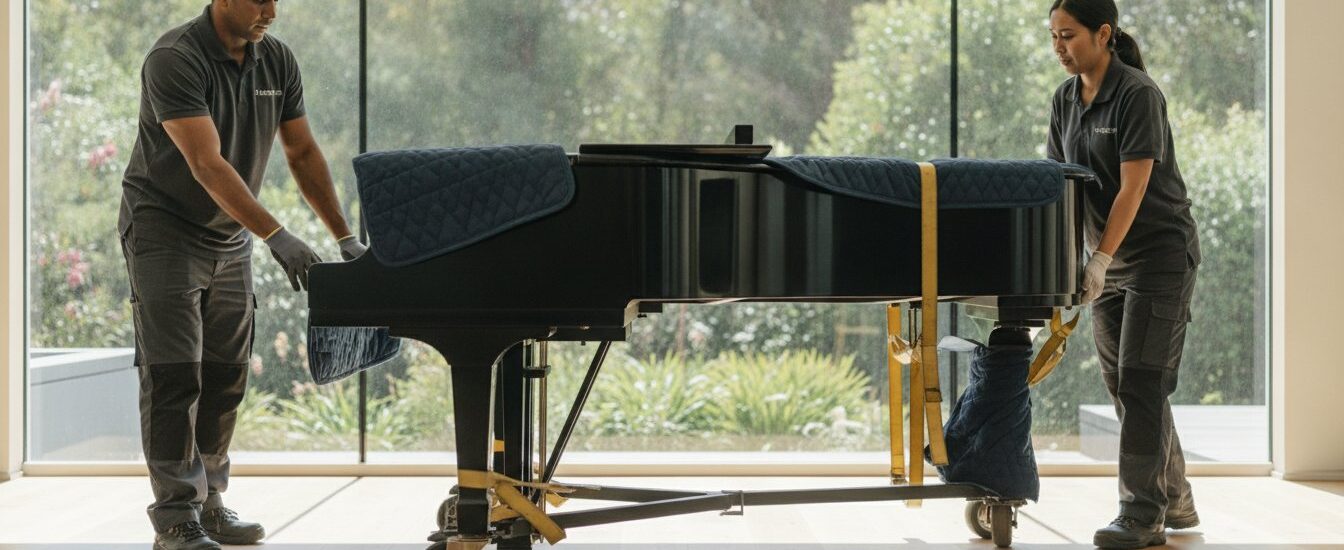
A piano is a delicate musical instrument first and a heavy piece of furniture second, requiring technical precision rather than just brute force. When you’re planning a relocation, understanding the piano moving cost is about more than just the bottom line; it’s about ensuring a high-value asset survives the trip unscathed. You’ve likely spent years maintaining your piano’s unique tone, so the fear of it going out of tune or sustaining structural damage during transit is a significant concern.
We understand the anxiety that comes with moving such a heavy, fragile item. You want to avoid hidden fees and ensure your new floors remain scratch-free. This guide explains the technical factors that determine professional transport rates and how to secure your instrument during a local or interstate move. You’ll learn what to look for in a specialist removalist to guarantee a damage-free experience. We’ll preview the essential equipment needed and how transparent, fixed-price quotes can provide the peace of mind you need for a seamless transition.
Key Takeaways
- Understand why moving a piano requires more than brute force to protect its delicate internal mechanics and thousands of moving parts.
- Discover how specialised equipment like piano skids and custom-fit padding prevent surface scratches and structural strain during transit.
- Identify the specific variables that influence your piano moving cost, including instrument size, crew requirements, and specialist insurance coverage.
- Learn how to manage climate-controlled environments for long-distance relocations to keep your instrument’s wood and strings stable.
- Find out why waiting two to four weeks for a professional tuning is essential for allowing your piano to settle in its new environment.
Why General Removalists Aren’t Always Piano Specialists
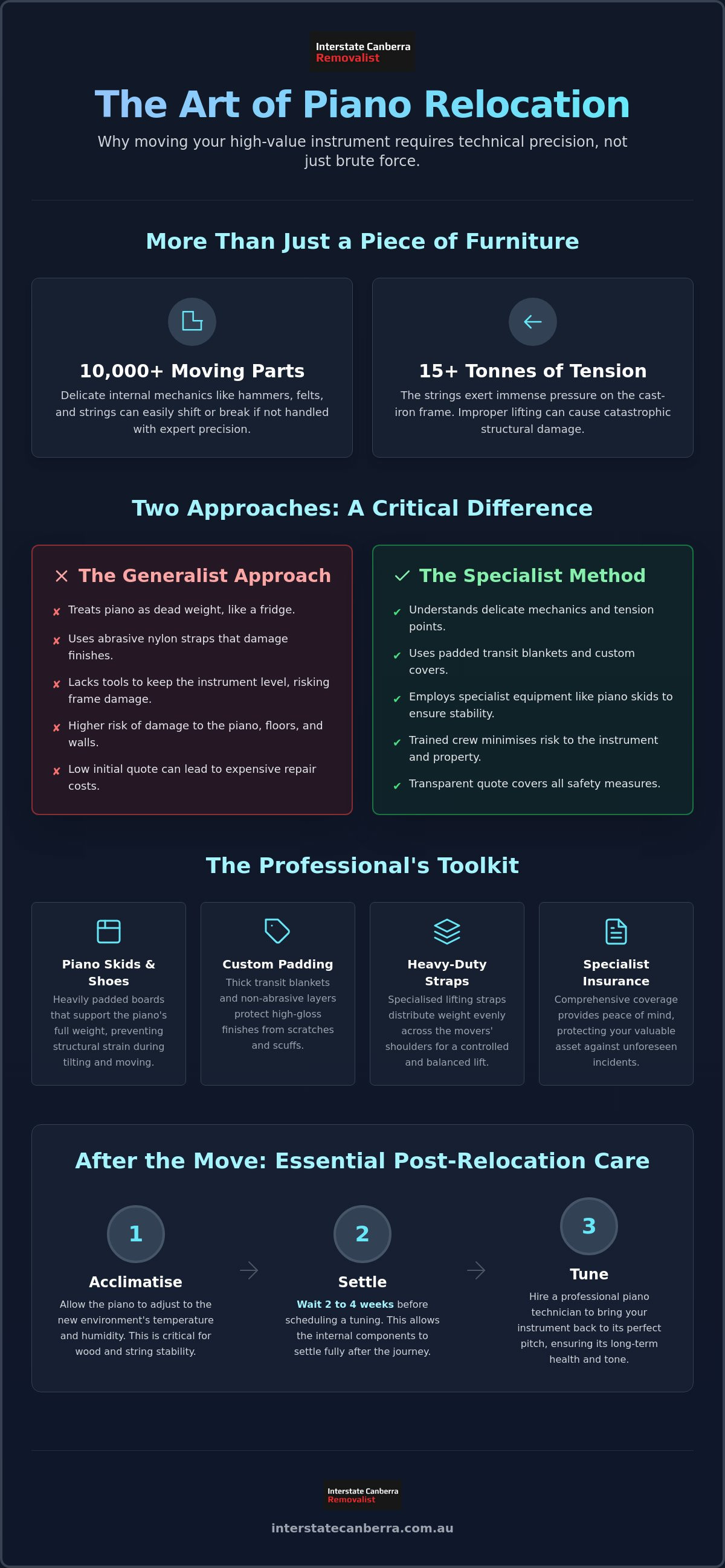
Most general removalists treat heavy items as dead weight. They see a 300kg upright the same way they see a double-door fridge. This approach is dangerous for a musical instrument. While a fridge has a simple compressor, a piano contains over 10,000 moving parts. These delicate components can shift or snap if the instrument isn’t handled with surgical precision. While a low quote is tempting, the true piano moving cost often includes the price of post-move repairs if a generalist mishandles the instrument.
Understanding how professional piano removalists operate reveals the difference between moving furniture and moving an instrument. General movers often use standard nylon straps. These are abrasive and can bite into high-polish ebony or mahogany finishes. Specialist movers use padded transit blankets and custom-fit covers to prevent surface damage. There is also the soundboard to consider. If the piano isn’t kept level during the lift, the structural integrity of the soundboard is at risk. Rough handling can dislodge internal felt and hammers, leaving you with a dead key or a permanent rattle.
To better understand the risks and technical requirements, watch this helpful video:
The Hidden Complexity of Piano Mechanics
A piano is a high-tension machine. The strings pull against the frame with over 15 tonnes of pressure. If the cast-iron plate isn’t supported correctly during a lift, it can crack under its own tension. Sudden changes in temperature or humidity during a move also cause the wood to expand or contract. This wreaks havoc on string tension and tuning stability. Specialists use climate-controlled environments for long-distance hauls to mitigate these environmental risks and keep the piano moving cost predictable by avoiding emergency technician visits later.
Risks of DIY or Unqualified Moving
Attempting a DIY move is a recipe for disaster and personal injury. Upright pianos have a deceptively high, top-heavy centre of gravity. They tip easily and can crush a person or a wall in seconds. Without specialised dollies, you’ll likely gouge your hardwood floors or damage internal staircases. For grand pianos, the risks are even higher. Improper tipping can permanently ruin the action, which is the complex mechanism connecting the key to the hammer. Professional handling ensures the instrument stays balanced and secure throughout the entire journey.
Technical Logistics: How Professional Piano Removalists Operate
Moving a piano isn’t just about strength. It’s an engineering challenge. Professional movers use a piano skid, which is a heavily padded board designed to support the instrument’s full weight during transit. This tool is critical for preventing structural strain. It allows the team to tilt and secure the piano without stressing the internal frame or the delicate legs. High-quality Australian Furniture Removers Association (AFRA) members adhere to these technical standards to ensure every lift is controlled and safe. Investing in these technical measures ensures your piano moving cost covers the highest level of protection for your home and instrument.
Specialist Equipment for Uprights and Grands
Grand pianos require a “piano shoe” to safely remove the lyre and legs. This allows the main body to rest securely on the skid for transport. For uprights, two specialists are the minimum requirement. They use heavy-duty lifting straps to distribute the weight evenly across their shoulders. If access is tight, we use custom ramps or hoists to navigate obstacles without compromising the instrument’s level. This precision is why the piano moving cost reflects the specialised labour and equipment involved in a safe relocation.
Protective Packing and Surface Preservation
We use heavy-duty transit blankets and custom-fit padding to prevent surface scratches. Surface-first packing prioritises the preservation of high-gloss finishes by using non-abrasive layers before applying structural restraints. We also secure the keyboard lid to prevent internal key damage from road vibrations. For long-distance interstate travel, shrink-wrapping over the blankets prevents moisture ingress and keeps the padding perfectly in place. If you’re preparing for a relocation, you can request a specialist quote to see how these protective measures are integrated into our service.
Protecting your home is just as vital as protecting the piano. We use specialised dollies with non-marking rubber wheels to glide over hardwood floors and tiles without leaving a trace. Once at the truck, a hydraulic tailgate provides a smooth, level transition from the ground to the vehicle floor. We then secure the instrument using specialised tie-down points built into the truck’s frame. This ensures the piano remains completely stationary, even during long hauls across the Australian landscape.
Factors Influencing Your Piano Moving Cost and Quote
A transparent quote is the foundation of a stress-free move. Your piano moving cost isn’t just a random figure; it’s calculated based on the specific physical demands of your instrument. For example, a standard upright usually requires a two-person crew, while a concert grand often demands four specialists to manage the weight and balance securely. When reviewing a quote, always look for a fixed price for the piano component. Hourly rates can lead to “bill shock” if the team encounters unexpected delays or difficult access at the new property.
Technical knowledge is the best indicator of a quality mover. During your initial enquiry, a professional team will ask about the piano’s brand, age, and any previous damage. They should also explain how relocation service fees apply to heavy items. If a removalist doesn’t ask about the model or the number of stairs involved, they likely lack the specialist expertise required for a safe transit.
Beyond Distance: Access and Complexity
Distance is only part of the equation. Technical difficulty plays a massive role in the final price. A “stair charge” is common because each flight of stairs significantly increases the risk and physical strain on the crew. Narrow hallways, tight turns, or the need for crane hire in high-rise apartments will also influence the quote. This is particularly true when moving interstate, where the logistics of long-distance transport and climate control must be factored into the planning.
Essential Credentials and Insurance Coverage
Standard transit insurance is often insufficient for high-value musical instruments. You need specialist cover that accounts for the unique mechanical risks of a piano. Always ask for a Certificate of Currency before the moving day to verify the level of protection. Professional standards are governed by the Australian Consumer Law for removalists, which protects you against misleading conduct and unfair contracts. Look for AFRA membership as a mark of quality and accountability. For a transparent and professional assessment of your needs, you can get an instant online quote from our specialist team today.
Planning Your Interstate Piano Relocation with Confidence
Moving an instrument across state lines requires a different level of planning compared to a local shift. The piano moving cost for interstate routes accounts for the complexity of climate control and long-haul vibration management. Australia’s diverse weather means your piano might travel from a humid coastal region to a dry inland city. Specialist movers manage these shifts to prevent the soundboard from cracking or the glue joints from failing during the journey.
Coordination is vital for a smooth delivery. Ensure there is clear truck access at both the pickup and delivery points nationally. Your instrument should be the last item loaded and the first unloaded. This loading order keeps the piano accessible and reduces the risk of other household goods shifting during the journey. Before the packing and unpacking begins, document the piano’s condition with clear, timestamped photos. This creates a baseline for your insurance coverage and provides peace of mind.
Once the piano arrives, resist the urge to tune it immediately. The physical stress of the move and the change in air pressure affect the string tension. You should wait two to four weeks before scheduling a professional tuner. This period allows the wood and internal mechanics to settle into the new home’s ambient temperature and humidity levels before any adjustments are made.
Preparing Your Instrument for Long-Distance Travel
Preparation starts with a simple clean. Dust or grit trapped under transit blankets can cause micro-scratches on high-gloss finishes during the vibrations of a long drive. If your piano has a lockable fallboard, secure it before the team arrives. This prevents the keys from moving excessively during transit. Always provide the removalist with the exact make and model. This allows us to calculate the precise weight and ensures we have the correct skid size ready for the job, keeping the piano moving cost transparent and accurate.
Why Specialist Hire is the Only Choice
Relying on professional piano movers is the only way to guarantee the safety of your investment. A standard removalist may not understand the specific balance points of a grand piano or the top-heavy nature of an upright. Our team brings a commitment to efficiency and reliability across all major Australian routes. We focus on the technical details so you can focus on settling into your new home without worrying about the condition of your instrument.
Secure Your Instrument’s Future
Relocating a piano is a technical operation that demands far more than just brute strength. You’ve learned that protecting the 10,000 moving parts within your instrument requires specialised equipment like piano skids and non-marking dollies. By prioritising a “surface-first” approach to packing and ensuring your removalist has the expertise to handle 15 tonnes of internal string pressure, you safeguard your investment against permanent damage. A transparent piano moving cost should always reflect these high standards, including professional packing and comprehensive surface protection as standard.
Whether you’re moving a family upright across town or a concert grand across the country, our national interstate coverage ensures your piano arrives in peak condition. We provide the steady hand and technical precision needed for complex relocations, giving you total peace of mind throughout the journey. Get an instant quote for your piano move today and let our specialists manage the heavy lifting. Your piano’s next performance starts with a safe arrival, and we’re here to make sure every note remains perfect.
Frequently Asked Questions
How much does it cost to move a piano interstate in Australia?
The total piano moving cost for an interstate relocation depends on the distance travelled, the specific model of your instrument, and the level of climate control required during transit. Long-distance hauls across Australia involve complex logistics that require specialised scheduling. To avoid unexpected fees, you should request a fixed-price quote that includes fuel, professional packing, and transit insurance for your specific route.
Do I need to hire a separate tuner after moving my piano?
Yes, you should always book a professional tuner approximately two to four weeks after your move is complete. This waiting period is essential because the wood and strings need time to settle into the new environment’s humidity and temperature levels. Tuning the instrument immediately upon arrival is often a waste of resources as the internal mechanics will continue to shift as they adjust to the new space.
Can a standard removalist team move a grand piano safely?
Most standard removalists lack the technical training and specialised equipment, such as piano shoes and skids, required to manage a grand piano’s unique centre of gravity. These instruments must be partially dismantled with extreme care to protect the internal action. Hiring a specialist ensures the weight is distributed correctly, preventing structural failure of the soundboard or damage to the delicate legs during the lift.
How do moving companies protect my floors during a piano move?
Specialist teams use heavy-duty dollies fitted with non-marking rubber wheels designed to support weights of up to 600kg without damaging surfaces. These dollies glide over hardwood, tiles, and vinyl without leaving scuffs or gouges. For added security, movers often lay down protective runners and use custom ramps to navigate door thresholds, ensuring the instrument never makes direct contact with your flooring.
What information do I need to provide for an accurate piano moving quote?
You need to provide the exact make, model, and type of piano to help the team assess the weight and dimensions accurately. It’s also vital to disclose the number of stairs at both locations and any difficult access points, such as narrow hallways or steep driveways. Providing these details upfront ensures your piano moving cost remains transparent and prevents “bill shock” on moving day.
Is my piano insured against mechanical damage during the move?
Standard transit insurance typically covers external impact damage but may not include the delicate internal mechanics. You must verify that your removalist provides specialist instrument cover that accounts for the thousands of moving parts inside the piano. Always request a Certificate of Currency before the move to confirm that the policy specifically protects against both structural and mechanical issues during transit.