

What if the success of your relocation is decided eight weeks before the truck even arrives? Most Australians focus on the physical labour, but a truly seamless move is won through meticulous logistics rather than just muscle. If you are one of the 350,000 people moving interstate this year, you need a reliable moving checklist to navigate the chaos and keep your transition on track.
We know that the fear of forgetting a critical admin task or seeing a family heirloom damaged can be overwhelming. It’s completely normal to feel anxious about the timeline for utility transfers, especially with significant gas connection costs and Australia Post fee changes taking effect in 2026. This guide provides a comprehensive, step-by-step plan to organise your relocation from start to finish. We’ll show you how to manage your timeline effectively, ensure your fragile items remain protected, and settle into your new home with minimal downtime for your work or family life.
Key Takeaways
- Learn why the eight-week mark is the critical starting point for securing removalists and establishing your master planning folder.
- Master the timing for utility transfers and mail redirection to avoid the higher connection fees and Australia Post surcharges coming in 2026.
- Discover how a professional moving checklist ensures no administrative tasks or high-value items are overlooked during the transition.
- Optimise your packing phase with a room-by-room labelling system and professional materials designed to protect fragile belongings.
- Identify the essential steps for moving day to ensure a smooth handover and zero damage to your property or furniture.
Setting the Foundation: Your 8-Week Pre-Move Strategy
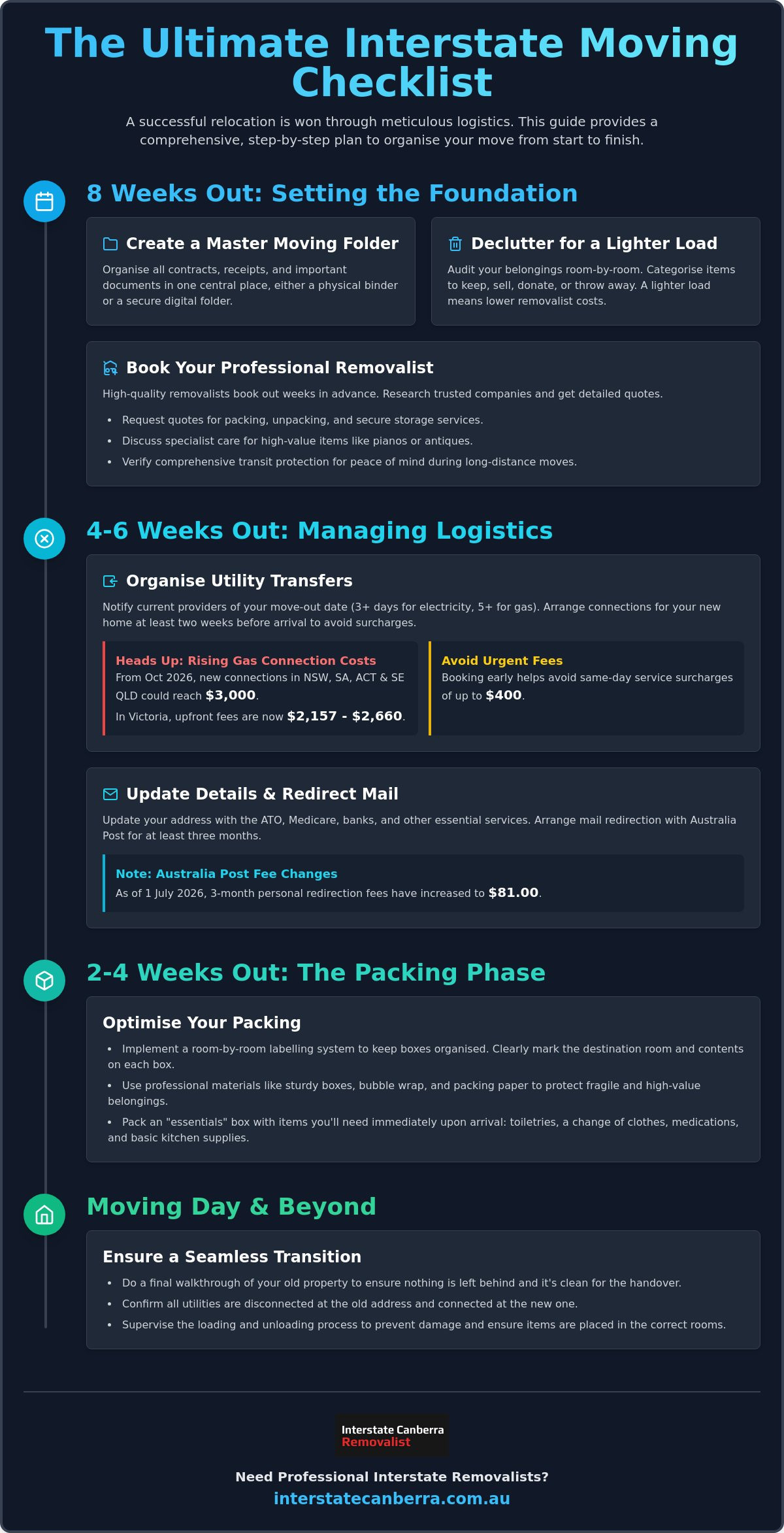
Setting the foundation for a successful relocation requires a clear head and a strict timeline. Eight weeks before your move-in date, you should establish a firm deadline and create a master moving folder. This folder, whether a physical binder or a secure digital drive, acts as the central hub for all your contracts, receipts, and floor plans. It’s the best way to keep your paperwork organised and accessible when you’re on the go.
A comprehensive moving checklist starts here. It serves as your roadmap, ensuring you don’t miss administrative deadlines or overlook service bookings. At this stage, your primary goal is to gain a bird’s-eye view of the entire process of moving. By identifying potential hurdles early, you can manage the logistics with confidence and poise.
To help you visualise these early steps, watch this practical guide for Australian homeowners:
The Purge: Decluttering for a Lighter Load
Moving house is the perfect opportunity to audit your belongings. Go through every room, including the garage and garden shed, to categorise items into four groups: keep, sell, donate, or rubbish. Be ruthless with your decisions. If you haven’t used an item in the last year, it’s likely time to let it go.
Organising a garage sale or listing high-value items on digital marketplaces can offset some of your relocation costs. Remember that removalist fees are often based on the volume of goods. The less you pack, the lower your total investment will be. It also reduces the downtime required to set up your new home, allowing your family to settle in much faster.
Booking Your Professional Removalist Team
Don’t wait until the last minute to secure your dates. High-quality removalists book out weeks in advance, especially for popular interstate routes. Research trusted removalists with national coverage to ensure your items are handled by seasoned professionals who understand the nuances of long-distance transport.
Request detailed quotes that include any additional services you might need. Your moving checklist should account for the following requirements:
- Professional packing and unpacking services to save time and reduce stress.
- Secure storage solutions if your new home isn’t ready for immediate occupancy.
- Specialist care for high-value items, such as piano moving or heavy antique furniture.
Verify that your chosen team offers comprehensive transit protection. This provides peace of mind that your belongings are protected during long-distance hauls across the country. A professional team will always be transparent about their insurance options and handling procedures.
Managing the Logistics: Administrative Tasks and Utility Transfers
Logistics are the backbone of a successful move. While packing boxes is visible progress, your moving checklist must prioritise the digital and administrative transition. Start by notifying your current utility providers of your move-out date. Give at least three business days’ notice for electricity and five business days for gas. This prevents you from paying for power used by the next occupants after you leave.
Organise connections for your new home at least two weeks before arrival. In 2026, the landscape for energy connections is changing. From October 2026, new gas connection costs in New South Wales, South Australia, the ACT, and South East Queensland will reflect actual costs, often reaching $3,000. If you are moving to Victoria, upfront fees for standard gas connections now sit between $2,157 and $2,660 depending on the network. Booking early avoids urgent connection surcharges, which can cost up to $400 for same-day service.
Update your address with the ATO, Medicare, and your bank. Arrange for mail redirection through Australia Post for at least three months. Be aware that as of 1 July 2026, personal redirection fees for three months have increased to $81.00. This small investment ensures you don’t miss vital correspondence while you update your details with various organisations. For smaller moves where you only need a few items transported while you handle the paperwork, a professional man and a van service can provide the flexibility you need.
The Essential Admin Checklist
Transitioning your life involves more than just boxes. Update your drivers licence and vehicle registration immediately upon arrival in a new state. Transfer school records or medical files to your new local providers well in advance. Secure house and contents insurance to commence from your first day in the new property. This ensures your belongings are protected from the moment they enter the new premises.
Interstate-Specific Considerations
Moving across state lines adds layers of complexity. Check state-specific quarantine laws regarding plants, soil, or certain food items to avoid fines at the border. Plan your own travel route carefully, booking accommodation if you are driving long distances. Ensure your pets have updated microchip details and are prepared for the journey. For those moving interstate, these small details prevent significant delays and ensure a calm arrival.
The Packing Phase: Protecting Your Belongings for the Long Haul
Packing is often the most time-consuming task on any moving checklist. It requires a methodical approach to ensure your possessions survive the journey across the Australian landscape. Don’t settle for flimsy, single-walled cartons from the local supermarket. They rarely withstand the pressure of being stacked in a moving truck. Invest in high-quality, double-walled boxes, professional-grade packing tape, and ample bubble wrap to provide the necessary cushioning for your items.
Develop a robust labelling system based on the rooms in your new house. Mark each box with its destination and a priority level. This makes the unpacking process much faster. Create a digital inventory by taking photos of high-value items before they are sealed. These images serve as vital evidence for insurance purposes if any damage occurs during transit. Finally, pack an “essentials carton” for your first 24 hours. Include toiletries, basic kitchen supplies, chargers, and a change of clothes so you don’t have to hunt through dozens of boxes on your first night.
Professional Packing vs. DIY
Deciding between a DIY approach and hiring a professional packing and unpacking service depends on your budget and timeline. Professional packers have the expertise to wrap items efficiently, often completing in hours what takes homeowners days. If you choose to pack yourself, focus your efforts on non-breakables like linens, books, and clothing. Let the professionals handle fragile kitchenware, artwork, and complex electronics. This division of labour ensures your most vulnerable items receive expert care while you manage the broader logistics of the move.
Special Care for Heavy and Fragile Items
Heavy and awkwardly shaped items require specific handling techniques to prevent damage. Securely wrap furniture corners with thick padding to avoid scuffs and dents during the moving interstate process. Long-distance hauls involve constant vibration, which can loosen joints or scratch surfaces if items aren’t protected correctly. Use professional-grade covers for mattresses and upholstered furniture to keep them clean and dry.
Specialist items like pianos or heavy antiques shouldn’t be moved without the right equipment. These pieces require specific ramps, dollies, and tie-down points to remain stable. Always place the heaviest items at the bottom of the load to create a low centre of gravity. This prevents shifting during transit and protects lighter boxes stacked on top. If you want to ensure your high-value items arrive in pristine condition, consider booking our professional packing and unpacking team to handle the technical details for you.
Moving Day and Beyond: Navigating the Transition Seamlessly
Moving day is the final hurdle in your relocation journey. It’s the culmination of weeks of preparation, and a robust moving checklist ensures that the physical transition is as controlled as the planning phase. Before you hand over the keys, conduct a thorough walkthrough of every room, cupboard, and crawl space. Check the dishwasher, oven, and even the top of high shelves. It’s easy to overlook small items in the rush of the morning.
When your removalist team arrives, supervise the loading process closely. Confirm the inventory list with the team leader before the truck departs. This is the moment to verify that every box and piece of furniture is accounted for and correctly secured. Never pack your high-value essentials in the truck. Keep jewellery, passports, birth certificates, and essential medications with you in your personal vehicle. This ensures they remain accessible and secure regardless of the transit time between properties.
Execution on the Big Day
Ensure clear access for the removalist vehicle at both the old and new addresses. If you are moving home or office in a busy city centre, check for parking restrictions or height clearances for large trucks. Provide the crew with a floor plan of the new house to expedite the unloading process. This small step saves you from repositioning heavy furniture later and keeps the team moving efficiently. Verify that all utilities are operational the moment you step inside to avoid any discomfort on your first night.
Settling into Your New Australian Home
Don’t feel pressured to unpack every box in the first twenty-four hours. Prioritise the kitchen and make the beds as soon as the frames are assembled. Having a functional kitchen and a comfortable place to sleep significantly reduces the mental fatigue of the day. Perform a quick safety check of the new property, looking for any hazards or maintenance issues that need immediate attention.
Inspect your belongings for any transit damage immediately upon unloading. If you notice a scuff or a broken item, report it to your removalist straight away while the team is still on-site. Once the boxes are cleared and the heavy lifting is done, take a walk to your new local shopping centre or park. Meeting the neighbours and exploring the area helps your family feel settled and connected to the new community faster. A successful move isn’t just about the items you carry; it’s about how quickly you can turn a new house into a home.
Master Your Relocation with Confidence
A successful Australian move is built on early preparation and a disciplined approach to logistics. By following this moving checklist, you have already mitigated the most common risks associated with relocation. You now have a clear path from decluttering your current space to navigating the 2026 utility fee changes and securing your high-value items for long-distance transit. The focus remains on maintaining a steady hand through every stage of the process.
Whether you require professional packing and unpacking services to save time or need specialist piano and heavy item movers for your most prized possessions, expert help is available. We also offer secure short-term and long-term storage solutions to bridge the gap between properties. Our goal is to protect your peace of mind while ensuring every box arrives exactly where it belongs. We take pride in managing the complexities so you don’t have to. For a complete step-by-step system covering everything from early decluttering to final bond, our detailed guide on moving household with zero surprises walks you through every stage of the process.
Ready to take the next step toward your new home? Get an instant quote for your seamless interstate move today. Your new chapter is waiting, and we’re here to ensure you arrive ready to enjoy it. Safe travels on your upcoming journey.
Frequently Asked Questions
How far in advance should I book an interstate removalist?
You should book your interstate removalist at least six to eight weeks before your move date. This lead time is essential to secure your preferred dates with a reputable team, especially during peak periods like the summer holidays. Booking early allows you to complete the first major step on your moving checklist and provides ample time for a detailed site inspection and a more accurate service quote.
Can I pack my own boxes for an interstate move?
You can pack your own boxes, but it is often safer to let professionals handle fragile or high-value items. DIY packing is perfectly suitable for non-breakables like clothing, linens, and books. However, be aware that many insurance providers only offer full transit protection for items packed by the removalist team. If you choose the DIY route, always use professional-grade, double-walled cartons to withstand long-haul transport.
What items are removalists not allowed to transport across state lines?
Removalists cannot transport dangerous goods such as gas cylinders, flammable liquids, ammunition, or aerosol cans. Furthermore, Australian state quarantine laws strictly regulate the movement of plants, soil, and certain fresh food items across borders. It is your responsibility to check the specific regulations for your destination state to avoid potential fines or the confiscation of items at quarantine checkpoints during your relocation.
Do I need to be present for the entire moving day?
Yes, you or a trusted representative should be present for the duration of the loading and unloading process. Your presence is required to supervise the handling of specific items, confirm the final inventory list, and conduct a thorough walkthrough of the property. Being on-site allows you to answer the team’s questions immediately, which prevents delays and ensures the truck is packed according to your priorities.
How do I handle the transfer of my utilities between states?
Notify your current providers at least five business days before you leave to arrange disconnections and new connections. This is particularly important in 2026, as new gas connection costs in several states are reflecting higher actual costs, sometimes reaching $3,000. Organising these transfers well in advance ensures you have electricity and hot water the moment you arrive, while also avoiding the high fees associated with urgent, same-day connection requests.
What is the best way to move large, fragile items like a piano?
The safest way to move a piano is to hire a specialist team with the correct heavy-lifting equipment. Standard moving techniques are often insufficient for the weight and delicate internal mechanisms of a piano. Specialist movers use custom ramps, heavy-duty dollies, and specific tie-down points to ensure the instrument remains stable. This professional approach prevents structural damage to the instrument and protects the flooring and walls of both properties. Before booking any service, it pays to understand interstate moving costs Australia wide, including how specialist item fees and fuel levies are calculated into your final quote.